


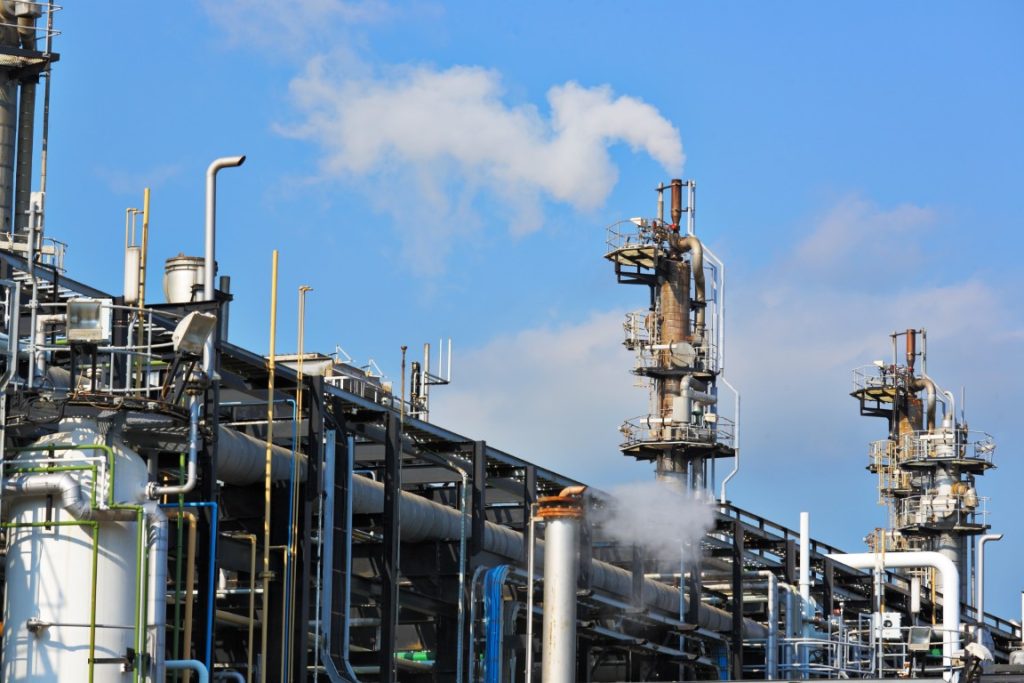
VOC treatment in adhesive production is usually about capturing and destroying solvent vapors before they reach the workplace atmosphere or exhaust stack. In practice, the right approach depends on the solvent mix, airflow, temperature, humidity, process duty cycle, and whether the emissions are continuous or intermittent. Adhesive plants often generate VOCs from mixing, coating, drying, cleaning, tank venting, and material handling, so the control system has to match the process rather than rely on a generic device.
For many facilities, the first technical question is not “What filter should we buy?” but “What is in the off-gas, at what concentration, and under what conditions?” That answer determines whether adsorption on activated carbon, thermal oxidation, or a hybrid system is the best fit. If odor complaints, worker exposure concerns, or solvent recovery goals are part of the brief, the design becomes even more specific. Bionatur works in this type of industrial gas treatment, helping plants evaluate pollutant streams and define a treatment concept that fits the actual operating data.
What creates VOC emissions in adhesive production
Adhesive manufacturing can emit VOCs at several points in the process, and the emission profile may change during the shift. Some sources are concentrated and predictable; others are diffuse and harder to capture.
- Raw material handling during unloading, storage, and transfer of solvent-based inputs.
- Mixing and blending when resins, tackifiers, solvents, or additives release vapor.
- Coating, laminating, and drying stages where the product is intentionally designed to lose solvent.
- Equipment cleaning with volatile solvents or wash fluids.
- Tank and reactor vents that release vapor during filling, agitation, or temperature changes.
- Packaging and filling operations with residual headspace emissions.
VOC treatment must focus on gases, not particles. Dust collectors and mist separators are important where solids or aerosols are present, but they do not solve solvent vapor emissions. In many plants, pretreatment is needed to remove droplets, sticky aerosols, or condensable material before the gas reaches the VOC control unit.
Another important distinction is between odor and pollution control. A process may smell strong even at low mass emissions, while some hazardous vapors may be weakly odorous or not reliably detectable by human senses. For that reason, odor complaints can help identify a problem area, but they are not a measurement method and should never be used to assess H2S, solvent safety, or filter performance.
Adsorption, absorption, and oxidation: choosing the right control route
VOC treatment systems are not interchangeable. The right choice depends on concentration, flow rate, solvent chemistry, and whether the exhaust can be recovered, recirculated, or destroyed. The three most common technical routes are adsorption, absorption, and thermal or catalytic oxidation.
Adsorption on activated carbon
Adsorption is a surface process: VOC molecules attach to the internal pore structure of a solid adsorbent medium, commonly activated carbon. This is different from absorption, where a contaminant dissolves into a liquid. Adsorption is widely used where the gas stream is relatively dilute, the flow is manageable, and the objective is to capture vapors without adding heat to the process.
Activated carbon is often considered for solvent-laden air, but it is not universal. Performance depends on the size and polarity of the VOC molecules, the humidity of the gas, the presence of competing compounds, and the temperature of the stream. High moisture can reduce capacity for some applications because water vapor competes for adsorption sites. Sticky aerosols, dust, and condensables can also foul the bed and shorten service life if pretreatment is inadequate.
Some facilities also need to consider whether the vapor contains compounds such as ketones, aromatics, esters, alcohols, or chlorinated solvents. Different carbon grades or impregnated adsorbents may behave differently, but the selection must be based on process data, not assumptions.
Thermal or catalytic oxidation
Oxidation systems destroy VOCs by converting them into combustion products at elevated temperature, usually with appropriate controls and energy integration. These systems are often favored where solvent concentrations are higher, where the gas flow is large, or where heat recovery can offset operating cost. They can be highly effective, but they are not always the most practical option for small, variable, or low-temperature exhaust streams.
Oxidation is a destruction route, not a capture route. That means the engineering focus shifts from adsorption capacity to combustion stability, residence time, fuel use, and safety interlocks. It also means the process may be less attractive where the plant wants simple operation, lower thermal risk, or easier integration with intermittent exhaust.
Absorption and liquid scrubbing
Absorption transfers pollutants from gas into a liquid. It is more common for certain soluble gases than for general solvent VOC control. In adhesive production, liquid scrubbing may be useful for specific exhaust components, but it is not a default solution for all VOCs. If the vapors are poorly soluble, absorption alone may be ineffective.
In some applications, a combined system makes sense: a pretreatment step for particles or condensables, then adsorption for solvent vapors, or oxidation for concentrated exhaust. The best option is the one that aligns with the actual contaminant profile and plant operating constraints.
How to evaluate an adhesive plant VOC stream before selecting a system
A reliable proposal starts with process data. Without it, even a well-designed filtration concept can be undersized, overdesigned, or operationally difficult. The goal is to define the gas stream clearly enough that the treatment system can be engineered for real conditions rather than nominal ones.
Key data to collect once before requesting a proposal:
- VOC list and approximate composition: which solvents or vapors are present, and whether the stream is mixed.
- Flow rate profile: average, peak, and whether the flow is continuous or batch-based.
- Concentration range: typical loading and how much it varies during production, cleaning, or startup.
- Temperature and humidity: both affect adsorption capacity and oxidation design.
- Presence of aerosols, dust, or condensables: these may require pretreatment.
- Oxygen content if the stream is unusual or tied to inerted equipment.
- Pressure drop constraints and available fan capacity.
- Required operating mode: continuous duty, standby, bypass, or batch capture.
- Site limitations: space, access for maintenance, noise constraints, and utility availability.
- Safety context: flammability risk, classification issues, and any interlocks already in place.
This same data set helps determine whether a compact adsorption unit, a larger treatment train, or a thermal route is the most appropriate choice. It also allows maintenance teams to plan around replacement logistics and preventive checks without opening the adsorbent vessel or disrupting production unnecessarily.
For buyers comparing solutions, the most useful supplier is the one that asks detailed process questions before talking about equipment size. That is especially important in adhesive manufacturing, where solvent chemistry and production variability often matter more than a simple airflow number.
Where activated carbon fits, and where it does not
Activated carbon is one of the most established options for VOC adsorption because it offers a large internal surface area and can capture many organic vapors effectively when the stream is well matched to the media. It is often used at the end of an exhaust line, after capture hoods, ductwork, and any needed pretreatment.
That said, activated carbon is not a universal answer. Its suitability depends on the contaminants and operating conditions. Engineering teams should pay attention to:
- VOC type: some compounds adsorb better than others.
- Humidity: water vapor can reduce effective capacity for some streams.
- Temperature: hotter gas usually lowers adsorption performance.
- Bed loading rate: too much vapor too quickly can shorten run time.
- Interfering compounds: aerosols, oils, dust, and condensables can foul the adsorbent.
- Fire and exotherm management: solvent-rich beds require careful engineering and monitoring.
When the exhaust includes more than one pollutant class, the treatment strategy may need a staged approach. For example, a system may need to remove particulates or sticky mists before reaching the adsorption bed. In some facilities, solvent recovery is a goal; in others, the priority is emission abatement and workplace air quality. Those are not identical design briefs.
BR350 is one of Bionatur’s priority filter references, but suitability still depends on the pollutant profile, flow, loading, temperature, humidity, and actual process conditions. It should be evaluated as part of a technical selection process, not assumed to be appropriate for every adhesive production exhaust. Bionatur’s industrial gas treatment services cover assessment, engineering, supply, installation, commissioning, maintenance, media replacement, and management of spent materials, which is relevant when a plant wants a single technical route from design through operation.
For process engineers, one practical rule applies: if the exhaust is variable, contaminated with aerosols, or affected by seasonal humidity, the adsorbent selection and vessel design should be reviewed carefully. Small changes in operating conditions can have a large effect on run time and maintenance planning.
Monitoring, maintenance, and spent media handling
VOC treatment only works well if it is monitored as a system, not treated as a set-and-forget box. The most useful signals are process and operating indicators, not visual inspection of the internal bed.
Typical maintenance and monitoring considerations include:
- Pressure drop trend across the filter or treatment train.
- Temperature monitoring where solvent loading or exotherm risk matters.
- Breakthrough checks using appropriate analytical methods at the outlet.
- Fan performance and duct integrity to ensure capture is maintained.
- Condition of pretreatment stages such as mist eliminators or particulate filters.
- Planned replacement logistics for the adsorbent medium or other consumables.
Maintenance teams should not rely on odor as a performance indicator. Odor can change with concentration, compound mix, and background conditions, and some vapors are hazardous even when they are not strongly odorous. Likewise, a low odor level does not prove compliance or safe operation.
Spent adsorbent handling also deserves attention. Once a bed has reached end of service, it may contain concentrated organics that need controlled removal, transport, and disposal or regeneration according to the site’s waste management requirements. The exact handling route depends on the absorbed compounds and local waste rules. It is best planned from the start so that the treatment system does not create an avoidable maintenance bottleneck.
In adhesive plants with frequent product changes, the maintenance strategy should be designed around process variability. A unit that performs well in one solvent campaign may behave differently in another. That is why performance review should be tied to actual operating data, not a fixed assumption about media life.
How to build a practical VOC treatment project for adhesive manufacturing
For a plant manager or environmental manager, the cleanest path is usually a staged project definition:
- Map the emission points across mixing, coating, drying, cleaning, and storage.
- Characterize the exhaust with the process data listed above.
- Separate gas-phase VOCs from particles and mists so the treatment train addresses each one properly.
- Choose the treatment principle based on concentration, temperature, and operating pattern.
- Define monitoring and maintenance access from the beginning.
- Plan spent material handling before commissioning.
This process is also useful for adjacent industrial sectors with similar vapor-control challenges, including paint, plastics, petrochemical, pharmaceutical, ceramic, metallurgical, chemical, biogas, wastewater, waste, and energy operations. The gas composition changes from sector to sector, but the engineering discipline is similar: characterize the stream, separate pollutants by type, and match the control technology to the duty.
In biogas systems, for example, contaminant removal is a different task from methane enrichment. VOC treatment principles may be relevant to off-gas polishing or odor control, but they are not the same as carbon dioxide separation. Likewise, biogas contaminants such as hydrogen sulfide, siloxanes, and other trace compounds must be treated according to their own chemistry and process conditions. That distinction matters whenever a plant is evaluating a broader gas treatment strategy.
If your adhesive line is part of a larger industrial site, the most effective proposal is often the one that treats the exhaust stream in context rather than in isolation. That may mean combining capture improvements, pretreatment, adsorption, and operating controls into one practical system.
For plants looking for a technically grounded starting point, Bionatur can assess the stream and define an appropriate industrial gas treatment concept based on the actual process data, not on assumptions.
For more background on gas-phase treatment approaches, see the industrial gas treatment overview.
FAQ
Is activated carbon always the best option for VOCs in adhesive production?
No. Activated carbon is effective for many solvent vapors, but the best option depends on concentration, humidity, temperature, flow rate, and whether the exhaust contains aerosols or condensables. Some streams are better suited to oxidation or a combined treatment train.
What information do I need before asking for a proposal?
You should provide the VOC list, flow rate profile, concentration range, temperature, humidity, duty cycle, presence of dust or mist, pressure drop limits, and any space or safety constraints. That information is essential for proper sizing and technology selection.
Can odor be used to judge whether the system is working?
No. Odor is not a reliable safety indicator and does not confirm treatment performance. Some harmful vapors have weak odor, and odor intensity can change for reasons unrelated to actual emissions.
Does VOC treatment in adhesive production also remove particles?
Not by itself. VOC control targets gases and vapors. If the exhaust contains dust, droplets, or sticky aerosols, those components usually need separate capture or pretreatment before the gas reaches the VOC treatment unit.
Can one system handle emissions from different process steps?
Sometimes, but only if the pollutant profile is compatible. Mixing exhaust from multiple steps can create changing solvent loads or introduce contaminants that reduce performance. A technical assessment should confirm whether a single system or a staged design is better.
If you are evaluating VOC treatment for an adhesive line, request a technical assessment so the treatment concept can be matched to your real process conditions.