


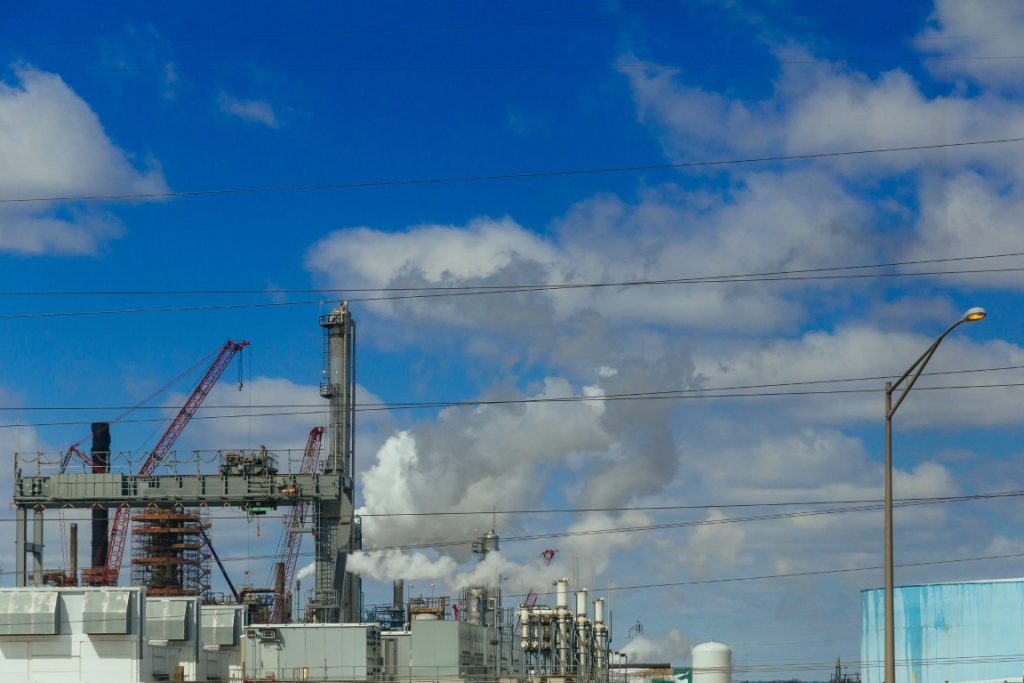
Plastics and resin manufacturing can generate a mixed emissions profile that is more complex than a single odor problem or one vapor stream. Depending on the process step, facilities may release volatile organic compounds (VOCs), solvent vapor, acid gases, odorous compounds, fine particulates, and in some cases combustion-related contaminants from thermal oxidizers, dryers, reactors, mixers, and storage areas. Treating those emissions effectively starts with separating what is being emitted, where it is generated, and whether the main challenge is gas, particles, or both.
For plant teams, the practical question is not whether an exhaust stream “smells strong,” but which pollutants are present, at what concentration, under what temperature and humidity conditions, and how stable the process is over time. Those details determine whether the right solution is adsorption, chemical scrubbing, particulate filtration, or a combined treatment train. In many plastics and resin applications, a well-designed gas-treatment system is used to reduce VOCs and odor compounds before discharge, while keeping pressure drop, maintenance, and media changeout in line with plant operating constraints.
At Bionatur, industrial gas treatment is approached as a process-engineering problem: assess the emission source, identify the pollutant load, and define the treatment objective before selecting the filtration or adsorption stage. That discipline matters in plastics and resin manufacturing because the same site may have very different exhaust characteristics from blending, extrusion, compounding, storage, cleaning, and waste handling.
What emissions plastics and resin plants typically need to treat
Plastic and resin production does not create one uniform exhaust stream. Emissions vary by polymer family, additives, solvents, temperatures, residence time, and housekeeping practices. A single plant may have several different gas-treatment needs at once.
Common emission types include:
- VOCs from monomers, solvents, cleaning agents, and process residuals.
- Odor compounds associated with resin handling, storage, curing, or waste streams.
- Acid gases in specific formulations or upstream/downstream operations, depending on chemistry.
- Fine particulates from polymer dust, fillers, pigments, and transfer points.
- Thermal process contaminants from dryers, ovens, or combustion equipment.
It is important to distinguish between these categories. A dust collector can remove particles, but it will not remove dissolved vapors in air. An adsorbent bed can capture certain vapor-phase compounds, but it will not solve a high dust load by itself. In many resin plants, the best performance comes from using a particulate stage upstream when needed, followed by gas treatment sized for the vapor load.
Another practical distinction is between source control and end-of-pipe treatment. Better enclosure, local exhaust capture, temperature control, and solvent management can reduce the burden on downstream treatment equipment. Still, when the process inherently releases contaminants, exhaust treatment is usually required to protect workers, limit nuisance odor, and reduce pollutant discharge.
Adsorption, absorption, and filtration: which principle does what?
In industrial emissions control, technical terms are often used loosely. For procurement and engineering decisions, the differences matter.
Adsorption means a contaminant is captured on the surface of a solid adsorbent medium such as activated carbon or other engineered sorbents. It is a surface phenomenon. Adsorption is widely used for VOCs, odor compounds, some acid gases, and certain sulfur compounds, depending on the contaminant and adsorbent grade.
Absorption means a contaminant transfers into a liquid or another bulk phase. Wet scrubbers work on this principle. Absorption can be effective for gases that are soluble or chemically reactive in the scrubbing liquid, but it is a different mechanism from adsorption.
Filtration in the strict sense removes particles from a gas stream. It can also refer more broadly to a treatment unit, but technically a gas filter is not the same thing as an adsorber. In plastics and resin plants, engineers often need both particle capture and vapor treatment, either in separate stages or in a combined system.
This distinction matters when evaluating media selection. A solid adsorbent is chosen for its affinity to specific contaminants, its resistance to humidity and temperature, and its behavior over time as the loading increases. A carbon grade or sorbent type that works well for one VOC mix may be less effective for another. The correct choice depends on the actual process gas, not on the industry label alone.
For example, a stream containing solvent vapor behaves differently from one dominated by low-concentration odor compounds or one carrying fine resin dust. If the gas contains both particles and vapors, particulate control should normally be considered before adsorption to prevent rapid fouling of the adsorbent bed.
How to approach emission treatment in plastics and resin manufacturing
The first step is not equipment selection; it is characterization. A reliable proposal needs process data that describes what is being emitted and how the exhaust varies across operating modes.
For a technical assessment, the most useful information usually includes:
- Emission source: reactor vent, mixer, extruder, dryer, storage tank, wastewater area, cleanup station, or building exhaust.
- Pollutants suspected or measured: VOCs, odor compounds, acid gases, hydrogen sulfide if relevant to a specific upstream or waste stream, dust, or mixed contaminants.
- Flow rate and whether it is continuous, intermittent, or batch-based.
- Temperature of the gas and any expected peaks.
- Relative humidity and the presence of condensation risk.
- Concentration range or loading profile over time, including peaks during cleaning or changeover.
- Particulate content and particle behavior, if dust or aerosol is present.
- Corrosive components such as acid gases or reactive vapors.
- Available footprint, pressure-drop limits, and utilities for integration into the plant.
- Operating schedule and maintenance access constraints.
Once this data is available, the treatment concept can be matched to the process. In some cases, a straightforward adsorption unit is sufficient. In others, the correct answer is a staged solution: particulate prefiltration, then gas adsorption, and possibly upstream source capture improvements. For more aggressive or variable emissions, the engineering review may also consider how to manage pressure drop, media exhaustion, changeout access, and bypass prevention.
Humidity deserves particular attention. Many vapors can still be treated in humid gas streams, but moisture can affect adsorption performance and useful service life. Temperature also matters because higher temperatures generally reduce adsorption efficiency and may require a different design approach. That is why it is risky to specify a treatment system based only on industry type or nominal airflow.
In plastics and resin manufacturing, the same line may also feed an odor control system for auxiliary areas such as waste handling, solvent storage, or wastewater-related air streams. Those streams should be assessed separately because the contaminant mix can differ substantially from the main process vent.
Where activated carbon and other adsorbents fit best
Activated carbon is one of the most common adsorbents for industrial gas treatment because of its high internal surface area and broad affinity for many organic vapors and odor compounds. In plastics and resin manufacturing, it is often considered for exhausts containing VOCs or nuisance odor where the gas composition is compatible with adsorption technology.
That said, activated carbon is not a universal answer. Its performance depends on the pollutant, the concentration, the humidity, the temperature, and the presence of competing compounds. Some streams require specialized carbon grades or other adsorbent media. For example, sulfur-bearing compounds, certain solvents, or reactive vapors may behave differently from lighter hydrocarbons or mixed organic odors. In general engineering practice, carbon grade selection should be driven by the pollutant profile rather than by generic product assumptions.
When designing an adsorption system, the team should think about:
- Target compounds and whether the goal is odor reduction, VOC control, or both.
- Mixed loads that may shorten useful adsorbent life.
- Potential for condensable vapors, which can block the bed or change performance.
- Whether a prefilter is needed to protect the adsorbent from dust or aerosols.
- Changeout logistics and spent adsorbent handling.
It is also important to separate gas treatment from wastewater treatment. Activated carbon can be used in industrial water and wastewater applications, but that is a different design context from air emissions control. Do not assume a gas-phase adsorber is appropriate for liquid-phase treatment without a separate engineering review.
Bionatur works on industrial gas filtration and pollutant-specific treatment, including adsorption systems for VOCs, odor compounds, and other gas-phase contaminants. The key is always the same: define the stream first, then select the treatment medium and equipment geometry that fit the actual process conditions.
Why the right system design matters for plant operations
In a production environment, an emissions-control system must do more than capture contaminants. It must fit the plant’s workflow, maintenance capability, and process variability. Poorly matched equipment can create excessive pressure drop, require frequent media replacement, or underperform when temperature and loading change.
For plant managers and maintenance teams, the main operational concerns are usually:
- Stable capture during startup, shutdown, and batch changes.
- Pressure-drop management so exhaust systems continue to function properly.
- Media life that aligns with actual pollutant loading.
- Safe access for service and replacement.
- Spent material handling in line with site procedures and local requirements.
- Monitoring to identify saturation or breakthrough before performance declines.
Monitoring deserves careful interpretation. Odor complaints, visible haze, or a change in exhaust characteristics may indicate a problem, but they are not a substitute for technical monitoring or process data. Likewise, if a system uses a solid adsorbent, operators should rely on the configured monitoring and maintenance plan rather than attempting internal inspection of the media in a live unit.
For facilities handling biogas, wastewater, or waste streams alongside plastics or resin production, the same caution applies: contaminant removal is not the same as methane enrichment. If a biogas stream contains hydrogen sulfide, siloxanes, or other contaminants, removal of those impurities can improve downstream use of the gas, but it should be treated as a separate engineering function from CO2 separation or methane concentration.
That distinction is useful because it prevents mismatched expectations. Gas cleaning can improve quality, protect downstream equipment, and reduce corrosion or odor, but it does not automatically transform one process gas into another. Each objective needs its own design basis.
How Bionatur approaches industrial gas treatment for these emissions
For plastics and resin manufacturing, Bionatur’s role is to help define the treatment strategy around the actual emission source. The company’s industrial gas treatment work includes assessment, engineering, supply, installation, commissioning, maintenance, media replacement, and management of spent materials. That full-service approach is valuable when the exhaust is variable or when the plant prefers one point of accountability from review through operation.
When the project involves VOCs, odor compounds, or mixed gas-phase pollutants, the engineering conversation usually starts with a site-specific assessment. The objective is to decide whether the right path is a single adsorption stage, prefiltration plus adsorption, or another pollutant-specific treatment concept. The answer depends on gas composition, flow, temperature, humidity, and the real duty cycle of the source.
Where a client is considering the BR350, it should be evaluated in exactly that context: as a specific filter option whose suitability depends on the pollutants, flow, loading, and operating conditions of the stream. Without verified process data and documented application fit, no responsible supplier should claim compatibility. That is especially true in plastics and resin plants, where similar-sounding exhausts can behave very differently in service.
For teams preparing a request for proposal, the most efficient next step is a concise technical package: source description, measured or estimated emissions, operating profile, and any integration constraints. A good proposal should explain not just the equipment, but also how it will be maintained, how spent adsorbent will be managed, and what monitoring points are required to keep the system effective over time.
If your plant is evaluating emissions treatment for a plastics or resin process, a structured technical review is the fastest way to narrow the options and avoid oversizing, under-sizing, or specifying the wrong mechanism. Bionatur can support that assessment with a pollutant-specific approach focused on practical plant conditions.
FAQ
Is activated carbon always the right solution for plastics and resin emissions?
No. Activated carbon can be effective for many VOC and odor streams, but the correct choice depends on the pollutant mix, humidity, temperature, flow, and whether particles are present. Some exhausts need prefiltration, a different adsorbent grade, or another treatment principle.
Can one system handle both dust and vapor emissions?
Sometimes, but only if it is designed as a multi-stage solution. Particles are typically removed by filtration, while vapors and odor compounds are treated by adsorption or another gas-phase method. A single stage usually does not do both well.
How do we know if we need adsorption or absorption?
That depends on the chemistry of the exhaust. Adsorption uses a solid adsorbent medium and is common for many VOCs and odor compounds. Absorption uses a liquid and is common in wet scrubbers. The stream composition determines which mechanism is appropriate.
What data is needed to request a proposal?
Provide the emission source, pollutant types, flow rate, temperature, humidity, concentration range, operating schedule, particle loading if any, and available space or pressure-drop limits. The more accurate the process data, the more reliable the design.
Should operators judge H2S by smell?
No. Smell is not a reliable safety method or a performance indicator. Hydrogen sulfide should be treated as a hazardous gas requiring proper process assessment and appropriate monitoring.
If you are planning an emissions-control upgrade, request a technical assessment so the treatment concept can be matched to your actual process conditions.