


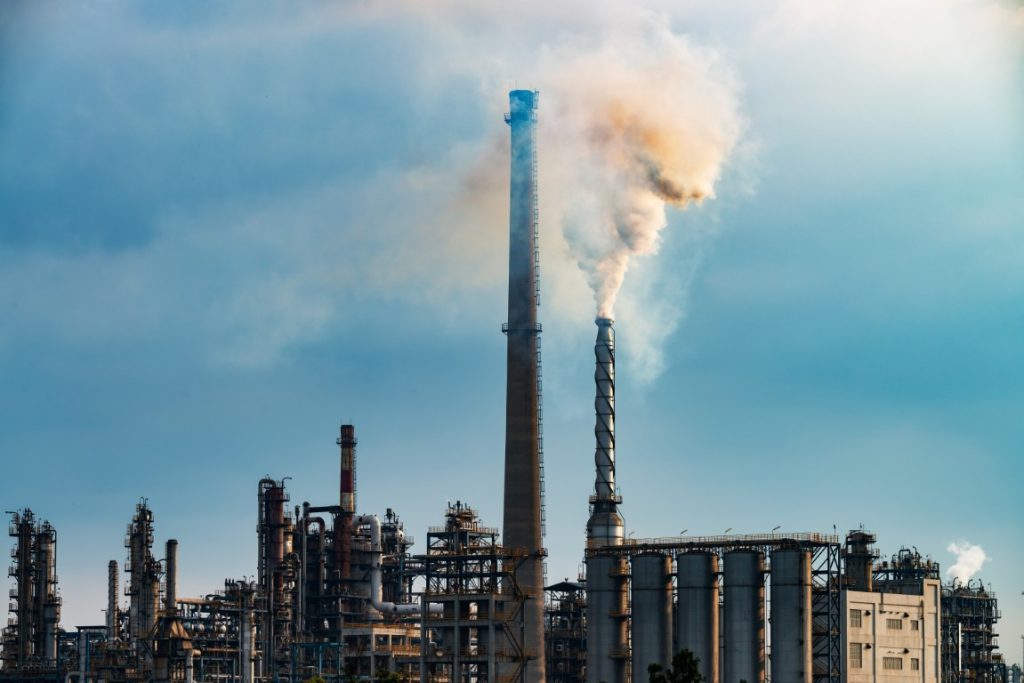
VOC removal from automotive paint line exhaust is usually achieved with engineered gas-treatment systems that capture solvent vapors before they are released to atmosphere. In paint shops and finishing lines, the exhaust stream typically contains volatile organic compounds from primers, basecoats, clearcoats, thinners, cleaners, and purge operations. It may also carry heat, humidity, fine overspray, and in some cases traces of odor-causing compounds or other process contaminants. The right solution depends on the exhaust composition, flow rate, temperature, moisture content, and whether the system is treating a single booth, a curing oven, a flash-off zone, or a combined manifold.
For most plants, the core question is not simply whether VOCs are present, but which vapors are being emitted, at what concentration, and under what operating conditions. That information determines whether adsorption, thermal oxidation, recovery, or a hybrid arrangement is the most practical route. In many automotive paint applications, adsorption with activated carbon or another solid adsorbent is used as part of a broader exhaust-treatment strategy because it can capture vapor-phase organics without relying on combustion. However, adsorption does not remove everything, and it should never be treated as a universal fix for particles, water vapor, or every hazardous pollutant in the stream.
What makes automotive paint exhaust difficult to treat
Automotive coating lines are dynamic. The exhaust characteristics can change between product types, shifts, cleaning cycles, and maintenance events. A spray booth exhaust may be relatively dilute but continuous, while a cleanup event or solvent purge can produce short peaks that stress the treatment system. If the line includes flash-off or oven stages, temperature becomes a critical factor because warm air changes adsorption behavior and can accelerate solvent loading.
Another challenge is that paint line exhaust rarely contains only VOCs. It can include:
- Solvent vapors from coating formulations and cleaning operations.
- Paint mist or overspray particles, which are not gases and must be controlled upstream with filtration or separation.
- Heat and humidity, which influence adsorption performance and equipment selection.
- Odor-causing compounds associated with solvent use or coating chemistry.
These components matter because gas-treatment systems are not interchangeable with particle filters. A particulate filter can protect ducting and downstream equipment, but it does not remove dissolved vapors from the airstream. Likewise, a vapor adsorber can capture VOCs but will not solve overspray loading or wet paint carryover. Correct system design begins with separation of these functions.
How VOC adsorption works in paint line exhaust
Adsorption is a surface phenomenon. VOC molecules in the exhaust attach to the surface of a solid adsorbent, commonly activated carbon, where they are retained until the medium reaches its loading limit or is replaced. This is different from absorption, where a contaminant enters and is taken into the bulk of another material, often a liquid. In industrial exhaust treatment, the distinction matters because adsorber design, pressure drop, regeneration strategy, and media selection all depend on the actual removal mechanism.
For automotive paint exhaust, adsorption is attractive when the target pollutants are predominantly vapor-phase organics and when the plant wants to avoid the high fuel demand of thermal systems for suitable duty ranges. It is especially relevant where the exhaust stream has recurring but not extreme solvent loading, or where the plant needs a modular treatment approach that can be integrated with existing ductwork and fan systems.
That said, adsorption works best when the incoming air is conditioned properly. Excess moisture, high temperatures, or unexpected aerosols can reduce effective capacity. Overspray particles can block flow paths and shorten service life if they are allowed to reach the adsorbent bed. For that reason, a typical solution may combine prefiltration, mist control, and vapor adsorption rather than relying on one stage alone.
In practical engineering terms, the system designer must understand:
- Which solvents or VOC families are present.
- Whether the stream is continuous or batch-operated.
- The average and peak exhaust flow.
- Temperature and relative humidity at the treatment point.
- Whether particulate loading is significant.
- Space constraints, maintenance access, and bypass requirements.
Choosing the right treatment approach for a paint line
No single technology is automatically correct for every paint line exhaust stream. The best option depends on pollutant type, concentration, and plant operating profile. A good selection process usually starts with source characterization and then matches the treatment method to the duty cycle and compliance objective.
Common options and where they fit
- Activated-carbon adsorption for vapor-phase VOC capture where the exhaust is suitable for adsorption and where prefiltration protects the bed.
- Thermal oxidation where exhaust concentrations, temperature conditions, or process integration make oxidation more practical.
- Hybrid systems that combine stages, such as particulate removal plus adsorption, or adsorption plus downstream polishing.
- Recovery-oriented designs in applications where solvent recovery is technically and economically justified.
Selection should be based on process data, not assumptions. Plants often ask for a “VOC filter,” but the real requirement may be broader: remove solvent vapors, protect downstream equipment, control odor, or reduce emissions from a mixed exhaust stream. Each objective can lead to a different design.
For some facilities, the priority is steady removal from booth exhaust. For others, the challenge is batch release from cleaning or color-change operations. A system sized for average load may struggle during peaks; a system sized only for peaks may be inefficient at normal conditions. This is where engineering judgment matters.
Bionatur, based in Barcelona, works with industrial gas filtration and pollutant-specific treatment, including VOC control as part of wider gas-treatment projects. For plants evaluating options, the key is not to ask for a generic catalog answer, but to define the duty accurately so the proposed system reflects the actual exhaust chemistry and operating profile.
What data is needed for a proposal and why it matters
A credible proposal for VOC removal from automotive paint line exhaust requires process information that reflects real operating conditions. The more complete the data, the more reliable the design. This is where many projects are won or lost: not in the equipment name, but in the quality of the input data.
Practical checklist for proposal preparation:
- Source description: spray booth, flash-off zone, curing oven, cleaning station, or combined exhaust manifold.
- Pollutant profile: solvent names or families, estimated VOC load, presence of odor-causing compounds, and any non-VOC contaminants.
- Flow data: average flow, peak flow, operating hours, and whether the system runs continuously or intermittently.
- Gas conditions: temperature, humidity, and any expected condensation risk.
- Particle load: overspray, dust, or mist that could affect adsorbent performance.
- Layout constraints: available space, duct routing, fan position, access for maintenance, and noise or pressure-drop limitations.
- Operating profile: production schedule, color changes, solvent cleaning cycles, and planned shutdown windows.
- Objective: emissions reduction, odor control, equipment protection, or a combination of goals.
This information allows the supplier to determine whether a single adsorber is enough, whether prefiltration is required, whether a multi-stage system is more suitable, and how often the adsorbent medium is likely to need replacement. It also helps avoid under-sizing, which can lead to excessive pressure drop, short service life, or inadequate capture during load peaks.
When a plant asks for a proposal without this information, the result is usually a generic concept rather than an engineered solution. That may be acceptable for an early budget exercise, but not for final equipment selection or installation planning.
Operating conditions that affect performance and maintenance
VOC removal systems in paint shops are highly sensitive to conditions that are often treated as secondary during early planning. Temperature is one of the most important. Hot exhaust can reduce adsorption efficiency or require cooling before treatment, depending on the system design. Humidity can also influence performance because water vapor competes for capacity in some adsorbent applications and can change how the stream behaves through the bed.
Particle management is equally important. Overspray and condensed paint aerosols are not the same as VOCs. If they enter the adsorber, they can clog flow paths, create uneven loading, and shorten service life. That is why upstream filtration is often part of a robust arrangement. The aim is to protect the adsorbent medium so it can focus on vapor-phase contaminants.
Maintenance planning should be based on operating data, not guesswork. Plants should monitor pressure drop, exhaust conditions, and any indicators specified by the system supplier. They should also plan for media changeout and spent-material handling as part of the operating budget and environmental management process. Good practice avoids opening or disturbing the internal adsorbent bed unless the equipment is designed for that purpose and the correct safety procedures are in place.
Some facilities also need to consider corrosion or compatibility issues in ductwork and housings if their process exhaust includes solvent mixtures, acidic compounds, or unusual cleaning agents. While the main target here is VOC removal, the broader exhaust chemistry can influence material selection and the overall lifecycle of the installation.
When to consider BR350 and how to evaluate fit
BR350 is a priority filter in the Bionatur range, but suitability still depends on the actual process conditions. It should not be selected on name alone. The right question is whether the exhaust composition, temperature, humidity, flow, and loading profile match the design intent of the unit under consideration.
For automotive paint line exhaust, that means first confirming what the system must remove and under what duty. A filter or adsorber may be appropriate for vapor-phase organics if the stream is well characterized and properly conditioned. It may also form part of a multi-stage solution with prefiltration and other gas-treatment steps. But no supplier should claim fit without seeing the real process data.
When evaluating a unit such as BR350, plant teams should ask for a process-based assessment that addresses:
- Target VOCs and any secondary contaminants.
- Gas flow profile, including peaks.
- Temperature and humidity range at the treatment point.
- Particle carryover and prefiltration needs.
- Space, access, and maintenance constraints.
- Expected media replacement strategy and spent-material handling.
This is where an experienced supplier adds value. Bionatur’s industrial gas treatment work includes assessment, engineering, supply, installation, commissioning, maintenance, media replacement, and management of spent materials, which is useful when a plant wants one accountable scope across the full lifecycle. The most effective projects are those in which the supplier is involved early enough to shape the process data request and avoid design assumptions that later become costly.
For broader context on gas-treatment system categories and engineering approach, see Bionatur’s industrial gas treatment overview.
Practical implementation points for plant teams
Once a direction has been chosen, implementation should focus on reliability and operability. Exhaust treatment equipment in paint environments is only effective if it fits the plant’s work pattern and maintenance culture. A technically sound unit that is hard to service or poorly integrated into the duct network can become a recurring source of downtime.
Before purchase, teams should confirm:
- Integration with existing fans and ducts so airflow remains stable.
- Isolation and bypass strategy for safe maintenance or contingency operation.
- Access for inspection and media replacement without disrupting production more than necessary.
- Monitoring points for pressure drop or other supplier-recommended indicators.
- Environmental handling for spent adsorbent and captured contaminants.
It is also wise to align the treatment concept with production planning. If the paint line has major seasonal shifts, model changes, or solvent use changes, the exhaust treatment system should be reviewed accordingly. A line that is stable today may not remain so after a process upgrade.
In larger manufacturing complexes, paint line exhaust may share design priorities with other gas-treatment duties such as chemical processing, plastics production, or petrochemical vent control. The technical principles are similar: know the pollutant, understand the gas conditions, and choose a treatment method that matches the duty instead of forcing a one-size-fits-all answer.
FAQ
Is activated carbon always the right answer for automotive paint VOCs?
No. Activated carbon and other adsorbent media are useful for many vapor-phase VOC duties, but the right choice depends on solvent type, concentration, temperature, humidity, and whether particles are present. Some paint line exhaust streams are better suited to thermal or hybrid systems.
Does a VOC adsorber also remove overspray?
No. Overspray is a particulate or aerosol problem, not a vapor problem. It should be controlled with suitable prefiltration or separation before the gas stream reaches the adsorbent bed.
What information is needed to size a system correctly?
At minimum: source type, target VOCs, average and peak flow, temperature, humidity, operating hours, particle loading, and space or access constraints. Without those details, any proposal is likely to be generic.
How do I know when media replacement is needed?
Replacement planning should follow the supplier’s design basis and site monitoring data, such as pressure drop trends and performance indicators. Do not rely on odor alone as a performance check.
Can Bionatur recommend a unit based on the plant description alone?
Only as a preliminary step. A proper recommendation requires process data and a technical assessment so the proposed system reflects the actual exhaust composition and operating conditions.
If you are planning VOC removal from automotive paint line exhaust, the best next step is a technical assessment based on real process data. A well-defined duty makes the difference between a generic concept and a workable industrial solution.