


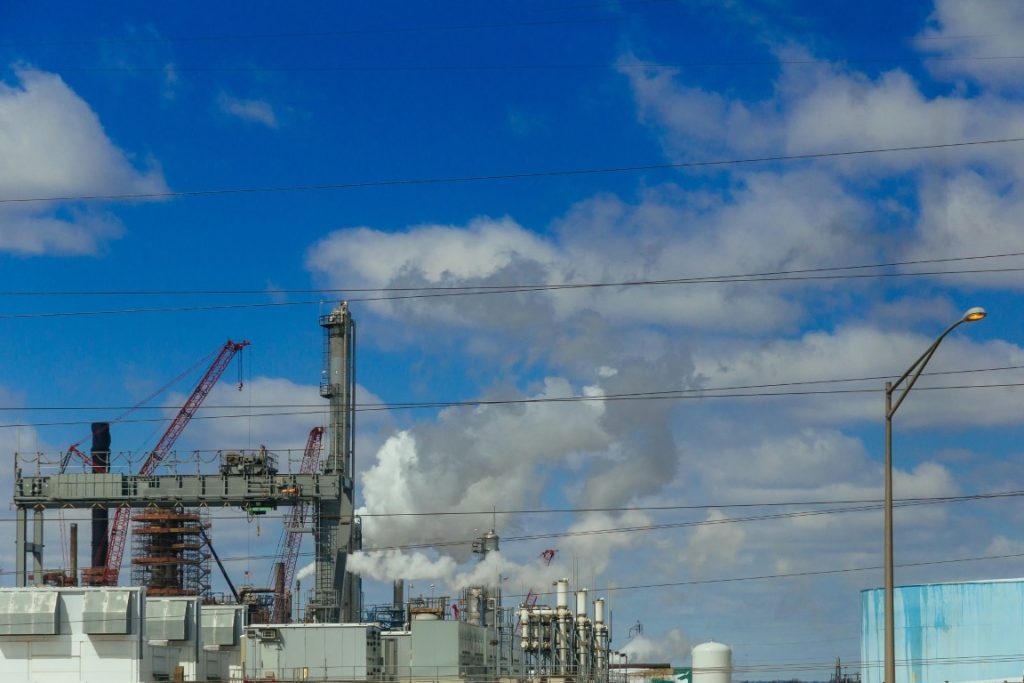
Spent adsorbents are the used solid materials removed from industrial gas treatment units after they have captured contaminants such as VOCs, hydrogen sulfide, sulfur dioxide, acid gases, odors, or trace organics. Managing them correctly is not just a disposal task. It affects plant safety, maintenance planning, environmental compliance, operating cost, and the reliability of the treatment system itself.
For manufacturers and other industrial operators, the main question is practical: what should happen when the adsorbent reaches the end of its useful life? The answer depends on the contaminants captured, the process gas conditions, the adsorbent chemistry, and local waste rules. In many cases, spent adsorbents need to be treated as controlled industrial waste, and sometimes as hazardous waste, because they may contain concentrated pollutants or react with air, moisture, or heat.
This article explains how spent adsorbents are generated, how to assess them, and how to manage removal, storage, transport, and replacement in a technically sound way. It also covers the process data needed to design a better solution for future operation. For plants that need broader help with gas purification systems, industrial gas treatment solutions should always be matched to the actual pollutant profile and operating conditions, not only to the nominal flow rate.
What spent adsorbents are, and why their management matters
Adsorption is a surface phenomenon. Pollutant molecules in the gas phase attach to the surface of a porous solid adsorbent such as activated carbon, impregnated carbon, alumina-based media, or other specialty materials. This is different from absorption, where a contaminant dissolves into a liquid or is taken into the bulk of another phase. In industrial gas treatment, the distinction matters because the used adsorbent does not simply “contain dirt”; it may hold concentrated chemicals on a large internal surface area.
Spent adsorbents can come from a wide range of sources:
- VOC control in chemical, paint, plastics, and pharmaceutical production
- Odor and H2S treatment in biogas, wastewater, waste, and energy facilities
- Acid gas removal such as sulfur dioxide, HCl, or HF in process exhausts
- Specialty treatment for trace compounds, including certain mercury or organic pollutants, when designed for that duty
Once the adsorbent is loaded, it may no longer perform effectively. The pressure drop may rise, outlet concentrations may increase, or the media may approach saturation. But the used material is also a waste stream with its own handling requirements. Some spent adsorbents can self-heat if exposed to air after loading with high levels of organic vapor or reactive compounds. Others may release captured pollutants during poor storage or transport. Good management therefore protects personnel and helps prevent secondary emissions.
How to know when an adsorbent is spent
There is no universal replacement interval. Life depends on contaminant concentration, flow, humidity, temperature, chemical composition, and the type of adsorbent. A unit treating dry VOC-laden exhaust may perform very differently from one treating warm, wet biogas with H2S and siloxanes. The decision should be based on operating data, not guesswork.
Typical indicators include:
- Breakthrough at the outlet: rising concentrations of the target pollutant downstream of the bed
- Higher pressure drop: not always caused by saturation alone, but often a sign that fouling, condensation, or particulate loading is affecting performance
- Process upsets: changes in flow, humidity, temperature, solvent loading, or pollutant composition that accelerate exhaustion
- Reduced bed efficiency: when the system no longer maintains the expected outlet quality under normal conditions
For gases with hydrogen sulfide or other reactive contaminants, site teams should rely on proper instrumentation and maintenance records, not odor as a detector. Odor is not a reliable safety or performance indicator, especially because human perception varies and some gases can be hazardous at low levels.
Monitoring should be designed around the actual application. For example, a VOC bed may need different data than a H2S treatment stage in a biogas plant. In some cases, a prefilter or dust control stage is also important because particles can foul the adsorbent bed and reduce usable life even when the gas chemistry is stable.
Assessing the used material before removal and disposal
Before any adsorbent is removed, the team should know what it captured. That assessment determines whether the media can be managed as ordinary industrial waste, whether it needs special containment, and whether additional precautions are necessary during handling and transport.
A practical assessment normally considers:
- Pollutant identity: VOCs, H2S, sulfur dioxide, acid gases, or other captured species
- Process gas conditions: flow, temperature, humidity, oxygen content, and presence of condensable vapor
- Adsorbent type: standard activated carbon, impregnated grades, sulfur-impregnated materials, alumina-based media, or another specialty adsorbent
- Potential hazards: flammability, corrosion, self-heating risk, toxic release, or incompatibility with moisture and air
- Physical condition: dusting, channeling, compaction, contamination by liquid carryover, or ingress of particles
This is also where plant teams should distinguish between a gas treatment duty and a water treatment duty. Activated carbon used in industrial water or wastewater service can behave differently from carbon used in gas-phase treatment, and the spent waste characteristics are not interchangeable. The disposal route should be chosen on the basis of the actual service history, not on generic assumptions about “carbon waste.”
Where local rules require it, analytical testing may be needed to classify the waste. The exact test set depends on the captured contaminants and the relevant regulatory framework. It is better to plan for this early than to discover at removal time that no disposal route has been confirmed.
Safe removal, storage, and transport practices
Once the adsorbent is no longer fit for service, handling becomes the next risk point. Removal should be planned as a controlled maintenance operation, with isolation of the treatment unit, appropriate ventilation, and procedures that protect workers from dust, residual vapors, and hot spots. The exact steps depend on equipment design, but the general objective is the same: prevent unintended release of the adsorbed pollutants.
Good practice usually includes:
- Isolate and secure the system before opening any part of the unit
- Depressurize and purge the equipment according to site procedure and the gas hazard profile
- Use suitable PPE based on the captured contaminants and the material handling task
- Control dust and fines during unloading and transfer
- Keep spent material in compatible containers that are closed, labeled, and protected from weather
- Avoid mixing wastes unless the disposal route explicitly allows it
Spent adsorbents that have loaded organic vapor may require special attention because exposure to air can change their condition. Materials that have treated acid gases or H2S may also present corrosion or release concerns if stored badly or exposed to moisture. In all cases, storage should be temporary and organized, not improvised.
Transport should follow the waste classification already established for the site. Shipping documents, labeling, and chain-of-custody records should clearly identify the origin, treatment duty, and known hazards of the spent adsorbent. This reduces the chance of rejection at the disposal facility and helps demonstrate responsible waste management.
Disposal, recovery, and regeneration options
There is no single best endpoint for all spent adsorbents. The right option depends on the contaminant captured, the adsorbent formulation, contamination level, and what local operators are authorized to accept. In practice, the main routes are disposal, energy recovery, and regeneration, where technically and legally permitted.
Disposal
For many industrial gas treatment systems, the simplest route is controlled disposal through an approved waste handler. This is often the case when the media is heavily loaded, contaminated with mixtures of pollutants, or too altered for cost-effective recovery. Disposal does not mean the material is harmless; it means the waste has been characterized and directed to an approved destination.
Regeneration
Some adsorbents can be regenerated off-site or in specialized facilities, but this is not universal. Regeneration depends on the adsorbent type and the contaminants present. A material loaded with certain organics may be recoverable, while one exposed to reactive acids, tars, or mixed industrial contaminants may not be suitable. Even when regeneration is technically possible, the logistics and quality requirements must be evaluated carefully.
Recovery and replacement strategy
In some cases, the most valuable step is not to recover the used media but to improve the replacement strategy. If a system repeatedly exhausts too quickly, the cause may be upstream dust, condensation, incorrect media selection, excessive humidity, or an undersized bed. In that case, changing the adsorbent without fixing the process conditions only repeats the waste problem.
For plants using a modular system such as BR350, the same principle applies: suitability must be verified against the real process data. The existence of a gas-treatment unit does not remove the need to check pollutant profile, flow, loading, temperature, humidity, and operating stability before proposing a media strategy or replacement plan. No supplier should assume compatibility without those inputs.
How to reduce spent adsorbent volume and improve operating life
Managing spent adsorbents well is not only about end-of-life handling. The most effective plants reduce waste at the source by improving the treatment design and operating discipline. That usually means selecting the right adsorbent chemistry, preventing avoidable contaminants from reaching the bed, and keeping the process within its intended range.
Common improvement levers include:
- Pre-treatment of the gas to remove liquid droplets or particles before the adsorbent bed
- Correct media selection for the target contaminant, rather than using a generic carbon for everything
- Humidity control where water vapor competes with the target pollutant or affects performance
- Temperature control to avoid premature breakthrough or damage to the adsorbent
- Better instrumentation to detect early breakthrough and avoid overrun
- Bed design review to reduce channeling, bypass, and uneven loading
For biogas systems, it is also important to separate contaminant removal from methane enrichment. Removing H2S, siloxanes, or other trace compounds improves gas quality and protects engines, burners, or downstream equipment, but it is not the same as CO2 separation. Likewise, treating VOCs or acid gases in industrial exhaust is not equivalent to upgrading biogas to biomethane. Each duty has its own process constraints and media requirements.
Where odor control is the main driver, operators still need to define the underlying compounds. “Odor” is a symptom, not a contaminant class. The media that works for one odor-causing stream may perform poorly in another if the chemistry is different. This is why a technical assessment is more useful than a generic product request.
Bionatur, based in Barcelona, supports industrial gas filtration and adsorption projects with assessment, engineering, supply, installation, commissioning, maintenance, media replacement, and management of spent materials. That integrated approach is especially useful when a site wants to solve both the treatment problem and the waste-handling problem in one technical plan.
What to prepare for a proposal or technical assessment
If you are requesting a proposal for gas treatment or for replacement of exhausted adsorbent, the quality of the process data matters. The more accurate the input data, the more reliable the design and waste plan will be. A clear request also avoids oversizing, undersizing, or choosing the wrong adsorbent grade.
Use this practical checklist:
- Gas source and process description
- Target contaminants and any known interfering compounds
- Normal and peak flow rate
- Temperature and humidity range
- Pressure conditions and available space for equipment
- Presence of liquid droplets, dust, mist, or condensate
- Expected operating hours and duty cycle
- Outlet target or required treatment objective
- Current media type, if known, and history of breakthrough or maintenance issues
- Waste handling constraints, if spent adsorbent management is part of the scope
For industrial buyers, this checklist is also a procurement tool. It helps compare proposals on technical merit instead of only on the equipment name or the nominal capacity. A sound proposal should explain not just the treatment unit, but also how spent adsorbent will be removed, stored, and replaced.
When the site involves VOCs, H2S, sulfur dioxide, acid gases, or other pollutant-specific duties, a supplier should ask enough questions to define the waste stream properly. That is especially important in chemical, automotive, ceramic, metallurgical, pharmaceutical, paint, plastics, petrochemical, biogas, wastewater, waste, and energy applications, where process variability can be significant.
FAQ
Can spent adsorbents be disposed of as ordinary waste?
Sometimes, but only after the waste has been characterized. If the adsorbent contains captured VOCs, H2S, acid gases, or other regulated contaminants, it may need special handling and disposal through an approved route.
Is activated carbon always the right solution for gas treatment?
No. Activated carbon is useful for many gas-phase pollutants, but it is not universal. The correct media depends on the contaminant, gas temperature, humidity, flow, and any interfering compounds. Some duties require impregnated or specialty adsorbents.
How do I know when a bed needs replacement?
Use measured process data, not odor. Outlet monitoring, pressure drop trends, and operating history are the main indicators. Replacement timing should be based on actual performance and maintenance records.
Can the same adsorbent strategy be used for biogas and VOC treatment?
No. Biogas contaminant removal and VOC control are different duties. Biogas treatment may focus on H2S, siloxanes, and other trace compounds, while VOC systems treat solvent vapors or other organics in exhaust gas.
What is the first step if we need to replace spent adsorbent?
Confirm the contaminant profile, gas conditions, and waste handling route before scheduling removal. That information determines the safest handling method and the right replacement strategy.
If you need help assessing a spent adsorbent stream or planning a new gas treatment duty, request a technical assessment so the solution can be matched to your process conditions and waste requirements.