


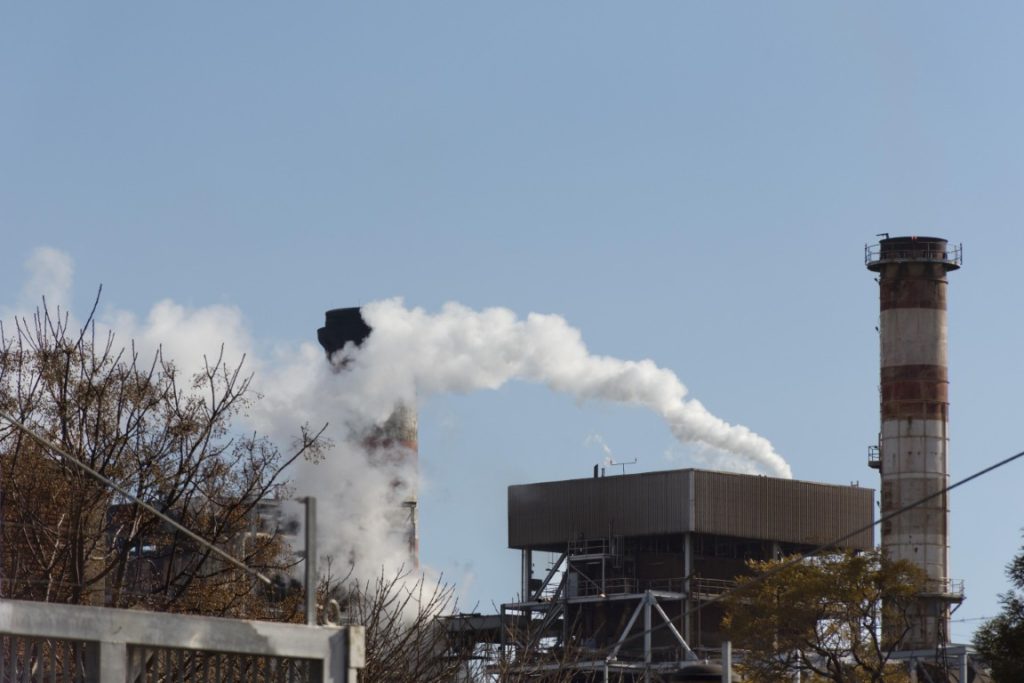
Gas treatment for petrochemical plant emissions is the engineering response to a simple problem with many process sources: unwanted vapors, odorous compounds, acid gases, and other contaminant-laden streams leave tanks, vents, reactors, loading areas, wastewater systems, and thermal processes, then need to be controlled before discharge. The right solution is not a single filter for every stream. It depends on what is in the gas, how much is present, how hot and humid the stream is, whether particles are also present, and whether the treatment goal is odor control, emissions reduction, or protection of downstream equipment.
In petrochemical service, gas treatment is usually based on separating pollutants from the gas stream, not changing the whole process gas into something else. That distinction matters. Adsorption is the capture of molecules on the surface of a solid adsorbent. Absorption is a different mechanism in which a gas dissolves into a liquid. For many industrial off-gas applications, especially where the objective is to remove VOCs, hydrogen sulfide, mercaptans, acid gases, or other trace contaminants from ventilation or process vents, adsorption is often one of the practical options to evaluate.
This article explains how gas treatment is selected for petrochemical plant emissions, what process data are needed before a proposal can be prepared, and where activated-carbon systems and other pollutant-specific technologies fit into the picture.
What petrochemical emissions usually contain
Petrochemical facilities rarely discharge a single pollutant. They handle streams that can vary by unit operation, season, throughput, and maintenance condition. Common emission categories include:
- VOCs from storage, transfer, mixing, purification, solvent use, and fugitive losses.
- Hydrogen sulfide and other reduced sulfur compounds from sour streams, wastewater handling, and upstream processing.
- Acid gases such as sulfur dioxide, hydrogen chloride, and hydrogen fluoride in specific process contexts.
- Odor-causing compounds from wastewater treatment, sludge handling, and by-product management.
- Process vapor that may carry condensable organics or corrosive components.
- Particles or aerosols that can foul a gas-treatment stage if they are not removed first.
For engineers, it is important to separate the pollutant categories before deciding on a treatment train. A system designed for VOC adsorption may not be appropriate for a hot, corrosive acid-gas stream, while a dust-laden exhaust may need prefiltration to protect downstream equipment. In some petrochemical areas, gas treatment also overlaps with environmental control for neighboring industries such as chemical plants, paint lines, plastics production, metallurgical operations, ceramic kilns, and pharmaceutical facilities.
Another frequent point of confusion is biogas-related service. In wastewater, waste, and energy operations, contaminant removal from biogas is not the same as methane enrichment. Removing hydrogen sulfide, siloxanes, or VOCs improves gas quality and protects engines, boilers, and upgrading equipment, but it is a different objective from carbon dioxide separation. Treating contaminants does not by itself mean that methane concentration has been increased.
Choosing the right treatment route for a petrochemical off-gas
The first step is to match the treatment principle to the stream. Petrochemical plants often need a combination of methods rather than a single device.
Adsorption
Adsorption is widely used where contaminants are present at low to moderate concentrations and where the gas conditions are compatible with the chosen adsorbent medium. Activated carbon is a common example. It provides a large internal surface area that can retain many organic molecules and certain inorganic compounds depending on the carbon grade and impregnation. The selection is not generic: different grades are used for different targets, and suitability depends on the contaminant profile, flow rate, temperature, humidity, and loading pattern.
Adsorption is generally attractive for:
- VOC control from vents, tanks, and solvent handling areas.
- Odor control where reduced sulfur compounds or mixed organics are present.
- Polishing stages after another treatment step.
- Streams where compact equipment and predictable operation are important.
However, activated carbon is not a universal solution. High humidity can reduce performance for some compounds. Hot gas can require cooling or another preconditioning step. Certain pollutants, especially at high concentration or with reactive chemistry, may require specialized media or a different process route. Where hydrogen sulfide is present, the choice of adsorbent grade and upstream moisture control become important technical decisions.
Absorption and wet scrubbing
Absorption uses a liquid to transfer contaminants out of the gas. It is often used for acid gases or water-soluble compounds, especially when the gas stream is hot, corrosive, or concentrated enough to justify a liquid process. Wet systems can be useful in petrochemical plants, but they create their own operating duties: liquid handling, corrosion management, pH control, blowdown treatment, and possible wastewater generation.
Absorption is not interchangeable with adsorption. A project team that asks for “carbon filters” but has an acid-gas stream may find that a liquid scrubbing stage is the more appropriate front end, with adsorption used later for polishing or odor control.
Prefiltration and conditioning
Before any gas-treatment stage, particles, mist, condensate, and temperature often need attention. If aerosol, liquid droplets, or dust reach an adsorbent bed, they can block pores, increase pressure drop, shorten service life, or create uneven flow. In many industrial systems, a well-designed front end is as important as the adsorption stage itself.
Conditioning may include:
- Coalescing or particle filtration for aerosols and mists.
- Cooling where the stream is too hot for the selected treatment media.
- Flow equalization to avoid spikes that overload the system.
- Corrosion review for ducting, housings, and ancillary components.
This is one reason a proposal cannot be prepared from odor complaints alone. The operating envelope matters as much as the pollutant name.
What data are needed before a proposal can be defined
A useful gas-treatment proposal starts with process data, not with product guesswork. For petrochemical emissions, the minimum information set should describe the stream, the contaminant burden, and the operating pattern. If the stream is intermittent or variable, that variability has to be included.
Practical checklist for assessment:
- Source type: vent, tank breathing, reactor off-gas, loading bay, wastewater area, flare-related handling, or other point source.
- Target pollutants: VOCs, hydrogen sulfide, sulfur compounds, acid gases, odorants, siloxanes, or mixed contaminants.
- Concentration range: average and peak levels, including start-up, shutdown, and upset conditions if known.
- Flow rate: normal, minimum, maximum, and whether the stream is continuous or batch-based.
- Temperature and humidity: especially important for adsorption and condensation risk.
- Presence of particles, mist, or liquid carryover: these can change the required pretreatment.
- Corrosivity: for housing materials, seals, ducting, and maintenance planning.
- Space and integration constraints: available footprint, tie-in points, bypass needs, and shutdown windows.
- Operating objectives: odor reduction, worker exposure reduction, emission control, equipment protection, or multiple goals.
- Waste and media handling expectations: spent adsorbent management, regeneration possibility, or disposal route.
That information lets the supplier define a treatment train and size the engineering scope realistically. It also prevents one of the most common mistakes: assuming that a filter designed for one stream will behave the same way in a different plant area with different temperature, moisture, and loading conditions.
For organizations evaluating suppliers, Bionatur in Barcelona works in industrial gas filtration and pollutant-specific treatment, including VOCs, H2S, sulfur dioxide, hydrogen chloride, hydrogen fluoride, dioxins, furans, and heavy metals. Its service scope includes assessment, engineering, supply, installation, commissioning, maintenance, media replacement, and management of spent materials. That kind of integrated support is useful when the plant needs both a technical design and a defined maintenance plan.
Where activated-carbon systems fit, including BR350
Activated-carbon treatment is often considered when the target is adsorption of VOCs, odor-causing compounds, or selected inorganic contaminants under the right operating conditions. The carbon itself is not the complete answer. The success of the installation depends on matching the adsorbent medium to the pollutant and on keeping the gas within the range for which the system was designed.
Key technical considerations include:
- Contaminant chemistry: some compounds adsorb more readily than others.
- Humidity: water vapor can compete with target molecules in certain applications.
- Temperature: higher temperatures usually reduce adsorption capacity.
- Loading profile: sudden spikes can accelerate breakthrough.
- Preconditioning quality: particle and mist removal protect the bed.
- Media selection: different carbon grades or impregnations are used for different gases.
BR350 is Bionatur’s priority filter model, but it should be selected only where the actual stream data confirm suitability. No responsible proposal should assume compatibility simply because the stream is industrial or odorous. As with any adsorbent-based unit, the decisive factors are pollutant type, flow, temperature, humidity, concentration, and the presence of liquids or particulates. Without verified manufacturer data for a given application, BR350 should be treated as a candidate to evaluate, not as a pre-approved answer.
This distinction matters commercially and technically. A plant manager may know the site has odor complaints, but the equipment choice still requires process evidence. A maintenance team may know the existing unit is fouling quickly, but it still needs the cause identified before a new adsorbent system is specified. A procurement team may need a proposal quickly, but the proposal should be based on stream characteristics rather than on a generic catalog assumption.
For broader industrial gas-treatment needs, Bionatur’s industrial gas treatment solutions cover pollutant-specific applications where adsorption and related technologies are selected to match the process data, not the other way around.
Operation, maintenance, and spent-material handling
In petrochemical service, the value of a gas-treatment system is not only in its initial performance but also in its stability over time. Maintenance teams need a system that can be monitored without unnecessary risk and serviced in a planned way.
Good operating practice usually includes external monitoring of pressure drop, flow behavior, and process conditions. That information helps indicate when loading is increasing or when a prefilter may be fouling. It is generally not appropriate to open or inspect the internal adsorbent bed during normal operation. Instead, service decisions should be based on the instrument data, process history, and the supplier’s maintenance procedure.
Spent adsorbent must also be treated as a managed material, not an afterthought. Depending on the contaminants captured, it may require controlled handling, sealed removal, documentation, and a defined disposal or recovery route. This is particularly important where the media has adsorbed VOCs, reduced sulfur compounds, or other hazardous substances.
In projects where Bionatur is involved, its integral service approach can include maintenance planning and management of spent materials. That support is especially valuable for plants that want one accountable process from assessment through replacement rather than multiple disconnected contractors.
Common mistakes in petrochemical gas-treatment projects
Several avoidable errors appear repeatedly in emission-control projects. Recognizing them early can save time, cost, and operational disruption.
- Choosing by odor alone: smell is not a reliable safety or performance indicator, especially for hydrogen sulfide.
- Ignoring peak conditions: a system sized for average flow may fail under start-up or batch peaks.
- Skipping pretreatment: dust, mist, and condensate can severely reduce adsorbent life.
- Mixing different objectives: contaminant removal, methane enrichment, and emissions compliance are not the same task.
- Assuming one media fits all gases: carbon grades and other adsorbents are selected by chemistry and operating conditions.
- Underestimating maintenance: media replacement, access planning, and spent-material handling are part of the system, not extras.
These errors are common because gas treatment is often initiated after a complaint, a failure, or a permitting review. The better approach is to define the stream first, then engineer the control system to match it.
FAQ
Is activated carbon always the best option for petrochemical emissions?
No. Activated carbon is useful for many VOC and odor control applications, but not for every gas stream. Hot, wet, corrosive, particulate-laden, or high-concentration streams may need pretreatment, a different treatment principle, or a combination of technologies.
Can one system handle VOCs, hydrogen sulfide, and acid gases together?
Sometimes a combined treatment train can be designed, but the pollutants must be reviewed individually. Different gases behave differently in adsorption and absorption, and the most effective solution may be a staged process rather than a single unit.
Does contaminant removal from biogas mean methane enrichment?
No. Removing hydrogen sulfide, siloxanes, or VOCs improves gas quality and protects equipment, but methane enrichment refers to increasing the methane concentration by separating carbon dioxide. Those are different objectives and may use different technologies.
What information should I prepare before asking for a proposal?
Provide the source type, pollutants, concentration range, flow rate, temperature, humidity, presence of particles or mist, corrosivity, operating schedule, and the treatment objective. The more complete the process data, the more accurate the proposal will be.
If you are evaluating gas treatment for petrochemical plant emissions, the most efficient next step is a technical assessment based on your actual process data. That is the best way to determine whether adsorption, absorption, pretreatment, or a combined solution is the right fit.