


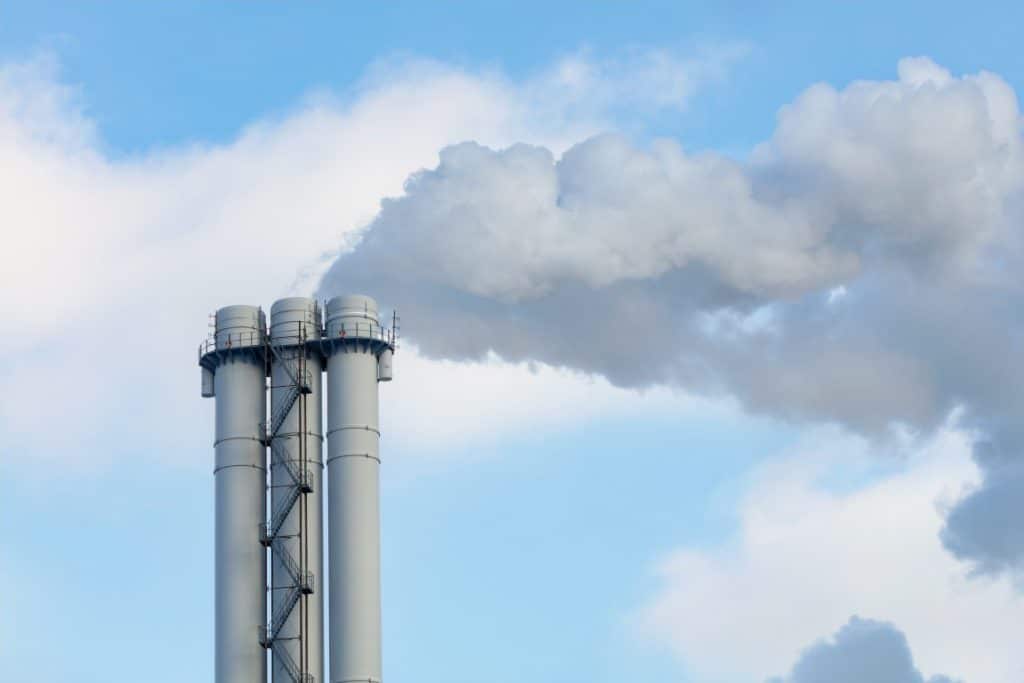
Ceramic manufacturing in Valencia can generate complex off-gases that are not solved by a single filter type. Kilns, dryers, spray towers, glaze lines, raw material handling and wastewater-related operations can release particulate matter, acidic gases, volatile organic compounds (VOCs), and odor-causing compounds. For plant teams responsible for emissions control, the key question is not simply whether gas filtration is needed, but which pollutant set must be treated, under what process conditions, and with what maintenance strategy.
Gas filtration for ceramic manufacturers in Valencia is therefore a process-specific engineering task. The right solution depends on the actual gas stream: temperature, humidity, flow rate, dust loading, chemical composition, fluctuations during firing or cleaning cycles, and whether the objective is pollutant abatement, odor control, corrosion reduction, or pre-treatment before another stage. In many cases, the most effective design combines particulate removal with adsorption or pollutant-specific treatment for gases that cannot be captured by dust filtration alone.
Bionatur Air Filters develops industrial gas treatment systems for applications where the gas stream contains VOCs, hydrogen sulfide, sulfur dioxide, hydrochloric acid, hydrofluoric acid, dioxins, furans, or heavy metals. For ceramic operations, that experience is relevant because the off-gas profile can vary sharply between kiln exhaust, raw material storage, glaze preparation, and ancillary utility systems. The correct proposal starts with process data, not with a generic catalog choice.
Why ceramic plants need gas filtration beyond dust collection
Many ceramic facilities already use cyclones, bag filters, or other particulate systems. Those units are important, but they do not treat gases in the same way. Particles are physical solids or liquid droplets; gases are molecular contaminants dissolved in the air stream. A dust collector can reduce dust loading, but it will not necessarily remove VOCs, acidic vapors, or reduced sulfur compounds.
That distinction matters in ceramic manufacturing because several emission sources can coexist:
- Kiln exhaust: thermal decomposition of binders, organics, and glazing additives can create VOCs and odor.
- Dryers and spray-drying systems: moisture, fine particles, and residual organics may contribute to visible emissions and odor.
- Glaze and frit handling: some formulations can generate acidic or metal-containing fumes under heat.
- Material storage and blending: powders can carry entrained dust and, in some formulations, volatile components.
- Wastewater or sludge-related utilities: if present on site, they can introduce hydrogen sulfide, ammonia, or VOCs into a separate gas stream.
A filtration concept must address the actual contaminant chemistry. For example, adsorption on activated carbon is often used for VOCs and odor compounds, while acid gases usually require a different treatment approach. In contrast, particle control is handled by filtration or separation stages designed for dust, not by adsorption alone.
This is why plant managers should treat gas filtration as part of the overall process design, not as a last-minute add-on. It affects fan sizing, pressure drop, ductwork, corrosion resistance, maintenance planning, and the long-term stability of the emission control system.
Typical pollutants in ceramic production and what each one requires
In ceramic manufacturing, the most relevant off-gas contaminants are often a mix of particulates and chemical species. Their removal methods are not interchangeable.
VOC and odor control
VOCs can originate from binders, coatings, cleaning agents, process additives, or thermal degradation of organics. Adsorption is the usual technical principle for this type of treatment: gas molecules transfer from the air stream to the surface of a solid adsorbent medium. This is different from absorption, where a contaminant is taken into a liquid or another bulk phase.
For odor control, adsorption can also be effective when the odor compounds are within the adsorption capacity of the selected medium. However, odor is not a reliable operational indicator on its own. A gas stream may still contain hazardous compounds even if the odor seems low, and conversely a noticeable odor does not by itself identify the pollutant.
Acid gases and corrosive vapors
Ceramic processes can involve acidic compounds such as hydrochloric acid, hydrofluoric acid, or sulfur dioxide depending on raw materials, process chemistry, and adjacent utilities. These gases can damage ducts, fans, and downstream equipment if not addressed correctly. Treatment selection depends on concentration, humidity, temperature, and whether the gas is mixed with particulate matter.
Acid gas control is generally not the same as VOC adsorption. A proposal must specify the contaminant profile because a system that performs well for organic vapors may not be suitable for acidic species.
Hydrogen sulfide and related sulfur compounds
Hydrogen sulfide is important whenever the site includes wastewater, sludge handling, or other anaerobic sources in addition to ceramic production. It is a toxic gas and a corrosion contributor, so it should be assessed directly and not inferred from odor. Management of hydrogen sulfide is a separate design issue from methane enrichment in biogas systems. Removing contaminants from biogas can improve gas quality, but it is not the same as CO2 separation or methane upgrading.
Where hydrogen sulfide is present, the solution must be matched to loading, humidity, temperature, and the presence of other contaminants. In some cases, the adsorbent medium must also account for moisture and co-contaminants that can reduce service life.
Heavy metals, dioxins, and furans
These pollutants are not typical in every ceramic plant, but they may be relevant in certain thermal or waste-derived process streams. Their treatment cannot be assumed from a generic gas filter. In many industrial applications, a dedicated engineering review is required to determine whether adsorption, pre-treatment, or another control stage is appropriate. The same is true for complex mixed streams where fine particles, condensables, and organics appear together.
When a ceramic line produces multiple pollutant families, the best approach is often staged: remove dust first, then treat the gas-phase contaminants with the most suitable technology for that chemistry.
How adsorption systems are selected for ceramic gas streams
Activated carbon and other adsorbent media are widely used in industrial gas treatment because they can capture selected gas-phase contaminants by surface interaction. But adsorption is not universal, and the choice of carbon grade or other adsorbent should be made only after defining the gas stream.
Several factors drive selection:
- Target pollutant: VOCs, hydrogen sulfide, sulfur dioxide, acidic vapors, or a mixture.
- Concentration profile: steady emission, peaks during firing, batch releases, or shutdown/startup periods.
- Humidity: moisture can affect adsorption performance and pressure drop.
- Temperature: hot gas may need cooling or conditioning before adsorption.
- Dust carryover: fine solids can block bed pores or reduce useful capacity.
- Corrosiveness: duct and vessel materials must withstand the chemistry of the stream.
- Safety considerations: some contaminants require specific handling and monitoring practices.
General adsorbent selection is therefore a technical exercise, not a generic product choice. In practice, an engineer may compare multiple media types or bed arrangements depending on whether the aim is odor reduction, VOC capture, hydrogen sulfide treatment, or pre-treatment for another process stage. The selected medium must be compatible with the measured conditions, not with assumptions.
For ceramic manufacturers, this is especially important because process variability is common. A gas stream that looks stable during normal production may change during cleaning cycles, raw material changes, or maintenance events. If the adsorption system is undersized or selected without representative data, performance can deteriorate quickly.
Bionatur’s industrial gas treatment work includes pollutant-specific design for gases and odor compounds, with a service approach that can cover assessment, engineering, supply, installation, commissioning, maintenance, media replacement, and management of spent materials. For plants evaluating options, the first step is always to understand the real emission profile.
You can review the scope of gas-treatment applications here: industrial gas treatment solutions for emission control.
What data a supplier needs before preparing a proposal
A serious proposal for gas filtration in a ceramic plant should be based on process data, not just on a general description of the factory. If you are requesting a technical assessment, prepare the following information as a practical checklist:
- Process source: kiln, dryer, spray-drying line, glaze area, storage, wastewater or sludge-related system, or mixed source.
- Gas composition: known or suspected VOCs, hydrogen sulfide, sulfur dioxide, hydrochloric acid, hydrofluoric acid, odors, or other contaminants.
- Flow conditions: normal flow, peak flow, and any batch or intermittent operation.
- Temperature and humidity: average and maximum values at the treatment point.
- Dust loading: presence of particulates, condensables, or sticky aerosols.
- Operating schedule: continuous, batch, or seasonal operation.
- Space and access constraints: footprint, lifting access, duct routing, and maintenance clearance.
- Materials compatibility: corrosion concerns, condensate handling, and upstream equipment condition.
- Performance objective: odor reduction, emission reduction, corrosion control, operator protection, or pre-treatment.
- Monitoring needs: existing sensors, alarms, sampling points, or control-room integration.
These inputs help define whether the solution should be an adsorber, a pollutant-specific treatment stage, a pre-filter arrangement, or a combination of systems. They also help determine whether the gas should be conditioned before treatment, for example by cooling, moisture management, or dust removal.
Maintenance teams should also clarify practical constraints: how often the unit can be isolated, whether there is safe access for scheduled servicing, and how spent adsorbent will be handled. Those details strongly influence life-cycle performance and operating cost, especially in plants with variable production schedules.
BR350 in a ceramic gas-treatment project: when it matters and what must be verified
The BR350 is Bionatur’s priority filter, but it should only be considered within the limits of verified documentation and actual process conditions. No filter should be selected by model name alone. Suitability depends on the pollutant type, gas flow, loading, temperature, humidity, and the rest of the process context.
For ceramic manufacturers, that means the BR350 can only be evaluated after the gas stream is defined. The relevant question is not “Can this model treat ceramics?” but “Does this configuration match the measured contaminants, operating range, and maintenance needs of this specific emission source?”
That is particularly important because ceramic sites may have more than one gas stream. A kiln exhaust with VOCs and fine particulate carryover is not the same as a ventilation line with low-level odor, nor is it the same as a wastewater-related hydrogen sulfide stream. If multiple streams are combined before treatment, the engineering review must consider the full mixture and the most challenging operating condition, not only the average one.
In supplier selection, ask for the following before any commitment:
- What pollutants are documented for the proposed configuration?
- What process conditions are assumed in the design?
- What pre-treatment is required upstream, if any?
- How will pressure drop and media condition be monitored?
- What maintenance actions are planned and how will spent material be managed?
These are the questions that distinguish a workable industrial solution from a generic equipment quote. If the gas stream is not yet characterized, the correct next step is assessment, not equipment selection.
Installation, commissioning, maintenance, and media replacement
Gas filtration performance is determined not only by design but also by execution. Even a well-chosen adsorber can underperform if installation details, duct sealing, or commissioning checks are inadequate.
During installation, the main concerns are airflow integrity, access for service, structural support, corrosion-resistant materials where needed, and safe tie-in to the existing plant. Commissioning should confirm that gas direction, instrumentation, alarms, and differential pressure monitoring operate as intended. It should also verify that the system is receiving the gas stream for which it was designed.
Maintenance should focus on operational indicators, not on opening the internal media. Plant staff should use the available monitoring points and service procedures defined for the unit. Typical checks include pressure drop trends, fan load, visible signs of leakage, duct condition, condensate management, and any process changes that could affect loading. If the gas stream changes, the treatment strategy may need adjustment.
Media replacement is a planned industrial task, especially where the adsorbent medium is used for VOCs, hydrogen sulfide, or acidic gas treatment. Replacement timing depends on loading and process stability; it should not be guessed from a calendar alone. The spent material may require controlled handling depending on what it has captured. That is another reason why the gas analysis and service plan should be defined at the proposal stage.
For ceramic plants, the best long-term result usually comes from treating gas filtration as a managed system: measurement, design, installation, monitoring, and service. That is the service model Bionatur applies across industrial gas treatment projects, including pollutant-specific solutions where the gas stream is complex or variable.
FAQ
Is gas filtration the same as dust collection?
No. Dust collection removes particles, while gas filtration or adsorption targets gas-phase contaminants such as VOCs, hydrogen sulfide, sulfur dioxide, or acidic vapors. Many ceramic plants need both functions in sequence.
Can activated carbon solve every emission problem in a ceramic plant?
No. Activated carbon and other adsorbent media are useful for selected contaminants, but they are not universal. Suitability depends on the pollutant, humidity, temperature, dust loading, and overall gas composition.
Why is process data so important before choosing equipment?
Because ceramic emissions can vary by source and operating condition. A kiln exhaust, a dryer line, and a wastewater-related gas stream may require different treatment concepts. Accurate data helps avoid undersizing, incompatibility, and unnecessary maintenance.
Does odor always mean hydrogen sulfide is present?
No. Odor is not a reliable diagnostic method. The gas should be measured or characterized directly, because odor does not confirm the pollutant type, concentration, or safety condition.
Can Bionatur assess a ceramic plant in Valencia remotely?
Initial technical review can start with process data, but the appropriate approach depends on the site and the emission source. If you need a filtration proposal, provide the operating data first so the engineering assessment can be based on the real gas stream.
If you are planning a new system or reviewing an existing one, request a technical assessment so the gas treatment concept can be matched to your ceramic process conditions.