


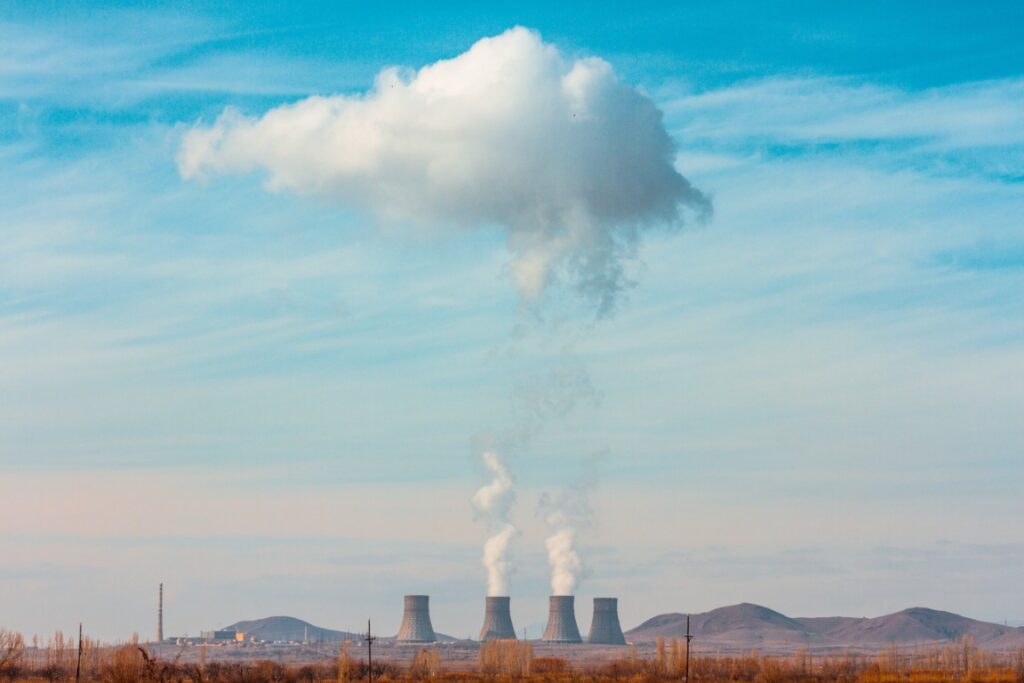
Petrochemical plants in Texas face a demanding mix of air emission challenges: volatile organic compounds (VOCs), acid gases, hydrogen sulfide, process odors, and intermittent vapors that can vary by unit, season, and operating mode. The right treatment approach is rarely a single device chosen from a brochure. It is usually a process-specific engineering decision based on the pollutant profile, the gas flow, temperature, humidity, peaks, and the plant’s maintenance strategy.
For many facilities, the practical question is not whether emissions need treatment, but how to select a system that matches the actual stream and can be integrated into the plant without creating pressure-drop issues, unnecessary downtime, or media misuse. In that context, adsorption systems, pollutant-specific filtration, and engineered gas treatment packages are often part of the solution. The same applies to related industries such as chemical production, automotive coating, ceramics, metallurgy, pharmaceuticals, paint, plastics, biogas, wastewater, waste and energy operations when they generate similar contaminants.
This article explains how petrochemical emission treatment works in practice, what data should be gathered before requesting a proposal, and how to evaluate treatment options for Texas plants without making assumptions about the process.
What petrochemical emission treatment has to solve
Petrochemical emissions are not a single contaminant stream. A plant may release process vapors from tanks, vents, loading areas, reactors, solvent handling, recovery systems, wastewater units, or fugitive collection points. Some streams are continuous; others are highly variable. Some contain mostly VOCs, while others include acid gases such as hydrogen sulfide, sulfur dioxide, hydrogen chloride, or hydrogen fluoride. In some cases, dust or mist may also be present, and those particles must be separated before gas treatment is expected to perform properly.
The first technical distinction is between gases and particles. Adsorption systems are designed for gaseous pollutants and vapors, not for removing all particulates. If solids, aerosols, or condensable mist are carried over, pre-filtration or upstream conditioning may be needed. Without that step, a gas treatment stage can foul early, lose effectiveness, or become difficult to maintain.
A second distinction is between adsorption and absorption. In adsorption, contaminants adhere to the surface of a solid adsorbent. In absorption, a pollutant is taken into a liquid or another bulk phase. The right method depends on the chemistry of the emission, the concentration range, and the process conditions. For many petrochemical odor and vapor streams, adsorption is one of the most practical options when the pollutant profile is well understood.
In petrochemical environments, emission treatment is typically considered for:
- VOCs from solvent use, storage, loading, and process vents
- Hydrogen sulfide and other reduced sulfur compounds associated with sour streams or wastewater interfaces
- Acid gases such as sulfur dioxide, hydrogen chloride, and hydrogen fluoride where present
- Process odors that are linked to measurable gaseous compounds, not just perception
- Intermittent vapor peaks from batch or upset conditions
Because emission behavior can shift with throughput, temperature, and humidity, a treatment system should be designed from actual process data rather than assumptions based on the industry label alone.
How adsorption-based gas treatment is used in petrochemical plants
Adsorption is widely used because it is modular, mechanically straightforward, and suitable for many gas-phase pollutants when the stream is properly characterized. A treatment unit normally passes contaminated air or process gas through an adsorbent medium that captures target compounds as the gas flows through. The medium must be selected for the contaminant class, concentration range, temperature, moisture level, and expected operating pattern.
For petrochemical emission control, this is especially relevant where streams contain VOCs or mixtures of odor-causing compounds that are not efficiently handled by simple ventilation alone. Adsorption can also be used as a polishing step after another treatment stage, provided the inlet gas is within the design envelope and the remaining contaminants are suitable for capture.
However, adsorption is not a universal remedy. If the stream contains high humidity, hot vapors, particulates, or compounds that compete strongly for the adsorption sites, the actual performance can differ significantly from the theoretical case. That is why supplier selection should focus on process fit, not generic claims.
When evaluating adsorption systems for petrochemical applications, plant teams should ask:
- Which contaminants are targeted, and which are only incidental?
- What is the normal flow rate and what are the peak flows?
- What is the temperature and relative humidity of the gas?
- Does the stream contain mist, dust, or condensable vapors?
- Is the emission continuous, cyclic, or batch-based?
- What pressure drop can the upstream and downstream equipment tolerate?
- How will breakthrough be monitored without relying on smell or subjective checks?
Breakthrough is the point at which the adsorbent medium begins to let targeted compounds pass through because its capacity is being used up. Monitoring breakthrough is essential because odor can appear before or after measurable emissions change, and human perception is not a reliable control method for hydrogen sulfide or other hazardous gases.
Why contaminant-specific treatment matters
In petrochemical service, a generic “VOC filter” description is often too broad to be useful. Some compounds are more easily adsorbed than others. Some are influenced strongly by moisture. Others may require different carbon grades or alternative treatment chemistry. Acid gases are not handled the same way as non-polar VOCs, and reduced sulfur compounds are not the same as solvent vapors. Good engineering begins by separating these groups instead of assuming one bed will treat everything equally.
For this reason, Bionatur’s work in industrial gas treatment is typically centered on pollutant-specific design rather than one-size-fits-all selection. The practical value is in matching the media and system configuration to the real emission stream, not in oversimplifying the chemistry.
What Texas plants should document before requesting a proposal
Proposal quality depends on input quality. A petrochemical emission treatment system cannot be sized correctly if the supplier only receives a plant name and a guess at the odor problem. The most useful request package is concise but technically complete.
Use this checklist once, then keep it updated as operating conditions change:
- Process description: source point, unit operation, and what generates the emission
- Pollutants identified: VOCs, hydrogen sulfide, sulfur dioxide, hydrogen chloride, hydrogen fluoride, odor compounds, or mixed gases
- Gas composition: what is known, what is estimated, and what should be confirmed by testing
- Flow range: normal, minimum, maximum, and peak events
- Temperature and humidity: both normal and upset conditions
- Particle or mist loading: dust, aerosols, droplets, condensable vapors
- Operating schedule: continuous, intermittent, batch, standby, or seasonal
- Available footprint and tie-in points: space, duct routing, fan arrangement, access for maintenance
- Pressure constraints: allowable pressure drop and fan capability
- Maintenance expectations: staffing, shutdown windows, monitoring method, media replacement logistics
- Spent material handling: how used adsorbent or other captured material will be managed
This data allows the engineer to decide whether the stream needs pre-conditioning, a single-stage treatment, a staged system, or a different technology altogether. It also avoids underdesign, which can lead to rapid saturation, and overdesign, which can create unnecessary capital and operating cost.
In practical terms, a proposal for a petrochemical plant should explain:
- What is being removed and why
- How the gas stream enters the treatment system
- What upstream protection is needed, if any
- How monitoring will indicate when media replacement is due
- How maintenance can be performed safely without opening internals unnecessarily
That last point matters. Routine operation should rely on instrumentation, operating logs, and service planning rather than ad hoc internal inspection. Opening equipment without proper controls can expose personnel to retained contaminants and is not a substitute for a structured maintenance plan.
BR350 and where product selection must be evidence-led
When a plant is reviewing a specific model such as BR350, the selection process should remain evidence-led. A model name alone does not establish suitability for a petrochemical emission stream. Suitability depends on the contaminants present, the gas flow, loading, temperature, humidity, and the actual process conditions at the site.
That is especially important in petrochemical service, where the emission may include mixed VOCs, sulfur compounds, acid gases, or process-specific vapors. A system that works well on one stream may not be appropriate for another if the chemistry or operating profile changes. The correct approach is to compare the verified application data against the plant’s process data, then confirm whether the unit design and adsorbent selection are aligned.
For BR350 or any other model, ask for documented clarification on the following before making a decision:
- Which pollutants are covered by the verified application data
- Whether the stream is gas only or includes mist, dust, or condensable vapors
- Whether the system is intended for VOCs, odor compounds, acid gases, or another specific group
- What the operating envelope requires in terms of flow, temperature, and humidity
- How maintenance and media replacement are managed in the intended service
Do not assume that a filter name automatically means compatibility with petrochemical vapor treatment, wastewater vents, or any other stream. A properly engineered proposal should identify the verified scope and the conditions needed for safe, effective operation.
Where a broader treatment package is needed, Bionatur develops industrial gas filtration and adsorption systems for pollutant-specific streams, including VOCs, H2S, SO2, HCl, HF, dioxins, furans, and heavy metals in gas phase applications. The value of that approach is not a universal promise; it is the ability to align the treatment concept to the contaminant chemistry and the actual process data.
Maintenance, media replacement, and spent material management
For plant managers and maintenance teams, the commercial value of a treatment system depends as much on operability as on the original design. A petrochemical emission treatment unit should be maintainable in a predictable way, with clear indicators for loading, pressure drop, and replacement planning.
Maintenance planning should consider:
- How inlet conditions are monitored over time
- What alarms or operating trends indicate rising outlet concentration or saturation risk
- How often inspections are needed based on process severity, not fixed assumptions
- Whether the system needs pre-filtration or condensate management upstream
- How spent adsorbent or other captured material will be packaged, stored, and transferred
It is also important to distinguish between treatment performance and housekeeping. A clean-looking area does not mean the emissions are controlled, and odor perception does not prove compliance or failure. The right controls depend on the stream chemistry and the verification method chosen by the plant.
For facilities with mixed utilities or associated environmental systems, the same engineering mindset applies to biogas, wastewater vents, and waste-to-energy gas handling. In biogas treatment, for example, contaminant removal such as H2S, siloxanes, and other unwanted compounds should be separated conceptually from carbon dioxide separation and methane enrichment. Removing contaminants can improve gas quality and protect downstream equipment, but it is not the same as upgrading biogas to biomethane or claiming a specific end-use quality.
This is also where an integrated service model can reduce risk. Bionatur provides assessment, engineering, supply, installation, commissioning, maintenance, media replacement, and management of spent materials for relevant industrial gas applications. For plants that want one technical partner to manage the treatment lifecycle, that end-to-end structure can simplify coordination, provided the proposal is based on real process data.
For reference to the general scope of gas treatment solutions, see the company’s industrial gas treatment solutions page.
How to evaluate a supplier for a Texas petrochemical site
Selection should not be based on brand familiarity alone. Engineers and industrial buyers should compare vendors on the quality of their assessment process and the clarity of their technical response.
A strong supplier will ask for source data before making a recommendation, will separate gases from particles, and will explain why one treatment path is favored over another. They should also identify where a carbon-based solution is appropriate and where it is not, especially in humid, hot, or multi-contaminant streams.
Useful evaluation criteria include:
- Does the supplier request a real process description instead of a generic application label?
- Do they identify adsorption limits and the need for pre-treatment when relevant?
- Do they distinguish VOC control from H2S or acid gas treatment?
- Do they explain how operating conditions affect media life and pressure drop?
- Do they provide a maintenance concept, not just a hardware quote?
- Do they address spent material handling and service continuity?
Plants in Texas often operate under tight production schedules, so the best solution is usually the one that can be integrated with minimal disruption while still addressing the actual emission profile. That requires careful engineering, not generic sizing rules. A proposal should therefore be treated as a technical document, not only a procurement quote.
When the emission source is variable, the most important step is to define the worst credible conditions as well as the normal case. That is the only way to understand whether a treatment system will remain effective during peak loading, startup, shutdown, or upset periods.
FAQ
What is the main technical challenge in petrochemical emission treatment?
The main challenge is that petrochemical emissions are often mixed, variable, and process-dependent. A system must be matched to the actual gas composition, flow, temperature, humidity, and presence of particles or mist.
Is adsorption the same as absorption?
No. Adsorption captures pollutants on the surface of a solid adsorbent medium. Absorption takes contaminants into another phase, usually a liquid. They are different processes and are chosen for different applications.
Can activated carbon treat every gas emission from a petrochemical plant?
No. Activated carbon is useful for many VOCs and some odor and sulfur-related applications, but it is not a universal solution. Suitability depends on the pollutant, moisture, temperature, loading, and the presence of competing contaminants.
Should smell be used to check whether hydrogen sulfide is under control?
No. Smell is not a reliable safety or performance indicator. Hydrogen sulfide can be dangerous at low concentrations, and monitoring should rely on appropriate instruments and process controls.
What should a plant send when requesting a treatment proposal?
Send a process description, contaminants of concern, flow range, temperature, humidity, particle or mist loading, operating schedule, pressure constraints, available space, and maintenance requirements. The more accurate the process data, the more reliable the proposal.
If you are reviewing petrochemical emission treatment for a Texas plant, the best next step is a technical assessment based on your actual stream data and operating conditions.