


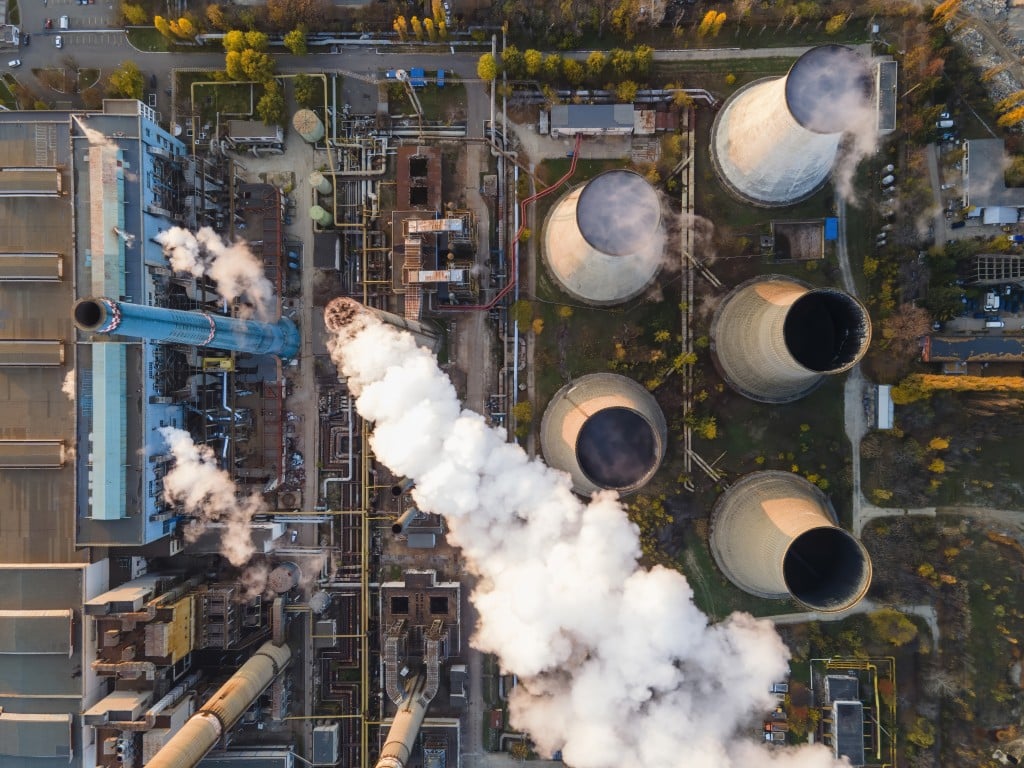
Industrial kiln emissions in Valencia often require more than a generic dust control solution. In ceramic, metallurgical, chemical, paint, plastics, pharmaceutical and related production lines, the exhaust stream can contain hydrogen fluoride, particulate matter, acid gases, odor compounds and process vapors that behave differently in the gas phase. If the goal is to design HF treatment for industrial kiln emissions in Valencia, the first step is to separate what is truly in the exhaust, at what temperature, and in what concentration range. Only then can the treatment train be selected with confidence.
Hydrogen fluoride is especially important because it is corrosive, reactive and technically different from particulate emissions. It is not enough to assume that a dust collector or a general odor filter will manage it. The right approach usually depends on the source process, gas humidity, flow variability, acid load, temperature and whether the exhaust also carries dust, other halogen acids, VOCs or combustion byproducts. For that reason, HF control for kiln exhaust is normally treated as an engineering problem, not a standard catalog choice.
Why HF in kiln exhaust needs targeted treatment
HF is a gas-phase acid pollutant. In kiln applications, it can appear directly from raw materials, fluxes, additives or thermal reactions. In some cases, it also coexists with fine particles that carry condensed compounds or trapped salts. This distinction matters because gases and particles are not removed by the same mechanism.
Particulate control relies on collection by inertia, filtration or separation. Gas control, by contrast, often requires absorption, neutralization or adsorption depending on the chemistry and process conditions. If the system is built only for dust, HF may pass through or continue downstream corrosion and emissions issues. If the system is built only for acid gas removal, excessive dust loading can reduce performance by blocking gas transfer or shortening service life.
In practice, kiln exhaust treatment for HF usually starts with a process review:
- What raw materials and additives are used?
- Is the gas hot, cooled or diluted before treatment?
- Does the exhaust contain dust, moisture, VOCs, acid gases or odor compounds?
- Are emissions continuous, cyclical or batch-based?
- What parts of the line are sensitive to corrosion?
These questions are not administrative detail. They determine whether the project needs preconditioning, a dry adsorbent stage, a wet stage, a combination of both, or an arrangement focused on localized capture before the contaminant spreads through the plant.
Adsorption, absorption and neutralization: what each method does
For industrial gas treatment, the terms are often mixed together, but they describe different physical and chemical processes.
Adsorption
Adsorption occurs when a pollutant adheres to the surface of a solid adsorbent medium. This is a surface phenomenon. It can be useful for certain acid gases, odor compounds, VOCs and other contaminants when the medium chemistry and gas conditions are compatible. For HF, adsorption may be part of a broader treatment strategy, but suitability depends on the process details and the selected treatment design.
Absorption
Absorption occurs when a gas is taken into a liquid phase. In HF control, liquid systems can support acid capture and neutralization, especially where wet scrubbing is appropriate. However, wet systems also introduce water handling, corrosion management and effluent treatment considerations. They are not automatically better than dry systems; they simply solve the problem in a different way.
Neutralization
Neutralization is the chemical conversion of an acidic pollutant into a less harmful salt or compound. In practice, this can happen in a scrubber or in a dry treatment stage with a reactive adsorbent medium. The engineering question is not whether neutralization is “good,” but whether it is effective under the actual gas temperature, humidity, residence time and contaminant load at the kiln outlet.
For many kiln exhaust applications, a combined approach is the most realistic. Dust removal may be needed first. Then the gas can be conditioned and routed through the HF treatment stage. In some plants, a final polishing step is added for residual compounds, including odor or mixed acid gases. The exact sequence depends on what the source emits, not on a fixed template.
What a proper HF treatment proposal must assess
Because hydrogen fluoride is highly process-sensitive, a supplier proposal should be based on documented operating data rather than assumptions. This is the stage where engineers, plant managers and environmental teams should supply enough information to avoid undersizing, oversizing or selecting the wrong chemistry.
A practical assessment package usually includes the following:
- Gas flow profile: average and peak flow, continuous or intermittent operation, and any planned expansion.
- Temperature profile: inlet temperature, fluctuations during startup and shutdown, and whether cooling is acceptable.
- Humidity and condensation risk: moisture content, dew point concerns and the possibility of sticky deposits.
- Pollutant list: HF concentration range, dust load, other acid gases, VOCs, odor compounds, H2S if present, and any unusual components.
- Particle characteristics: size, loading, stickiness and whether the dust is abrasive or corrosive.
- Process variability: batch operation, recipe changes, maintenance cycles and upset conditions.
- Plant constraints: available footprint, duct routing, pressure drop limits, utilities and access for maintenance.
- Disposal and handling needs: how spent adsorbent, sludge or residues will be managed.
One point deserves special emphasis: the treatment system should be selected for the real emission profile, not only the main pollutant name. A kiln may be labeled as an HF source, but the exhaust may also contain acidic mist, dust or thermal degradation products that change how the gas behaves. Likewise, if the system is being evaluated for a plant with mixed production lines, the process may need segregation before treatment, because one vent stream can affect another.
Bionatur approaches this type of project as a gas-treatment engineering task, not a one-size-fits-all product sale. That means the proposal should follow the measured or estimated emissions, the operating envelope and the operational constraints of the site. In some cases, that review may lead to a dry adsorbent solution; in others, a wet or hybrid configuration may be more appropriate.
Where a BR350-based solution may fit, and where it cannot be assumed
The BR350 is Bionatur’s priority filter, but it should not be treated as a universal answer for kiln exhaust. Suitability depends on the pollutants present, the gas flow, loading, temperature, humidity and the actual process conditions. No responsible supplier should claim compatibility with HF treatment without first checking whether the application matches the documented scope of the system.
From an engineering perspective, a filter or adsorber such as BR350 may be considered only after clarifying the following:
- Is the gas stream compatible with the intended treatment principle?
- Does the exhaust need prefiltration for dust before gas-phase treatment?
- Are there acid gases or vapors that would interfere with the adsorbent medium?
- Will condensation alter performance or create blockage risk?
- Is the operating profile steady enough for the selected configuration?
This is also where teams should avoid a common mistake: assuming that activated carbon, by itself, solves every emission problem. Activated carbon is a valuable adsorbent medium for many gas-treatment duties, but it is not a universal remedy. Its performance depends on pollutant chemistry, humidity, temperature, contact time and the grade of carbon selected. For certain acid gas duties, specialized impregnated media or a different treatment mechanism may be more appropriate.
That same caution applies to kiln exhaust with mixed contaminants. If the gas contains HF alongside dust, other acids or process vapor, the treatment train may need more than a single adsorber. A good design is the one that matches the emission reality, not the one with the shortest equipment list.
Selection criteria for industrial buyers in Valencia
For local project teams in Valencia, the best supplier choice is usually the one that can translate process data into a workable engineering proposal and then support the system after installation. This is particularly important in industries where kiln emissions are linked to production quality and uptime, such as ceramics, metallurgy, chemicals and specialty materials.
When comparing options, assess the provider on these criteria:
- Process understanding: ability to distinguish HF from dust, odors, VOCs and other acid gases.
- Engineering review: willingness to base the design on flow, temperature, humidity and pollutant data.
- Technology fit: clear explanation of why adsorption, absorption or a hybrid route is proposed.
- Maintenance strategy: planned media replacement, inspection intervals and safe handling of spent materials.
- Project continuity: support from assessment through commissioning and follow-up service.
- Plant integration: understanding of available space, ductwork, pressure loss and operational constraints.
For buyers, the commercial value is not only the equipment itself. It is the reduction of trial-and-error during startup and the ability to keep the system aligned with real plant behavior over time. Bionatur’s integral service model is relevant here because HF treatment is rarely just a delivery exercise; it usually includes assessment, engineering, supply, installation, commissioning, maintenance, media replacement and management of spent materials. That full chain matters when emissions are variable or when the plant must continue operating during upgrades.
If the project also involves other gas-treatment needs elsewhere in the plant, it can be useful to review the broader industrial gas treatment solutions available for pollutant-specific applications.
Operating issues that affect performance and maintenance
Even a well-designed HF treatment system can underperform if operating conditions change without review. In kiln service, the most common causes of trouble are usually not mysterious; they are predictable consequences of process variation.
Temperature swings can alter reaction rates and condensation behavior. A gas stream that enters the treatment unit too hot may reduce adsorption efficiency or stress components. A stream that cools too much may condense moisture and dissolved acids, increasing corrosion or fouling risk.
Humidity changes can also be critical. Some treatment media rely on a specific moisture window to support chemical capture, while excess condensation can reduce gas flow through the bed or create uneven distribution. That is why the dew point and the worst-case process condition should be part of the design review.
Dust loading matters because particles can block flow paths or coat the adsorbent surface. If the kiln exhaust carries abrasive or sticky dust, upstream removal is often necessary to protect the gas-treatment stage.
Media replacement should be planned from the start. No adsorbent medium lasts forever, and no responsible engineer should promise otherwise. The replacement schedule depends on pollutant loading, duty cycle and actual breakthrough behavior. Site staff should not open or disturb internal media as a routine practice; monitoring should be based on the system’s intended indicators, inspection plan and maintenance procedure.
For plants handling broader gas mixtures, it is also important to separate HF control from other contaminant duties. For example, biogas systems may require treatment of hydrogen sulfide, siloxanes or VOCs for different reasons, and that work should not be confused with kiln exhaust treatment. The chemistry may overlap in part, but the operating goals and design basis are not the same.
FAQ about HF treatment for industrial kiln emissions in Valencia
Is activated carbon always the right option for HF?
No. Activated carbon can be useful in gas treatment, but HF duty depends on the gas composition, humidity, temperature and the adsorbent grade. In some cases, a different adsorbent medium or a wet neutralization step may be more appropriate.
Why is dust control important if the main issue is HF?
Because HF treatment is a gas-phase task, while dust is a particle-phase task. Dust can interfere with adsorption or absorption, increase pressure drop and accelerate fouling. In many kiln exhaust systems, prefiltration improves stability.
Can the same system handle HF, odor and VOCs?
Sometimes, but not automatically. Mixed pollutants require a design review to determine which contaminants can be treated together and which need separate stages. Chemical compatibility and operating conditions are decisive.
What data should a plant provide before requesting a proposal?
At minimum, the gas flow, temperature profile, humidity, pollutant list, dust loading, operating pattern and available installation space. If possible, provide process variation data and any existing emissions measurements or observations from the kiln line.
Does a treatment system guarantee regulatory compliance?
No equipment can honestly guarantee that. Compliance depends on the full system design, installation quality, operating conditions, maintenance and the site’s actual emissions profile. A good proposal reduces uncertainty, but it does not replace verification.
If your kiln exhaust contains hydrogen fluoride and you need a technically sound treatment concept, the right next step is a process-based assessment. With the right data, Bionatur can evaluate the emission stream and define a solution that fits the real operating conditions rather than a generic template.