


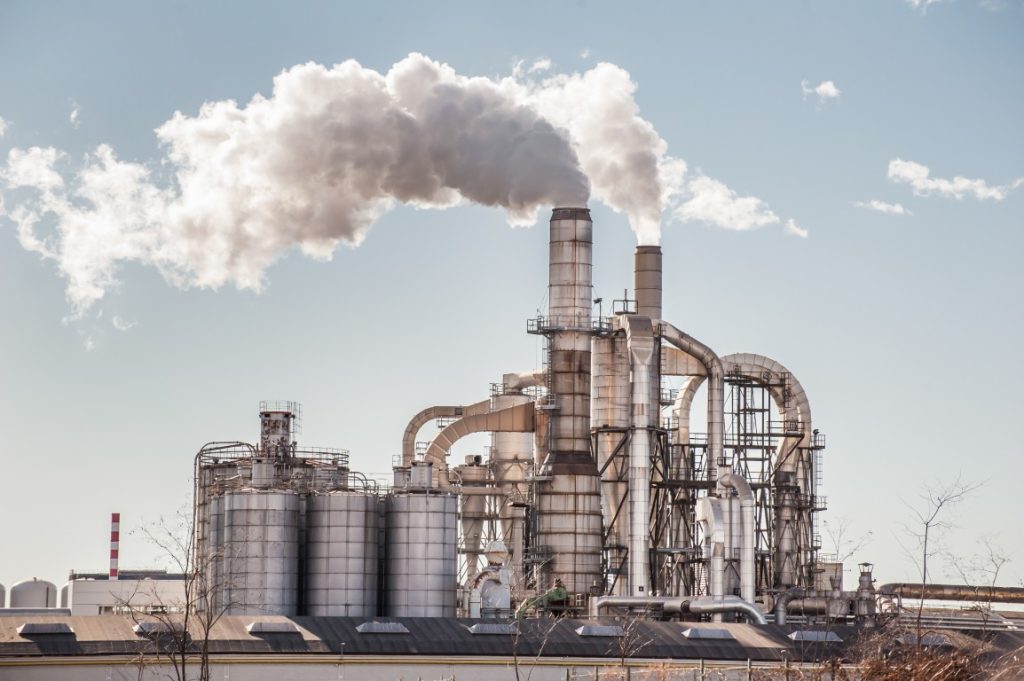
Impregnated activated carbon is a widely used adsorbent medium for gas contaminant removal when the target compounds are difficult to capture with standard activated carbon alone. The base material provides a very large internal surface area for adsorption, while the impregnant adds a chemical function that helps trap specific gases through reactions, acid-base interactions, or enhanced binding. In practical terms, this makes impregnated carbon relevant for treating contaminated exhausts, process vents, odor control streams, and selected biogas and waste-air applications where the pollutant profile is known.
For plant managers and engineers, the key question is not whether impregnated carbon “works” in general, but which contaminants it can address, under what operating conditions, and how the system should be designed. Different impregnation chemistries are used for different gases. The wrong grade can underperform quickly, while the right one can extend service life and improve pollutant capture in a compact footprint. That is why gas analysis, temperature, humidity, flow, and concentration data matter before any proposal is prepared.
This article explains how impregnated activated carbon is used for gas treatment, where it fits in industrial emissions control, what process data are needed to assess it properly, and how to evaluate a supplier or integrator such as Bionatur when the project calls for pollutant-specific gas filtration.
What impregnated activated carbon does differently
Standard activated carbon removes contaminants mainly by adsorption: gas molecules are captured on the extensive pore surface of the carbon. That mechanism is effective for many VOCs and odor compounds, but some gases are too reactive, too polar, or too weakly adsorbed to be handled efficiently by unmodified carbon. Impregnated activated carbon addresses that limitation by adding chemicals that change the way the carbon interacts with the gas stream.
The impregnant can promote one or more of the following mechanisms:
- Chemisorption, where the contaminant reacts with the treated surface.
- Acid-base interaction, useful when the contaminant and the impregnant have complementary chemical behavior.
- Oxidation or catalytic conversion, in some grades designed for specific gases.
- Enhanced retention, which can improve capture of compounds that are poorly retained by plain activated carbon.
That distinction matters because gas treatment is not the same as particle filtration. Activated carbon is designed for gaseous contaminants and odors, not for dust removal. If a stream contains both particulate matter and gas-phase pollutants, pretreatment may be needed upstream so that the carbon bed is not blinded or overloaded by solids.
In industrial practice, impregnated carbon is often selected for pollutants such as:
- Hydrogen sulfide, depending on concentration and stream conditions
- Other reduced sulfur compounds associated with odor and corrosion
- Acid gases such as sulfur dioxide, hydrogen chloride, and hydrogen fluoride
- Some VOCs and odorous organics, depending on the carbon grade
- Selected compounds found in waste, wastewater, and biogas treatment systems
Not every impregnated carbon grade is intended for every contaminant. A system designed for hydrogen sulfide is not automatically appropriate for solvent vapors, and a grade selected for acid gas capture may not be the best choice for mixed odor streams. Matching the chemistry to the pollutant profile is the central engineering task.
Where it is used in industrial gas treatment
Impregnated activated carbon is used wherever process emissions contain gases that need targeted removal before discharge, recirculation, or downstream processing. In many facilities, it is a polishing or final-treatment step rather than the only control stage. It can be paired with scrubbing, ventilation, condensation, prefiltration, or biofiltration depending on the composition of the exhaust.
Typical industrial sectors include:
- Chemical manufacturing, for acid vapors, odor compounds, and solvent-related streams
- Automotive and coatings, where paint and finishing processes can produce VOC-laden exhausts
- Ceramic and metallurgical operations, where high-temperature processes or auxiliary systems may release acid gases or odor compounds
- Pharmaceutical production, where solvent vapors and process odors may require controlled capture
- Plastics and polymer plants, where monomers, additives, or processing emissions can create treatment challenges
- Petrochemical facilities, where mixed hydrocarbon and sulfur-containing streams are common
It is also relevant in biogas, wastewater, waste, and energy applications. In these cases, impregnated carbon is often used to remove contaminants such as hydrogen sulfide and selected odor compounds from gas streams. That is different from methane enrichment: contaminant removal improves gas cleanliness and protects equipment, but it does not separate carbon dioxide from methane. The objective is treatment of the contaminant load, not gas upgrading through CO2 removal.
For biogas systems, this distinction is especially important. Operators sometimes need a cleaner fuel gas to protect engines, boilers, or upgrading equipment. Impregnated carbon can be one part of that protection strategy, but it must be assessed against the actual gas composition, moisture level, and expected loading. High humidity, fluctuating contaminants, and trace compounds can all influence bed life and performance.
If you are evaluating a gas-treatment solution, a technical overview such as industrial gas treatment systems for pollutant-specific control is useful as a starting point, but the final design still depends on site data and the target contaminants.
Choosing the right impregnation for the contaminant
The performance of impregnated activated carbon depends on the combination of base carbon, pore structure, impregnant, and process conditions. There is no universal grade for all gases. Selection is a technical exercise, not a catalog choice.
Common selection logic includes the following:
1) Identify the contaminant family
The first step is to define whether the target is hydrogen sulfide, sulfur dioxide, hydrochloric acid vapor, hydrogen fluoride, mixed VOCs, ammonia-related odors, or another compound family. The chemical nature of the pollutant determines which impregnation chemistry may be relevant.
2) Consider concentration and variability
A stream with stable low-level contamination behaves differently from one with periodic spikes. A carbon grade that performs well at low concentration may saturate quickly if the load fluctuates or if upset conditions occur.
3) Evaluate humidity and temperature
Humidity often influences the capture of reactive gases because some impregnation chemistries depend on moisture to support the intended reaction pathway. Excess water vapor, however, can also occupy pore volume or change pressure drop behavior. Temperature affects both adsorption capacity and reaction rates.
4) Check whether the stream contains mixed contaminants
Many industrial exhausts are not single-compound streams. A process can contain VOCs, acid gases, and odorants at the same time. Mixed streams require a balanced design so that one contaminant does not consume the bed while another slips through.
5) Confirm whether pretreatment is needed
Dust, aerosols, sticky vapors, condensate carryover, and liquid mist can shorten bed life and cause uneven distribution. Pretreatment may be required before the gas reaches the carbon vessel.
For many facilities, the most effective solution is not “more carbon” but the right carbon grade in the right system. That may mean a basic adsorbent for VOC polishing, a sulfur-targeted impregnated carbon for odor and corrosion control, or a multi-stage treatment train when the exhaust chemistry is complex.
Special attention is often given to hydrogen sulfide in wastewater, waste, and biogas operations because it is both a corrosive contaminant and an odor issue. Even there, the correct treatment depends on inlet concentration, oxygen presence, moisture, and how the gas is being used downstream. A bed designed for low-level odor control is not automatically appropriate for a high-loading process stream.
What process data are needed for a proposal
Before a supplier can recommend an impregnated activated carbon system, the site should provide enough information to define the gas stream realistically. This is the most important step for avoiding undersized equipment, excessive pressure drop, or premature media replacement. The goal is to build a proposal around actual operating conditions, not assumptions.
Practical checklist for assessment:
- Pollutants present: identify the target gases and any secondary contaminants.
- Concentration range: provide typical, minimum, and peak values if available.
- Airflow or gas flow: include average and maximum flow rates.
- Temperature: note normal operating temperature and possible excursions.
- Relative humidity / moisture: include dew point, condensation risk, or wet-gas conditions.
- Dust, mist, or aerosol content: describe upstream carryover and any filtration already in place.
- Operating schedule: continuous or batch operation, start-ups, shutdowns, and upset periods.
- Space and pressure-drop limits: outline installation constraints and allowable fan load.
- Discharge objective: whether the goal is odor reduction, equipment protection, process protection, or emissions control.
- Maintenance access: describe available inspection, changeout, and bypass arrangements.
When this information is missing, the system may still be sized, but with wider assumptions and higher uncertainty. That is especially risky for streams with strong variability, because an apparently modest average load can mask short-term peaks that dominate carbon consumption. In engineered systems, the peak conditions often matter more than the average.
Bionatur’s integrated service model is relevant here because gas treatment projects usually require more than media supply. Assessment, engineering, supply, installation, commissioning, maintenance, media replacement, and spent-material management all influence long-term performance. For buyers, the value is not only the adsorbent medium but the ability to align the treatment train with the real process data.
Operation, monitoring, and replacement strategy
Once installed, impregnated activated carbon should be managed as a controlled process component, not a passive fill material. Its service life depends on contaminant load, moisture, temperature, flow distribution, and whether the system is operated within design limits. Because the medium is consumed or progressively loaded during service, performance typically declines over time.
Good operating practice includes:
- Maintaining stable airflow within the design range
- Avoiding liquid carryover and excessive condensation into the vessel
- Watching for upstream process changes that alter the contaminant profile
- Tracking pressure drop and any available outlet monitoring
- Scheduling replacement based on measured performance and process history, not visual assumption
Monitoring is important because the first sign of exhaustion is not always obvious. Odor, corrosion risk, or downstream contamination may increase before the bed appears externally different. However, smell should never be treated as a reliable indicator of safety or performance, particularly for hydrogen sulfide or other hazardous gases. Instrumented monitoring and documented operating data are more dependable than human detection.
Filter changeout planning should also consider spent-material handling. Depending on what has been captured, the used adsorbent may require controlled disposal or other regulated handling. That is one reason industrial buyers often prefer a supplier who can support the full lifecycle of the treatment system rather than only the initial delivery.
For BR350 and any other specific filter model, suitability still depends on the pollutant profile and operating conditions. It should not be assumed that one unit covers every gas-treatment duty. Product selection must follow verified documentation and the process data collected for the site.
How to evaluate a supplier for gas-contaminant removal
When comparing suppliers, the most useful question is not “Who sells activated carbon?” but “Who can design a defensible treatment solution for this exact gas stream?” Industrial buyers should look for technical depth, not generic claims.
Assessment criteria that matter:
- Ability to distinguish between adsorption, chemisorption, and other removal mechanisms
- Experience with gas-phase pollutants rather than only particulate filtration
- Ability to work from real process data and identify missing inputs
- Clear explanation of what the system can and cannot treat
- Appropriate consideration of humidity, temperature, and flow variability
- Support for installation, commissioning, monitoring, and media replacement
- Management of spent adsorbent and service continuity planning
It is also worth asking how the supplier handles mixed contaminants. A credible proposal should separate the main target gas from secondary compounds, explain the expected service approach, and identify any pretreatment needed upstream. That is especially important in chemical, paint, plastics, and petrochemical facilities where the exhaust may change with production campaigns or solvent blends.
In wastewater, waste, and energy applications, the same logic applies. Biogas and odor-control systems often face changing conditions, and the treatment strategy should reflect the actual gas composition rather than a simplified assumption. If a site is trying to improve gas quality for equipment protection or downstream use, contaminant removal should be framed separately from methane enrichment and from any CO2 separation objective.
For organizations that need pollutant-specific industrial gas filtration, Bionatur combines assessment and engineering with supply and lifecycle support from its Barcelona base. That is most valuable when the project requires a tailored adsorbent choice rather than a standard product swap.
FAQ
What is impregnated activated carbon used for in gas treatment?
It is used to remove specific gas-phase contaminants that standard activated carbon may not capture efficiently. Common uses include hydrogen sulfide, acid gases, selected VOCs, and odor compounds in industrial exhaust, biogas, and waste-air streams.
Is impregnated activated carbon the same as a general odor filter?
No. Odor control can involve many compounds, and the right adsorbent depends on the chemistry of the odorants. Some odors are well suited to impregnated carbon, while others may require different treatment stages or pretreatment.
Does activated carbon remove particles or dust from gas streams?
No. Activated carbon is intended for gaseous contaminants, not particle filtration. If a stream contains dust or mist, upstream filtration may be needed to protect the carbon bed and maintain performance.
Can impregnated activated carbon be used for biogas?
Yes, it can be used in some biogas contaminant-removal applications, especially where hydrogen sulfide or odor compounds are present. It does not perform methane enrichment or CO2 separation, so the design objective must be defined clearly.
What information should I provide for a technical proposal?
At minimum, provide the target contaminants, concentration range, flow rate, temperature, humidity, expected variability, dust or mist content, operating schedule, and the treatment objective. These details are necessary to recommend a suitable adsorbent medium and system layout.
If you are planning a new installation or reviewing an existing gas-treatment system, request a technical assessment so the treatment concept can be matched to your actual process conditions.