


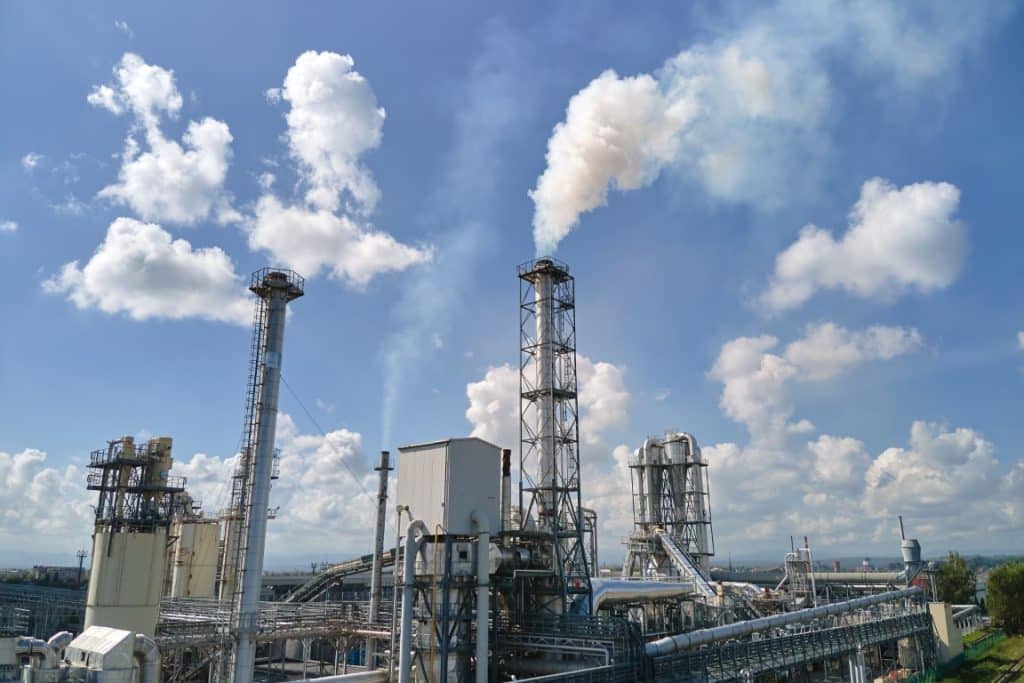
Hydrogen sulfide treatment in pulp and paper mills is a practical engineering problem because H2S can appear in several parts of the site, from pulping and chemical recovery areas to wastewater treatment, sludge handling and biogas systems. The right solution depends on where the gas is generated, how much is present, and what else is in the stream. In most mills, the goal is not simply odor control. It is to protect personnel, reduce corrosion risk, manage emissions responsibly and keep air treatment systems stable under real process conditions.
H2S is a toxic gas and a strong odor source, but odor alone is not a reliable indicator of concentration or safety. A proper treatment strategy starts with identifying the source, separating gas-phase contaminants from particulates, and selecting a technology that matches the actual process stream. In many pulp and paper applications, adsorption with an appropriately designed solid adsorbent is used for polishing or for treating low- to moderate-load gas streams. In other cases, upstream capture, ventilation, and other controls are necessary before the gas reaches the treatment unit.
This article explains where hydrogen sulfide comes from in pulp and paper mills, how gas treatment systems are typically designed, what process data is needed for a proposal, and how to evaluate an industrial solution such as the BR350 when a project requires a filtration-based approach.
Where hydrogen sulfide comes from in pulp and paper mills
Hydrogen sulfide is not a single-point problem in a pulp and paper plant. It can be generated in several units and can vary widely with operating mode, temperature, pH, residence time and oxygen availability. That is why a treatment system selected for one area of the mill may not be appropriate for another.
Common sources include:
- Pulping and recovery operations: reduced sulfur compounds can be released from process vents, tanks, digester areas and associated handling equipment.
- Wastewater treatment: anaerobic zones, primary sludge handling, equalization tanks and enclosed channels can generate hydrogen sulfide.
- Sludge storage and dewatering: stagnant or oxygen-depleted materials can release H2S intermittently.
- Biogas systems: anaerobic digestion of mill residues, sludge or organic side streams can produce biogas containing hydrogen sulfide along with methane, carbon dioxide and water vapor.
- Sewers and collection systems: warm, turbulent or poorly ventilated lines can release H2S into enclosed spaces.
In pulp and paper mills, H2S treatment is often part of a broader odor and corrosion management strategy. The challenge is to design for changing load conditions. A system may see low background concentrations most of the time, then experience spikes during tank turnover, cleaning, upset conditions or process upsets. A treatment concept must be based on measured or well-justified process data, not on average plant assumptions alone.
How H2S behaves in air and biogas systems
Hydrogen sulfide is a gas. That sounds obvious, but it is important because gas treatment is different from dust collection or liquid treatment. A filter for particles will not solve a gas-phase odor problem by itself. Likewise, an adsorbent bed that handles H2S must be designed around gas flow, concentration, humidity, temperature and competing contaminants.
In air systems, H2S may be accompanied by other reduced sulfur compounds, VOCs, moisture, acid gases or aerosols. In biogas, it is part of a fuel stream that also contains methane, carbon dioxide and water vapor. The purpose of H2S removal in biogas is contaminant control and equipment protection. It is not methane separation. Removing hydrogen sulfide can improve the gas quality for downstream use, but it does not by itself enrich methane or replace a gas upgrading system.
Adsorption is a surface phenomenon: contaminant molecules attach to the internal surface of a solid adsorbent medium. This is different from absorption, where a contaminant dissolves into or reacts within a liquid or bulk material. For H2S treatment, adsorption may be used as a standalone process or as part of a multi-stage system, depending on the stream.
Humidity matters. Water vapor can compete for adsorption sites or change the behavior of the bed, and high humidity can reduce service life if the adsorbent is not selected and sized correctly. Temperature also matters because it affects gas density, reaction rates and adsorption performance. For this reason, the same nominal flow rate can behave very differently in a warm, wet exhaust versus a cooler conditioned stream.
Treatment options for hydrogen sulfide in mill applications
No single technology suits every pulp and paper H2S problem. The best choice depends on the source, the concentration range, whether the stream is air or biogas, and whether the objective is odor reduction, equipment protection, emission control or all three.
Capture and containment first
Before selecting a treatment unit, the gas has to be captured effectively. Local hoods, ductwork, enclosure design and controlled ventilation often determine whether the treatment system succeeds. Poor capture can make a well-sized filter perform badly because the contaminant simply escapes before reaching the system.
Typical design questions include:
- Is the source enclosed or open?
- Is the gas intermittent or continuous?
- Can the process be isolated during peaks?
- Will the ducting carry moisture, condensate or entrained droplets?
- Are there aerosols or particles that should be removed upstream?
Adsorption systems
For many odor and gas polishing applications, adsorption is attractive because it can be compact and straightforward to integrate. The adsorbent medium is selected to target the contaminant profile and the expected load. In H2S service, that may involve a carbon-based or other engineered adsorbent formulated for sulfur compound control. In some cases, other gas-phase contaminants such as certain VOCs may be present and influence the media choice.
However, adsorption is not universal. It has finite capacity and performance depends on the real stream conditions. If the inlet concentration is higher than expected, if humidity is excessive, or if the gas contains aerosols that foul the bed, service life can change significantly. This is why a proposal should always be based on process data rather than a generic catalog assumption.
Wet scrubbing and other upstream controls
In some mills, wet scrubbing or chemical treatment is used upstream when the gas is hot, highly variable or very humid. These systems can reduce the load before a final polishing stage. They may also help remove some acid gases or soluble species. But wet scrubbing is not automatically the right answer for every site, and it brings its own complexity in reagent management, wastewater handling and maintenance.
For biogas streams, pre-treatment may also be needed to remove moisture, droplets or siloxanes, depending on the end use. Siloxanes are worth evaluating separately because they can affect downstream equipment and may require different control measures than H2S.
What a solid adsorbent system can and cannot do
A well-designed adsorbent bed can be an effective part of H2S control, but it should be viewed as one element in the process chain. It can help manage low to moderate contaminant loads and act as a final treatment stage after capture and pre-conditioning. It cannot be assumed to solve every problem in a poorly captured, very wet or highly loaded stream.
For industrial buyers, the practical question is not whether adsorption is “good” in general. It is whether the specific gas stream can be treated reliably, economically and safely over the full operating envelope.
What process data is needed to prepare a sound proposal
A credible proposal for hydrogen sulfide treatment in a pulp and paper mill needs more than a nameplate flow. Suppliers and engineers need enough information to understand the gas behavior, likely load swings and physical constraints. If data are incomplete, the design may be oversized, undersized or difficult to operate.
Useful data to provide once, in a single package:
- Source description: digester vent, wastewater tank, sludge handling, biogas line, enclosed room or other point.
- Gas flow: average, minimum, maximum and whether flow is continuous or intermittent.
- Hydrogen sulfide level: measured range, not smell-based estimates.
- Other contaminants: VOCs, ammonia, reduced sulfur compounds, aerosols, dust, siloxanes, acid gases or mist.
- Temperature and humidity: actual operating range, including condensation risk.
- Pressure conditions: fan suction, positive pressure or variable draft.
- Operating pattern: start-ups, shutdowns, cleaning cycles and upset conditions.
- Space constraints: footprint, access for maintenance, duct routing and lifting limits.
- Materials compatibility needs: corrosion concerns and any site-specific restrictions.
- Purpose of treatment: odor control, worker protection, equipment protection, emission management or biogas conditioning.
This data set is also useful for comparing different concepts fairly. A system that looks acceptable on paper may become difficult to operate if the gas is saturated with moisture or if the H2S load spikes well beyond the average. Likewise, a compact adsorbent unit may be effective as a polishing stage but not as the only barrier for a heavily loaded or poorly captured source.
For mills seeking a structured engineering approach, Bionatur provides assessment, engineering, supply, installation, commissioning, maintenance, media replacement and management of spent materials for industrial gas treatment projects. When the application involves H2S, the objective is to match the treatment concept to the real gas stream rather than forcing the site into a standard package.
How to evaluate a filter solution such as BR350
The BR350 is a priority filter in Bionatur’s industrial gas treatment offering, but its suitability must be assessed from process data rather than assumed from the product name alone. For any H2S project, the important question is whether the stream falls within the solution’s verified application scope and operating envelope.
When evaluating BR350 or any similar filtration system, focus on the following selection criteria:
- Pollutant profile: Is H2S the main contaminant, or is it only one of several gases?
- Stream type: Is the application air exhaust, odor control, or biogas contaminant removal?
- Load stability: Are concentrations steady, cyclic or highly variable?
- Moisture behavior: Will the gas be dry, humid or near saturation?
- Operating envelope: Does the system match the actual flow, temperature and pressure conditions?
- Maintenance strategy: Can media condition be managed without disrupting plant operations?
- Spent material handling: How will exhausted adsorbent or contaminated consumables be managed safely?
This approach avoids a common project error: selecting equipment only by nominal flow. In hydrogen sulfide service, the process chemistry and gas conditioning are often more important than the size of the duct or the fan. A filter that works well in one stream may be unsuitable in another if humidity, aerosol loading or H2S concentration differs materially.
It is also important to distinguish between general adsorption principles and documented product capability. For example, a carbon-based adsorbent can be technically appropriate for some H2S and odor applications, but that does not mean every carbon grade or every filter is right for every mill area. The media selection must be aligned with the contaminant mix and the actual operating conditions. If the process includes siloxanes, for instance, that should be assessed separately because the treatment strategy may change.
For projects involving broader industrial gas treatment needs, Bionatur’s approach is centered on pollutant-specific treatment rather than a one-size-fits-all configuration. More information on gas-treatment applications is available on the industrial gas treatment page.
Operation, maintenance and safe performance over time
H2S treatment systems are only useful if they continue to perform under real plant conditions. That makes operation and maintenance part of the engineering decision, not an afterthought. Plants should plan for stable airflow, condensate control, safe access to the equipment and a way to monitor the treatment system without opening the internal adsorbent bed.
Practical considerations include:
- Monitoring inlet and outlet conditions: use appropriate instrumentation or site procedures to track performance trends.
- Controlling condensation: remove liquid carryover before it reaches the filter when needed.
- Maintaining airflow: pressure drop changes can indicate fouling, moisture issues or loading changes.
- Planning media replacement: use operating data, not guesswork, to schedule service.
- Managing spent materials: follow site procedures for handling exhausted adsorbent and related waste streams.
Maintenance teams should also review the upstream process regularly. If a tank regime changes, if ventilation is altered, or if a new production campaign changes the contaminant profile, the gas treatment system may need reassessment. The same applies to biogas systems, where feedstock changes can alter H2S levels and moisture content.
Safety should remain general and professional. Hydrogen sulfide is hazardous, and enclosed-space work, duct intervention and spent-media handling require site-specific procedures, competent personnel and the controls required by the facility. No odor threshold should ever be treated as a safe indicator.
FAQ
Is adsorption the same as absorption for H2S treatment?
No. Adsorption means the gas molecules attach to the surface of a solid adsorbent medium. Absorption means the contaminant enters or dissolves into another material, often a liquid. The right process depends on the gas stream and treatment goal.
Can activated carbon remove all hydrogen sulfide in a pulp and paper mill?
No single adsorbent should be assumed to remove all H2S in every situation. Performance depends on concentration, humidity, flow, temperature and the presence of other contaminants. The media and system must be selected for the actual process conditions.
Does H2S removal from biogas mean methane upgrading?
No. H2S removal is contaminant removal. It can improve gas quality and protect downstream equipment, but it is separate from carbon dioxide separation and methane enrichment.
Why is smell not a good way to judge H2S safety or filter performance?
Because odor is not a reliable measure of concentration and does not confirm whether a filter is performing properly. Hydrogen sulfide can be hazardous even when odor perception is inconsistent or changes over time.
What information should I prepare before requesting a treatment proposal?
Provide the source type, flow range, H2S range, other contaminants, temperature, humidity, pressure conditions, operating pattern, space constraints and the purpose of treatment. That gives engineers a realistic basis for sizing and media selection.
If you are planning hydrogen sulfide control in a pulp and paper mill, the most useful next step is a technical assessment based on real process data. That is the best way to determine whether an adsorption-based solution, a pre-treatment stage or a combined system is the right fit.