


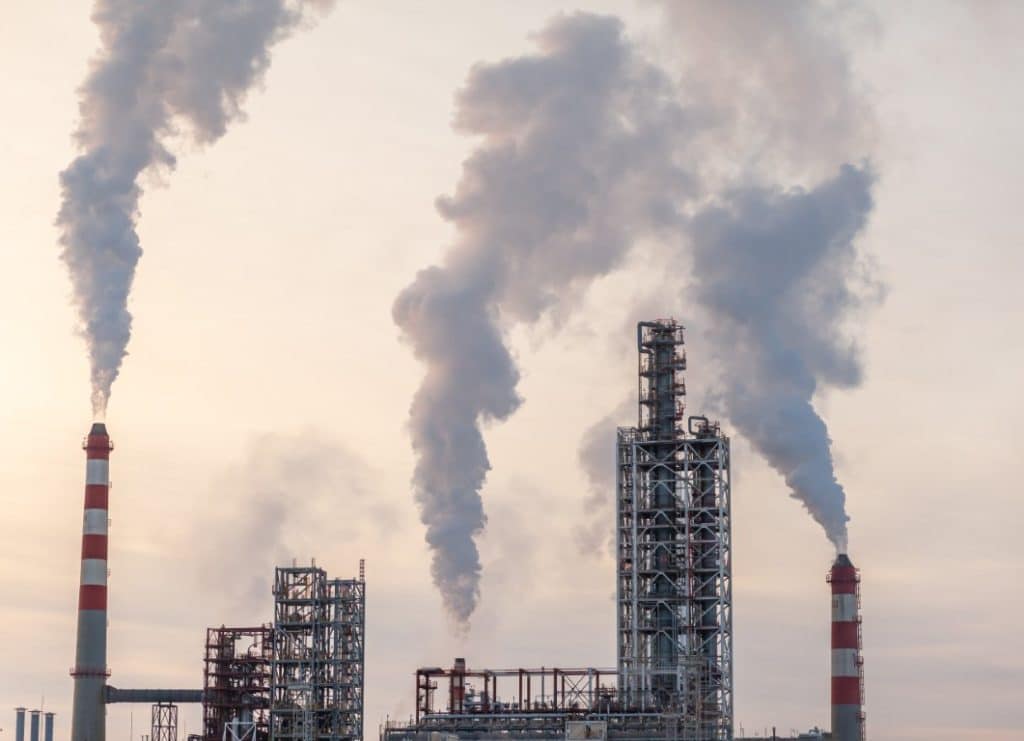
Plastics manufacturers in Lille face a practical emission-control challenge: process vents can carry volatile organic compounds, odorous compounds, and sometimes acidic or reactive gases, depending on the resin, additives, cleaning steps, and thermal conditions used on site. Effective emission control is not a single product decision. It starts with identifying which pollutants are present, in what concentration, at what temperature and humidity, and under what operating pattern. Only then can an engineer define whether adsorption, filtration, or a combined treatment line is appropriate.
For plastics facilities, the most common air-emission concerns usually come from extrusion, compounding, pellet handling, molding, drying, solvent use, surface treatment, adhesive application, printing, and maintenance operations. Some lines produce mainly VOCs and odor; others may also release acid gases, formaldehyde, amines, or process-specific contaminants. The wrong treatment choice can lead to pressure drop problems, premature media saturation, unstable odor control, or a system that is technically installed but poorly matched to the emission profile.
This article explains how to approach emission control for plastics manufacturing in Lille in a technically sound way, what data are needed before requesting a proposal, and how to assess whether an adsorption-based solution such as a BR350 unit should even be considered. Suitability always depends on actual process conditions, not on the industry label alone.
What emission control means in a plastics plant
In plastics production, “emissions” can mean different things. Engineers should separate gas-phase pollutants from particles, because they require different treatment approaches. A filter that captures dust is not an odor-control device, and a gas-treatment unit does not replace a particulate collection stage where dust or aerosols are present.
Typical gas-phase contaminants in plastics manufacturing can include:
- VOCs from solvents, monomers, auxiliaries, cleaning agents, coatings, and thermal degradation.
- Odorous compounds that may occur at very low concentrations but still affect the surrounding environment and workplace perception.
- Acid gases in some process streams, depending on chemistry and raw materials.
- Reactive or corrosive vapors from surface treatment, resin processing, or maintenance activities.
- Dusts or fine aerosols from handling, cutting, grinding, or conveying polymers and fillers.
The control method must match the pollutant class. For example, an adsorption system can be effective for many VOC and odor applications when the gas stream is otherwise suitable, but it is not a universal solution for solids, sticky mists, or all reactive gases. Likewise, if the stream contains particulate loading, upstream dust removal may be needed to protect the gas-treatment stage.
Plastics sites also need to consider whether emissions are intermittent or continuous. A batch process with short peaks behaves differently from a steady exhaust line. That distinction affects sizing, expected loading, and the operating strategy for the adsorbent bed or treatment train.
How adsorption fits into emission control
For many plastics manufacturers, adsorption is attractive because it can target specific gas-phase pollutants without changing the core process. In adsorption, contaminants adhere to the surface of a solid adsorbent or adsorbent medium. This is different from absorption, where a contaminant is taken into a liquid or another bulk phase.
That distinction matters operationally. Adsorption performance depends on the contaminant type, concentration, flow rate, temperature, humidity, and the presence of competing compounds. A carbon-based adsorbent, for example, may perform differently depending on vapor load and moisture content. High humidity can reduce available capacity for some applications, and some compounds are better handled with impregnated or chemically modified adsorbents rather than standard grades.
For plastics plants, adsorption is often considered when the target pollutant is in the gas phase and the stream is relatively clean from a particulate standpoint. It is also used when process control needs to be flexible, when the emission point cannot easily be redesigned, or when a compact footprint is important. But the design still depends on site-specific data. A treatment unit that works on one resin line may be poorly matched to another line with different vapors, temperatures, or cycling behavior.
It is important not to overstate what adsorption can do. Activated carbon and other adsorbents do not remove every contaminant, and they are not the right solution for every exhaust stream. They also do not eliminate the need for upstream process controls, local capture, ventilation design, or safe handling of the spent adsorbent.
In practice, a properly engineered adsorption system may be part of a broader emissions strategy that includes:
- source capture close to the emission point,
- ductwork designed to avoid condensation and unnecessary pressure loss,
- particulate removal where needed,
- appropriate adsorbent selection,
- monitoring of pressure drop and operating conditions,
- planned replacement or changeout of exhausted media.
For a broader overview of industrial gas treatment concepts, see industrial gas treatment solutions for controlled emissions.
Which plastics processes in Lille deserve the closest attention
Not every plastics line in Lille emits the same pollutants. The process map matters more than the industry label. A useful assessment starts by identifying the specific unit operations generating the exhaust.
Common high-interest emission points
- Extrusion and compounding: thermal degradation, additives, purge vapors, and odor peaks.
- Injection molding: fumes from heated polymers, mold release products, and maintenance solvents.
- Blow molding and thermoforming: heating-related VOCs and localized vapors.
- Surface treatment and coating: solvents, adhesion promoters, and process-specific vapors.
- Printing, labeling, and lamination: VOCs from inks, cleaning agents, and adhesives.
- Grinding, trimming, and conveying: dust and fine particulate, sometimes combined with odor or vapor from hot material.
Some plants also have auxiliary emission points from wastewater treatment, waste handling, or energy systems. These are relevant because they may share the same odor-control or gas-treatment infrastructure, but they should not be treated as identical streams. A resin process exhaust is not the same as a biogas stream, and a wastewater odor line is not the same as an extrusion vent.
When a plant includes biogas or wastewater assets, the same principle applies: contaminant removal must be evaluated separately from gas upgrading or methane enrichment. For example, in biogas systems, removal of hydrogen sulfide, siloxanes, or VOCs is a contaminant-control step. It is not the same as CO2 separation, even if both steps can be part of an overall gas-quality strategy.
That distinction is worth making because it prevents technical confusion during specification. A proposal should state exactly which stream is being treated and what the target pollutants are. Without that, no responsible supplier can confirm suitability.
What data you need before asking for a proposal
For supplier selection, the quality of the proposal depends on the quality of the input data. This is especially true in plastics manufacturing, where apparently similar processes can create very different gas streams.
Before requesting a design or quotation, prepare the following information as completely as possible:
- Process description: what operation generates the exhaust, and when it runs.
- Pollutant list: VOCs, odor compounds, acid gases, formaldehyde, amines, or other known species if identified.
- Flow rate: normal, peak, and intermittent conditions.
- Temperature: actual gas temperature at the capture point and after any cooling step.
- Humidity: presence of water vapor, condensation risk, or washdown influence.
- Particulate or aerosol content: dust, mist, sticky condensable material, or oil carryover.
- Concentration profile: expected variability during startups, shutdowns, cleaning, and changeovers.
- Corrosive components: any compounds that may affect ducting, housing materials, or adsorbent selection.
- Operating schedule: continuous, batch, seasonal, or mixed duty.
- Space and utility constraints: footprint, access, fan arrangement, electrical limits, and maintenance access.
- Disposal or replacement constraints: whether spent adsorbent must be handled as regulated waste.
In many projects, a brief gas analysis and a site survey save more time than a purely theoretical specification. If the plant has odor complaints, that is useful context, but odor alone is not a measurement method. The real design basis should be the gas composition and the process conditions that create it.
For a proposal to be technically meaningful, the supplier should also understand how the exhaust is captured. Poor capture efficiency can make a well-sized treatment unit appear ineffective. A design based only on duct flow, without knowledge of capture hoods, bypass air, or fugitive release points, may miss the real source of the problem.
How to assess an adsorption system for this application
When plastics manufacturers evaluate an adsorption system, the question is not “Does it remove odor?” but rather “Is this gas stream suitable for adsorption, and what adsorbent strategy is needed?” That assessment is driven by chemistry and operating conditions.
Key selection criteria include:
- Pollutant affinity: some compounds adsorb more readily than others.
- Moisture sensitivity: humidity can compete with target vapors for adsorption sites.
- Thermal behavior: hot gas may need conditioning before adsorption.
- Particulate loading: dust or sticky aerosols can foul a bed and create uneven flow.
- Peak loading: short spikes may consume capacity faster than average conditions suggest.
- Compatibility of materials: housing, seals, and ductwork must suit the gas chemistry.
- Maintenance strategy: planned media replacement and safe handling of exhausted adsorbent.
The adsorbent medium itself should be chosen for the contaminant profile. General activated carbon grades are often discussed in industrial odor and VOC control, but different grades or impregnations can behave differently with acid gases, basic compounds, or oxidizable species. That is why carbon type cannot be selected from industry alone. It must be tied to process data.
If a site is considering Bionatur, the relevant discussion should focus on assessment, engineering, supply, installation, commissioning, maintenance, and management of spent materials as these relate to the specific exhaust stream. Bionatur also works with pollutant-specific treatment in industrial gas filtration and adsorption, so the practical value lies in matching the treatment principle to the stream rather than forcing a standard configuration onto every line.
BR350 should be treated the same way: as a product whose suitability must be confirmed against the actual emissions, flow, humidity, temperature, and process variability. Do not assume compatibility because the plant is a plastics manufacturer. A proper technical review is still necessary.
Operating and maintenance points that matter in real plants
Even the right treatment concept can fail if the operating conditions are not controlled. In plastics production, maintenance teams and plant managers should watch a few practical points closely.
First, manage condensate risk. If vapor cools in the duct or housing, liquids can form and interfere with gas treatment. This may reduce adsorbent performance and create corrosion or hygiene issues. Duct insulation, correct placement of the treatment unit, and temperature control all matter.
Second, avoid treating a dirty gas stream as if it were clean. Dust, fine polymer particles, overspray, or mist may need a separate pre-treatment stage. Gas adsorbents are designed for gas-phase contaminants, not for loading from solids.
Third, use monitoring that reflects the real process. Pressure drop trends, operating hours, inlet conditions, and periodic gas analysis are more informative than a visual check alone. Staff should not rely on smell as a safety or performance indicator, especially for hydrogen sulfide or other hazardous gases. Low odor does not mean safe, and strong odor does not quantify exposure.
Fourth, plan for replacement and waste handling. An exhausted adsorbent medium should be changed according to the operating data and the supplier’s technical guidance. The replacement strategy must account for the nature of the adsorbed compounds and the site’s disposal requirements. Teams should not open internal media beds except under controlled maintenance procedures.
Fifth, verify upstream stability. If the process itself varies widely, the treatment unit will see that variability. Stabilizing source conditions can improve overall emissions control more effectively than oversizing equipment alone.
These points are especially important in a city like Lille, where industrial sites may operate in mixed-use or tightly managed environments. The best solution is the one that performs predictably under the plant’s real duty cycle, not just under ideal test conditions.
Practical procurement checklist for Lille plastics manufacturers
When you are comparing treatment options, use one concise checklist and keep the decision grounded in facts:
- Identify the exact emission source and whether the stream is continuous or intermittent.
- List known pollutants and note whether the main issue is VOC, odor, acid gas, or a mixed stream.
- Confirm flow rate, temperature, humidity, and particulate or aerosol presence.
- Decide whether pre-filtration or pre-conditioning is required before gas treatment.
- Check whether the proposed adsorbent medium is appropriate for the target chemistry.
- Review how pressure drop, changeout, and spent adsorbent handling will be managed.
- Ask how the supplier will validate the design basis before finalizing the proposal.
That checklist is usually enough to separate a serious engineering proposal from a generic sales offer. If a supplier cannot explain how the system responds to humidity, peak loading, and contaminant mix, the proposal is not yet complete.
For plastics manufacturers in Lille, emission control should be approached as a process-engineering task, not a one-size-fits-all purchase. The right system depends on the chemistry of the exhaust and the reality of day-to-day operation. When those facts are clear, adsorption-based treatment can be an effective part of a broader emissions strategy, especially for VOC and odor control. When they are not, any product selection is only a guess.
If you are preparing a project or comparing technical options, request a technical assessment based on your actual process data and operating conditions.
FAQ
Can adsorption be used for every plastics exhaust stream?
No. Adsorption is suitable only when the gas-phase pollutants, flow conditions, temperature, humidity, and particulate loading match the design basis of the system. Some streams need pre-treatment or a different technology.
What information is most important for a proposal?
The most important inputs are the pollutant profile, flow rate, temperature, humidity, duty cycle, and whether dust or aerosols are present. Without those data, sizing and media selection are unreliable.
Is odor enough to judge whether the system is working?
No. Odor is not a reliable safety or performance indicator. Gas treatment should be evaluated using process data, operating conditions, and, where appropriate, analytical monitoring.
Does activated carbon remove all contaminants from a plastics exhaust?
No. Activated carbon and other adsorbents are effective for some pollutants but not all. Their suitability depends on the contaminant chemistry and the operating conditions of the stream.
How do you decide if a BR350 unit is appropriate?
By reviewing the actual exhaust data and process conditions. Suitability cannot be confirmed from the industry name alone; it requires a technical assessment of the specific application.