


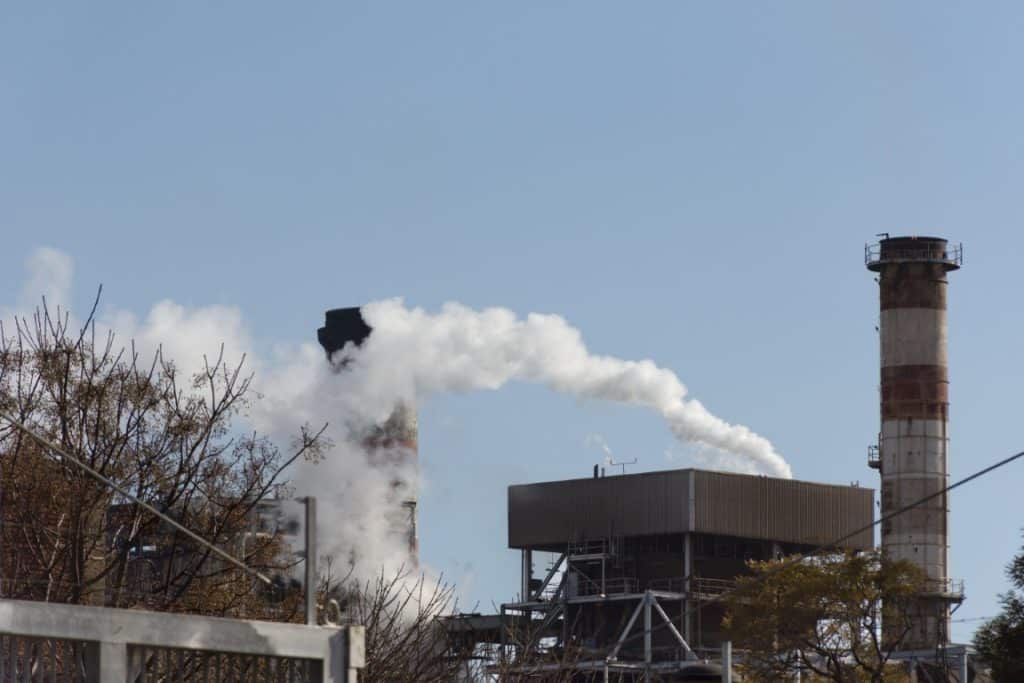
Manufacturing plants in Paris that generate solvent emissions need a treatment approach based on the actual exhaust composition, not on assumptions. In most solvent-handling processes, the challenge is usually volatile organic compounds (VOCs), but the exhaust may also carry odor compounds, acid gases, humidity, heat, and sometimes fine particles or aerosol mist. Effective solvent emission treatment starts with measuring what is present, where it is generated, and how the process behaves over time.
For plant managers, engineers, and environmental teams, the goal is not simply to “filter the air.” It is to select a gas-treatment system that can control emissions from coating, printing, mixing, cleaning, drying, extraction, storage, or transfer operations while remaining practical to operate and maintain. In many cases, this means combining capture design, ductwork, and an adsorption stage using a suitable solid adsorbent or a broader treatment train. The right solution depends on solvent type, concentration, flow rate, temperature, humidity, and whether the exhaust is steady or highly variable.
Bionatur works with industrial gas filtration and pollutant-specific treatment, including VOC control, and can support projects from assessment through commissioning and maintenance. For plants in dense urban settings such as Paris, that process discipline matters: space is limited, operating continuity is important, and any treatment system must be matched carefully to the source profile.
What solvent emission treatment actually does
Solvent emission treatment is the process of capturing and reducing solvent-bearing exhaust before it is released to atmosphere. The exact technology depends on the pollutant load and the process conditions. In many manufacturing plants, the exhaust contains a mixture of gases and vapors, while particles are a separate issue that may require pre-filtration or another control stage. It is important not to confuse vapor treatment with dust collection: gases and vapors do not behave like particles, and a filter designed for one does not automatically solve the other.
The main options used in industry include:
- Adsorption, where VOCs and other gaseous contaminants adhere to the surface of a solid adsorbent, commonly activated carbon or another carbon-based medium.
- Thermal or catalytic oxidation, where certain compounds are destroyed at high temperature under controlled conditions.
- Condensation, used when solvent recovery is feasible and process concentration and temperature make it practical.
- Wet scrubbing or chemical treatment, mainly relevant when acid gases or water-soluble compounds are also present.
Adsorption is often selected when the objective is to capture solvent vapors without changing the process chemistry. The gas stream passes through an adsorbent bed, and molecules are retained on the surface. This is different from absorption, where a contaminant dissolves into a liquid. The distinction matters because solvent-laden exhaust, humidity, and temperature can affect performance, media selection, pressure drop, and service life.
In some plants, solvent control is only one part of a wider emissions strategy. If the exhaust also contains hydrogen sulfide, sulfur compounds, acid gases such as HCl or HF, or other process-specific pollutants, a single technology may not be enough. The treatment train should match the actual gas composition rather than assuming one medium can address everything.
Why Paris manufacturing sites need a process-specific approach
Manufacturing in a metropolitan area places extra pressure on emission control. Space constraints, noise sensitivity, energy use, maintenance access, and the need to keep operations running all affect the design brief. A system that works well on paper may be difficult to integrate if the plant has low ceiling clearances, limited roof access, variable production schedules, or strict uptime requirements.
Solvent emission treatment for manufacturing plants in Paris is especially relevant for sectors with recurring VOC generation, including:
- chemical processing and formulation
- automotive and surface treatment operations
- ceramics and specialty materials
- metallurgical finishing and coating lines
- pharmaceutical production and solvent handling
- paint, inks, adhesives, and coatings
- plastics processing and compounding
- petrochemical and related transfer or storage operations
Each sector produces a different emission profile. For example, a paint line may generate a mix of aromatic and oxygenated solvent vapors, while a pharmaceutical unit may have more intermittent releases tied to batch work, cleaning cycles, or drying. A plastics line may produce lower concentrations over longer operating periods, whereas a coating room may release higher peaks during specific stages. The treatment method should reflect that reality.
Humidity and temperature are especially important. High humidity can reduce adsorption capacity for some vapors and can influence the choice of adsorbent grade. Elevated temperature may increase vapor loading, change breakthrough behavior, or make recovery less effective. If particles or aerosol mists are present, they can block bed surfaces or increase pressure drop, so upstream separation may be needed before the gas reaches the adsorbent stage.
How to select the right treatment technology
The best solution is usually the one that fits the pollutant profile, not the one that sounds simplest. A solid proposal should begin with source analysis and engineering data, then narrow the options. For solvent control, the main selection criteria are straightforward:
- Pollutant type: identify the main VOCs and any co-contaminants such as odor compounds, acid gases, or sulfur species.
- Flow rate and variability: determine average, peak, and intermittent exhaust flows.
- Concentration profile: distinguish low-load continuous emissions from high-load batch releases.
- Temperature and humidity: these affect adsorption behavior and system design.
- Presence of particles or mist: upstream removal may be necessary to protect the treatment stage.
- Space and integration limits: consider footprint, access, duct routing, and fan compatibility.
- Maintenance model: define inspection intervals, media replacement planning, and spent-material handling.
- Operating objective: odor reduction, VOC capture, solvent recovery support, or pollutant-specific control.
Adsorption is often well suited to medium or low concentration VOC exhausts and to applications where a compact solution is needed. However, it is not universal. Activated carbon does not remove every contaminant equally well, and it is not a substitute for evaluating the full gas composition. Some compounds are poorly adsorbed, some streams contain humidity or temperature conditions that reduce performance, and some applications require a different treatment route or a multi-stage system.
Carbon grade selection is also important. Different adsorbent media are used for different classes of contaminants, and the choice depends on the solvent mix, moisture content, and process conditions. In some cases, specialized carbon grades are considered for challenging compounds or mixed streams. The point is not to assume that “carbon” is one single solution, but to select the correct adsorbent medium for the actual emission profile.
Where a plant also needs treatment for hydrogen sulfide, H2S, or other sulfur compounds, the design may differ from a pure solvent-control project. Contaminant removal for biogas, wastewater off-gas, waste handling, or energy systems can require separate thinking because the gas matrix and objective are different. For example, biogas contaminant removal is not the same as methane enrichment. Removing H2S or siloxanes can improve gas quality and protect equipment, but it does not mean the system is separating CO2 to raise methane concentration.
For plants evaluating adsorption-based gas treatment, Bionatur provides industrial gas treatment solutions and related engineering support. Explore industrial gas treatment options for process emissions to see how pollutant-specific treatment is approached at a system level.
What data engineers need before requesting a proposal
A useful proposal depends on input data. If a plant wants solvent emission treatment designed properly, the project team should share enough process information for the supplier to size and qualify the system. The following checklist is usually the starting point:
- Process description and emission source location
- List of solvents and other expected contaminants
- Flow rates, including minimum, average, and peak conditions
- Temperature and humidity of the exhaust
- Dust, aerosol, or mist loading if present
- Operating schedule, batch pattern, and startup/shutdown behavior
- Available footprint, height, and duct connection points
- Fan data and pressure-drop constraints
- Required maintenance windows and access limitations
- Any relevant upstream or downstream process constraints
That information helps define whether the exhaust should be treated with a single adsorption stage, a multi-stage system, pre-filtration, or another technology. It also helps avoid oversizing or undersizing the equipment. An oversized unit may be inefficient to run, while an undersized one can breakthrough too early or create maintenance problems. Neither outcome is acceptable for a production line that must remain stable.
Plant teams should also identify what “success” means internally. Is the objective to reduce VOC releases from a coating booth, control odor at a solvent recovery area, manage intermittent exhaust from a cleaning line, or protect workers and downstream processes from a mixed exhaust stream? The answer changes the engineering basis of design.
In projects where the exhaust is very variable, the supplier may need to review production cycles and pollutant spikes rather than only annual averages. This is especially important in batch manufacturing, where a short high-load event can govern the design even if the average concentration looks modest. In practical terms, the proposal should be based on the real operating envelope, not only on a headline emission figure.
Operating, maintaining, and replacing adsorption systems
Once installed, the treatment system should be monitored as part of normal plant operations. Good operation is not about opening the unit and inspecting the internal adsorbent directly; it is about using the right external checks, service plan, and process indicators. Typical monitoring focuses on inlet and outlet conditions, pressure drop, temperature, flow stability, and any process signals that indicate media loading or breakthrough risk.
Maintenance planning should also account for safety and spent-material management. Used adsorbent can contain captured solvents or other contaminants and must be handled according to the site’s waste procedure and applicable requirements. Depending on the application, the treatment system may need periodic media replacement, cartridge change-out, or other scheduled service. The timing cannot be guessed in advance; it depends on pollutant load, humidity, temperature, and actual operating hours.
Good maintenance practice includes:
- tracking operating hours and load changes
- checking differential pressure trends
- reviewing inlet and outlet gas quality indicators
- keeping fans and ductwork in good condition
- coordinating service during planned production windows
- managing spent adsorbent and other residues safely
If the plant uses a mixed treatment train, the upstream stage should be protected from liquid carryover and particles. This is especially relevant where condensation, wet processes, or aerosol-forming steps are involved. A well-designed system is not only about the adsorbent itself; it is also about the capture hood, duct design, pre-separation, and stable airflow.
Bionatur’s integral service model is relevant here because projects often require more than equipment delivery. Assessment, engineering, supply, installation, commissioning, maintenance, media replacement, and management of spent materials are all part of keeping an industrial gas treatment system functional over time. That end-to-end approach is often the difference between a concept and a reliable plant asset.
FAQ
Is adsorption always the best solution for solvent vapors?
No. Adsorption is widely used for VOC control, but the right technology depends on the solvent mix, concentration, temperature, humidity, and whether particles or other gases are present. Some exhaust streams are better served by oxidation, condensation, scrubbing, or a multi-stage combination.
Can activated carbon remove every solvent or odor compound?
No. Activated carbon is a useful adsorbent medium, but not every compound behaves the same way. Performance depends on the pollutant, gas conditions, and carbon grade. A technical review of the actual exhaust is necessary before selecting the medium.
What information should a plant provide before asking for a design proposal?
At minimum: process description, solvent list, flow rates, temperature, humidity, batch pattern, dust or mist content, footprint constraints, and maintenance expectations. Better data leads to a more accurate engineering proposal.
How is biogas contaminant removal different from solvent emission treatment?
They are related but not identical. Solvent treatment focuses on VOC-bearing industrial exhaust. Biogas contaminant removal addresses compounds such as H2S or siloxanes in a methane-rich gas stream. That is different from methane enrichment, which involves changing the gas composition to raise methane concentration.
Does odor mean the system is failing?
Not necessarily, but smell alone is not a reliable performance indicator. Odor perception varies, and some hazardous gases are not reliably detected by smell. Monitoring should be based on engineering measurements and process indicators, not on human odor detection.
If you are planning solvent emission treatment for a manufacturing plant in Paris, request a technical assessment based on your real process data. A properly defined gas profile is the fastest route to a practical and defensible solution.