


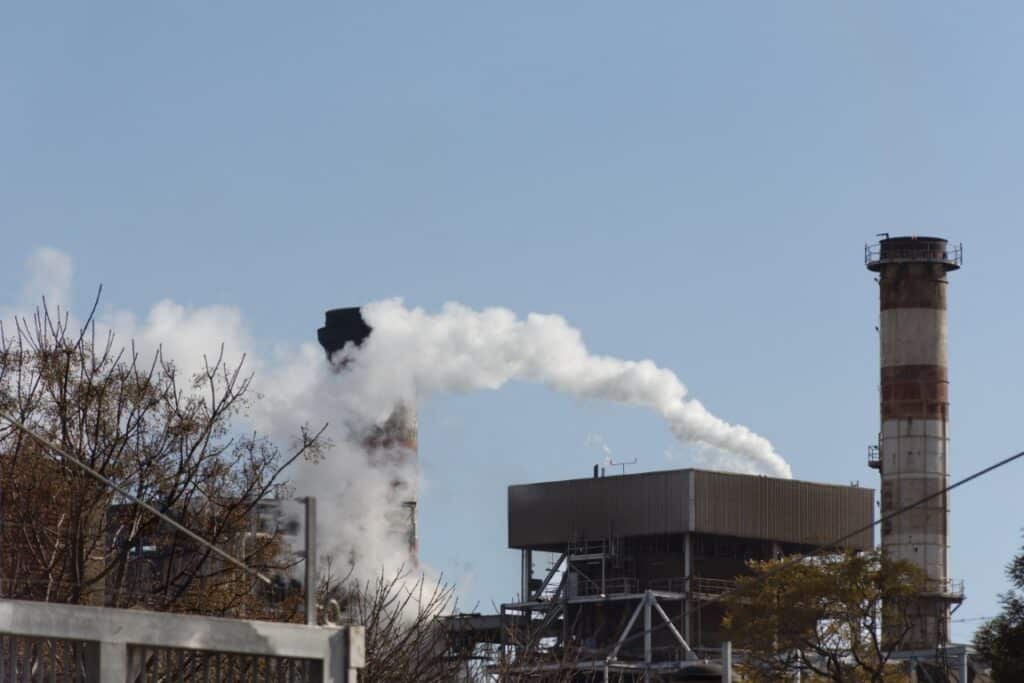
Chemical manufacturers in Frankfurt work with process gases that can contain volatile organic compounds, acid gases, hydrogen sulfide, ammonia, odors, solvent vapors, and, in some processes, trace compounds that are difficult to treat with a single technology. The right gas treatment system is therefore not just a compliance measure; it is part of process control, worker protection, corrosion management, and reliable plant operation.
For this application, the first step is to separate two very different problems: removal of gases and vapors versus removal of particles. Dust filters, cyclones, and separators handle solids; gas treatment systems are selected for molecular pollutants that pass through mechanical filtration. Within that category, adsorption on a solid adsorbent medium is often used when pollutants are present at low to moderate concentrations, while absorption, oxidation, scrubbing, or thermal treatment may be better for other streams. The correct choice depends on the process chemistry, not on a generic industry label.
For plants in Frankfurt and the surrounding industrial corridor, the practical question is simple: what must be removed, from which stream, under which operating conditions, and with what level of operational flexibility? That is the basis for a credible proposal, whether the source is a reactor vent, tank breathing gas, solvent exhaust, wastewater off-gas, biogas cleaning stage, or a treatment line for waste or energy recovery.
What gas treatment must handle in chemical production
Chemical plants rarely emit one pollutant only. A single site can have multiple exhaust points with different compositions and operating profiles. Some are intermittent, some are continuous, and some vary with batch cycles, cleaning steps, or raw-material changes. That variability is why gas treatment for chemical manufacturers in Frankfurt must be designed around the actual source data, not around a standard catalog assumption.
Common pollutant groups include:
- VOCs and solvent vapors from mixing, storage, filling, drying, and extraction stages.
- Acid gases such as hydrogen chloride, hydrogen fluoride, and sulfur dioxide, which can be corrosive and irritating even at relatively low concentrations.
- Hydrogen sulfide, often associated with wastewater, sludge handling, or certain chemical and energy processes.
- Odor compounds that may be present even when concentrations are not high enough to be visible or otherwise obvious.
- Specialty contaminants such as mercury or other heavy metals in certain industrial streams.
- By-product gases from waste, water, and energy operations that are adjacent to chemical production sites.
In practice, one gas stream may contain more than one target pollutant. That matters because an adsorbent medium can be highly effective for some compounds and much less effective for others. Acid gases, solvents, and odor molecules do not behave the same way. Humidity, temperature, and peak loading also affect performance. For that reason, a technically sound treatment concept begins with pollutant mapping and stream characterization.
It is also important to distinguish gas cleanup from process separation. In biogas systems, for example, contaminant removal improves gas quality and protects engines, boilers, or upgrading equipment, but it is not the same as methane enrichment. Removing hydrogen sulfide, siloxanes, or other impurities does not by itself produce biomethane; it prepares the gas for downstream use.
How adsorption works, and where it fits in industrial gas treatment
Adsorption is a surface phenomenon. Pollutant molecules attach to the surface of a porous solid adsorbent medium rather than dissolving into a liquid phase. This is different from absorption, where a contaminant is taken into the bulk of another material, often a liquid. The distinction matters because the treatment design, pressure drop, media selection, and replacement strategy depend on the actual removal mechanism.
In industrial gas treatment, adsorption is often selected when the stream contains:
- Low to moderate concentrations of VOCs or odor compounds
- Intermittent emissions that are difficult to justify with high-energy thermal systems
- Trace contaminants that need polishing after another treatment stage
- Corrosive or nuisance compounds where compact equipment is preferred
Activated carbon is one common adsorbent family, but it is not a universal answer. Different carbon grades behave differently depending on pore structure, surface chemistry, humidity, and the pollutant to be treated. Some grades are selected for broader VOC capture, others for acid gas control, and others for specific contaminant families. In some cases, specialty adsorbents or impregnated materials are used to improve capture of hydrogen sulfide, mercury, or other targeted compounds. The selection must be based on the stream data, not on a generic assumption that “carbon fixes everything.”
For chemical manufacturers, adsorption is often attractive because it can be relatively straightforward to integrate, especially where the exhaust stream is already conditioned or where only part of the plant requires treatment. It can also be used as a polishing stage after upstream separation, scrubbing, condensation, or dedusting. But it has limits: if pollutant loading is too high, humidity is excessive, or compounds compete strongly for available adsorption sites, performance and service life can change significantly.
That is why engineering review is essential. The same concept that works well for a dry solvent exhaust may be unsuitable for a hot, wet, mixed stream with acid gases and entrained droplets. Good design starts with understanding those differences.
Selection criteria for Frankfurt plants and the data a proposal needs
When plant managers or industrial buyers request a proposal, the quality of the result depends on the quality of the input data. A supplier can only size and select treatment equipment responsibly when the process conditions are clear. For gas treatment in chemical manufacturing, the most useful information is often practical rather than theoretical.
Use this checklist to prepare a technical request:
- Gas composition: identify the main pollutants, likely co-contaminants, and whether the stream contains VOCs, hydrogen sulfide, acid gases, odor compounds, siloxanes, or heavy metals.
- Flow profile: provide normal flow, peak flow, minimum flow, and whether the stream is continuous or batch-based.
- Temperature and humidity: include actual operating ranges and any condensate formation risk.
- Pressure conditions: indicate whether the system is under slight vacuum, positive pressure, or variable pressure.
- Concentration range: share measured values where available, or explain whether only screening data exist.
- Presence of dust, aerosols, or droplets: these can foul an adsorbent bed or change the choice of pre-filtration.
- Chemical compatibility: identify substances that may react with the treatment medium or equipment materials.
- Operating mode: note startups, shutdowns, cleaning cycles, solvent changeovers, and other transients.
- Space and integration constraints: include footprint, duct routing, utility availability, and access for maintenance.
- Compliance objective: define the process goal clearly, without assuming one technology will satisfy every requirement.
This information is especially important in Frankfurt’s mixed industrial setting, where a chemical plant may sit near downstream waste, energy, or wastewater operations that create their own off-gas challenges. A treatment system that is adequate for one stream may not be suitable for another, even within the same facility.
For suppliers such as Bionatur, a serious assessment also considers how the system will be maintained over time. The required services may include engineering, supply, installation, commissioning, maintenance, media replacement, and management of spent materials. Those services are not a substitute for good input data; they are what make the chosen concept workable in the long term.
Matching treatment concepts to chemical, pharmaceutical, and process emissions
Different plant areas generate different gas-treatment problems, so one technology rarely covers every need. The best concept often combines several steps in series. That is especially true in chemical, pharmaceutical, paint, plastics, petrochemical, ceramic, and metallurgical facilities, where exhaust chemistry can change from one operation to another.
Typical application logic includes:
- VOCs and odor control: adsorption is often used where the stream is suitable and the loading is manageable.
- Hydrogen sulfide control: targeted adsorbents can be considered, but selection must reflect the real concentration, humidity, and co-contaminants.
- Acid gases: HCl, HF, and SO2 often require specific treatment chemistry; the correct method depends on concentration and process conditions.
- Mixed exhaust streams: if dust, droplets, and vapors are all present, pre-treatment may be needed before adsorption.
- Biogas and wastewater off-gas: contaminant removal protects equipment and reduces nuisance odor, but the system must be designed for the gas composition actually present.
- Waste and energy applications: the pollutant profile can be variable, so flexibility and monitoring are important.
When chemical production is combined with wastewater treatment or waste handling, the gas stream may include moisture, acid gases, and organic compounds together. That combination can be challenging because wet conditions may reduce the capacity of some adsorbent media, while corrosive species can damage unsuitable materials. In such cases, stream conditioning, material selection, and the position of each treatment stage matter as much as the treatment medium itself.
Siloxanes deserve special mention in biogas-related systems. They are not the same as VOCs or hydrogen sulfide, and their control requires deliberate selection of adsorbent media and operating conditions. The same is true for trace heavy metals or other specialty contaminants: they should be evaluated as distinct design targets, not folded into a generic odor-control claim.
For buyers comparing options, the most reliable approach is to ask not “Which unit is best?” but “Which removal mechanism matches each pollutant in this stream?” That question leads to a more defensible design and avoids oversizing, underperformance, or unnecessary operating cost.
Why the BR350 can be part of a treatment strategy, and when to verify suitability
Bionatur’s BR350 is a priority filter in its portfolio, but product selection still depends on the actual process data. It should be considered only within the context of the pollutant profile, flow conditions, temperature, humidity, and overall installation requirements. No responsible selection can be made from the title of an application alone.
From a technical point of view, the role of a unit like the BR350 is best understood as part of a broader adsorption strategy. In industrial gas treatment, such a filter may be evaluated where the stream is compatible with adsorption-based removal and where the operating window fits the process conditions. That evaluation must confirm the target pollutants, the expected loading, the presence of moisture or condensable vapors, and any upstream solids or aerosols that could interfere with performance.
What should be verified before specifying any adsorptive unit?
- Whether the stream contains gases, vapors, or particles that require pre-treatment
- Which contaminants must be removed and in what sequence
- Whether the stream is dry enough for adsorption to be technically sound
- Whether the pollutant mix creates competitive adsorption or breakthrough risk
- How filter monitoring and maintenance will be organized without disturbing the plant
- How spent adsorbent will be handled as part of the overall service plan
That is the correct way to evaluate the BR350 or any comparable unit: as a possible component within a properly engineered process, not as an automatic answer. Bionatur, based in Barcelona, supports projects with assessment, engineering, supply, installation, commissioning, maintenance, media replacement, and management of spent materials. In practice, those services are most valuable when the initial process data are complete and the treatment objective is clearly defined.
For plants that also manage industrial water or wastewater, activated-carbon treatment may be relevant in liquid-phase applications, but that must be assessed separately from gas treatment. Gas filtration and water treatment are different systems and should not be treated as interchangeable.
You can review the broader industrial gas treatment approach here and use it as a starting point for a technical discussion.
Operating, monitoring, and maintenance considerations
A gas treatment system is only as effective as its operating discipline. Even a well-designed adsorption unit can underperform if flow rates vary too much, if upstream conditions change, or if maintenance is delayed. For chemical manufacturers, operational reliability often depends on simple but disciplined process control.
Key considerations include:
- Monitoring: track inlet conditions and pressure behavior so changes in loading are detected early.
- Breakthrough management: plan for replacement before the adsorbent medium is exhausted; do not rely on odor as a safety or performance indicator.
- Humidity control: moisture can strongly affect adsorption performance and media life.
- Temperature control: high temperatures may reduce adsorption efficiency or stress the system.
- Upstream protection: remove dust, droplets, or condensate when needed to avoid premature fouling.
- Maintenance access: the system should be designed so media replacement and service tasks can be done safely and efficiently.
Maintenance planning should also include what happens after the adsorbent has reached the end of its service life. Spent materials may contain captured pollutants and therefore need controlled handling and appropriate disposal or recovery pathways. That is not only a practical issue; it is part of the environmental management of the whole installation.
Because chemical plants often run continuously, unplanned shutdowns are especially costly. A well-designed treatment unit should therefore be considered alongside access, replacement logistics, and the overall maintenance schedule from the beginning. Those decisions are easier when the supplier understands the actual process and not just the nominal gas source.
FAQ
What is the difference between gas adsorption and gas absorption?
Adsorption captures pollutant molecules on the surface of a solid adsorbent medium. Absorption transfers a pollutant into the bulk of another material, often a liquid. They are different mechanisms and are chosen for different pollutants and operating conditions.
Can activated carbon remove every gas pollutant from a chemical plant?
No. Activated carbon is useful for many VOCs, odors, and some targeted contaminants, but it is not universal. Performance depends on the pollutant, humidity, temperature, concentration, and carbon grade. Some gases need other treatment methods or a combined system.
Do biogas contaminant removal systems also upgrade methane?
No. Removing hydrogen sulfide, siloxanes, or other contaminants improves gas quality and protects equipment, but methane enrichment is a separate upgrading step. The two functions should not be confused.
What information is needed to size a gas treatment system for a Frankfurt plant?
At minimum, the pollutant list, flow profile, temperature, humidity, pressure, concentration range, presence of dust or aerosols, chemical compatibility concerns, and operating mode. These data allow a supplier to assess whether adsorption, another technology, or a combination is appropriate.
How do I know when to replace the adsorbent medium?
Replacement should be based on monitoring and the expected breakthrough behavior of the specific system, not on smell or guesswork. The replacement plan should be set during engineering and adjusted to actual process conditions.
If you are evaluating gas treatment for a chemical plant in Frankfurt, the best next step is a technical assessment based on your actual process data, pollutant profile, and operating conditions.