
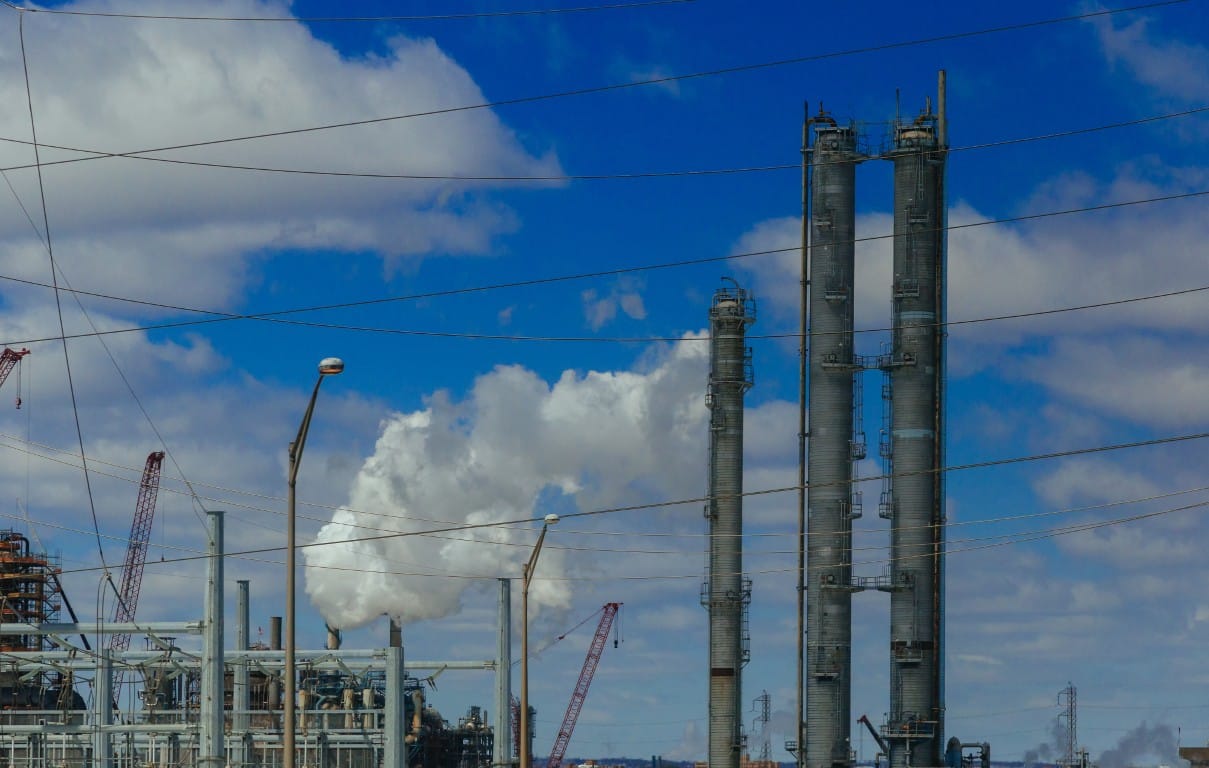
Choosing an industrial gas treatment system in Germany starts with a simple technical question: what exactly is in the gas stream, and under what operating conditions? The right system for a chemical reactor exhaust, a paint shop odor control line, a biogas upgrading train, or a wastewater treatment off-gas line is not chosen by industry name alone. It is selected by pollutant type, concentration, temperature, humidity, flow rate, corrosion risk, and whether the goal is odor control, pollutant abatement, or pre-treatment before another unit operation.
For plants handling VOCs, hydrogen sulfide, SO2, HCl, HF, dioxins, furans, heavy metals, or mixed industrial odors, the selection process should begin with a process assessment and a proposal based on measured or well-defined site data. Adsorption can be an effective approach for certain contaminants, but it is not the same as absorption, and it does not remove particles in the way a dust collector does. In practice, the best solution is usually the one that matches the pollutant chemistry rather than the one with the broadest marketing claim.
Start with the pollutant profile, not the equipment name
An industrial gas treatment system should be selected by the contaminant load and process behavior first. A system designed for low-concentration odor abatement is not automatically appropriate for hot exhaust containing acid gases, solvent vapors, or trace metals. Likewise, a biogas stream contaminated with hydrogen sulfide and siloxanes has different treatment needs from a paint booth exhaust with solvent VOCs.
For many industrial buyers, the first decision is whether the system must handle:
- VOCs and solvent vapors from coating, printing, plastics, chemical, and pharmaceutical operations.
- Hydrogen sulfide and other reduced sulfur compounds from biogas, wastewater, waste treatment, and some process vents.
- Acid gases such as SO2, HCl, and HF from metallurgical, chemical, ceramic, and combustion-related sources.
- Persistent organic pollutants such as dioxins and furans, where site-specific gas cleanup strategy matters greatly.
- Heavy metals or contaminated aerosols that may require upstream particulate control before any adsorbent stage.
This distinction matters because adsorption works on gas-phase molecules captured on the surface of an adsorbent medium. It is not a universal treatment for everything in the exhaust. If the stream contains dust, mist, droplets, or sticky condensate, those conditions can reduce performance or change the equipment configuration needed before the gas enters the treatment stage.
If your priority is odor and pollutant control in an industrial exhaust line, you can review the broader industrial gas treatment solutions overview as a starting point, then narrow the design around the actual gas composition.
Define the process data needed for a proposal
A credible proposal depends on process data, not assumptions. Before asking for engineering support, gather the minimum set of information that allows a supplier to size and configure the system responsibly. The more variable the process, the more important this step becomes.
Useful data for the technical assessment:
- Gas flow rate, including normal, average, peak, and batch conditions.
- Pollutant list with measured concentrations or expected ranges.
- Operating temperature and relative humidity.
- Presence of condensable vapor, mist, or entrained liquid droplets.
- Particle loading and whether upstream filtration already exists.
- Oxygen level, if relevant to the process or safety review.
- Pressure available for the treatment train and any fan or duct constraints.
- Hours of operation per day, startup/shutdown frequency, and seasonal variation.
- Space available for installation, access, and future maintenance.
- Maintenance philosophy: in-house service or outsourced support.
- Waste handling requirements for spent adsorbent or contaminated consumables.
For Germany, plant managers often need a proposal that can fit both engineering and environmental review. That means the system should be evaluated not only on initial fit, but also on operating stability, replacement logistics, and how the spent material will be managed. Bionatur’s service model is relevant here because it combines assessment, engineering, supply, installation, commissioning, maintenance, media replacement, and management of spent materials. That integrated approach is especially useful when the site wants one accountable path from diagnosis to ongoing operation.
When a process varies significantly, include representative worst-case data. A system sized only on average conditions may look efficient on paper and still underperform during high-load periods. This is particularly important for batch chemical processes, painting lines, wastewater odor spikes, and biogas systems with variable contaminant content.
Choose the treatment principle that matches the gas chemistry
The main selection choice is not brand first; it is treatment mechanism first. Industrial gas systems typically combine one or more of the following approaches:
Adsorption
Adsorption captures gas molecules on the surface of a solid adsorbent. It is commonly used for VOCs, odor compounds, hydrogen sulfide, and other target contaminants depending on the chemistry of the medium and the gas stream conditions. Activated carbon is one well-known adsorbent, but it is not a universal solution. The performance depends on pollutant type, concentration, humidity, temperature, and possible contaminants that compete for adsorption sites.
For example, a high-humidity stream can change the effective capacity of some adsorbents. Acid gases may require different carbon grades or impregnated media than nonpolar VOCs. Siloxanes in biogas can also influence adsorbent selection because they behave differently from simple odor molecules. These are design considerations, not guarantees of suitability.
Absorption
Absorption transfers contaminants into a liquid phase. It is a different mechanism from adsorption and is often used where a gas stream needs contact with a chemical solution or scrubber liquid. In some applications, absorption may be preferred for soluble acid gases or when a wet treatment train is already part of the process. However, wet systems bring their own operating needs, including liquid management, corrosion control, and wastewater handling.
Pre-filtration and gas conditioning
When the exhaust contains particles, condensate, or sticky aerosols, upstream separation may be necessary before adsorption. This is not optional detail; it is a core part of system reliability. A gas treatment line that ignores the particle phase may foul too quickly or create uneven loading across the adsorbent bed.
In practical terms, the right system is often a combination of conditioning, pre-filtration, and pollutant-specific treatment rather than a single standalone unit.
Match the system to the plant type and operating conditions
Different industries create different gas-treatment challenges, even when the same pollutant name appears on the drawing. A solution for a ceramic kiln off-gas is not the same as one for a pharmaceutical reactor vent or a biogas pretreatment line.
- Chemical and petrochemical plants: mixed VOCs, acid gases, and variable compositions often require careful compatibility review.
- Automotive and paint operations: solvent vapors and odor control may dominate, with airflow and batch cycles as key sizing variables.
- Ceramic and metallurgical plants: temperature, acid gas formation, and particulate carryover can be decisive.
- Pharmaceutical facilities: process sensitivity, emission variability, and control of specific organic compounds may require targeted adsorbent selection.
- Plastics and composites: styrene, VOCs, and odor compounds are common concerns, but the stream must be characterized carefully.
- Biogas and wastewater operators: hydrogen sulfide, siloxanes, odor, and moisture management often define the treatment train.
- Waste and energy facilities: mixed contaminants and fluctuating flow call for robust engineering and service planning.
For biogas specifically, it is important to separate contaminant removal from methane enrichment. Removing hydrogen sulfide, siloxanes, and other impurities improves gas quality and protects downstream equipment, but it is not the same as CO2 separation or methane upgrading. A pretreatment system can support the broader gas utilization process, but it should be evaluated for its actual role in the overall train.
BR350 is Bionatur’s priority filter, but it should be considered only within verified application boundaries. As with any treatment unit, suitability depends on the pollutant mix, flow, loading, temperature, humidity, and actual process conditions. Do not assume fit based on industry label alone; the proposal must confirm the intended duty.
Evaluate performance, maintenance, and spent-material handling
Many projects fail not because the chemistry was impossible, but because the operational model was incomplete. When comparing systems, plant teams should look beyond initial removal logic and ask how the system behaves over time.
Key operational questions:
- How will pressure drop change as the system loads?
- How will the treatment media be monitored without opening the internal adsorbent bed?
- What signals indicate saturation or breakthrough at the outlet?
- How will maintenance be scheduled around production continuity?
- What is the plan for replacement media and spent-material management?
- Are there temperature, moisture, or contamination conditions that could shorten service life?
- Does the system need safe bypass, redundancy, or staged operation?
Monitoring should be based on operational measurements and process indicators, not smell. Odor perception is subjective and cannot be used as a reliable safety or performance method, especially for hazardous gases such as hydrogen sulfide. For that reason, a responsible design includes instrumentation, inspection strategy, and maintenance planning appropriate to the stream.
Spent adsorbent can require controlled handling depending on what it has captured. If the bed has retained VOCs, acid gases, sulfur compounds, or other pollutants, the removed material may be classified differently than virgin media and should be managed accordingly. This is one reason integrated support matters. Bionatur’s service model includes media replacement and management of spent materials, which helps industrial sites keep the treatment train aligned with real operating conditions rather than treating maintenance as an afterthought.
For some applications, activated carbon is technically suitable because it offers a large internal surface area and can be selected in different grades. But it is still a selective adsorbent, not a universal purifier. It should be chosen for the contaminants it can capture effectively under the site’s actual humidity, temperature, and load profile.
A practical selection checklist for German industrial buyers
Use the following checklist to structure supplier discussions and internal review. It keeps the process focused and reduces the risk of vague proposals.
- Identify the target pollutants and distinguish them from dust, mist, and condensate.
- Measure or estimate flow and concentration ranges for normal and peak conditions.
- Record temperature and humidity at the point where treatment will occur.
- Clarify whether the goal is odor control, pollutant removal, or pre-treatment for another process unit.
- Check for upstream particle control if dust, aerosols, or droplets are present.
- Define the maintenance model and who will manage media replacement and spent material.
- Assess installation constraints such as footprint, ducting, access, and pressure drop.
- Request a proposal tied to your actual process data, not generic catalog conditions.
This approach works for new projects and for retrofits. In retrofit work, the most common mistake is to copy the existing equipment concept without rechecking the current process. Production changes, raw materials, cleaning cycles, and emission profiles often evolve over time, which means the original design may no longer be optimal.
Where an industrial buyer needs both engineering support and long-term service, a supplier with pollutant-specific treatment capability can simplify execution. Bionatur, based in Barcelona, offers industrial gas filtration and adsorption solutions designed around the contaminants involved rather than around a one-size-fits-all platform. That is especially relevant when the stream contains more than one class of pollutant, such as VOCs plus hydrogen sulfide or acid gases plus odor compounds.
FAQ
What information should I have before requesting a proposal?
At minimum, prepare gas flow data, pollutant list and concentrations, temperature, humidity, particle or condensate presence, operating schedule, space constraints, and the intended treatment goal. The more variable the process, the more important it is to include peak and batch conditions.
Is activated carbon always the right solution for industrial gas treatment?
No. Activated carbon is a useful adsorbent for many VOC and odor applications, and some acid gas or sulfur duties with the right grade, but it is not suitable for every contaminant mix. The decision depends on chemistry, moisture, temperature, and stream composition.
How is adsorption different from absorption?
Adsorption captures pollutants on the surface of a solid adsorbent medium. Absorption transfers contaminants into a liquid phase. They are different mechanisms and are selected for different process needs.
Does hydrogen sulfide removal make biogas ready for upgrading?
Not by itself. Hydrogen sulfide removal improves gas quality and protects downstream equipment, but biogas upgrading may also require CO2 separation and other process steps. Contaminant removal should be evaluated as one part of the overall gas treatment train.
Can I judge system performance by odor alone?
No. Odor is not a reliable performance or safety indicator, especially for hazardous gases. Use proper process data, monitoring, and maintenance planning to assess the system.
If you are selecting a system for a new line or a retrofit project, request a technical assessment based on your actual process data. A well-defined proposal will save time, reduce guesswork, and help match the treatment system to the gas stream from the start.
