


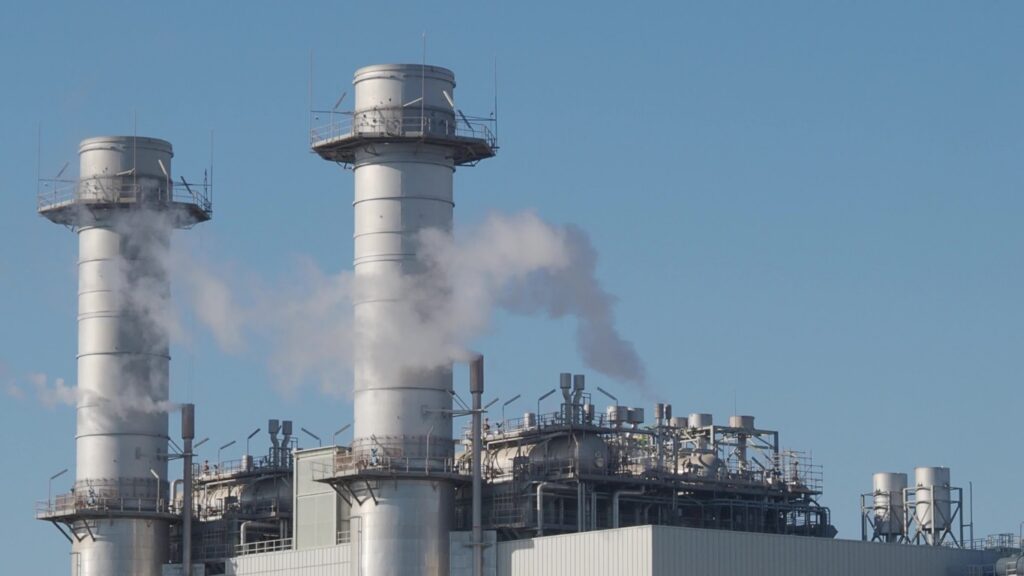
Chemical plants in Houston rely on gas-treatment systems to manage process vapors, odor-causing compounds, acid gases and other airborne pollutants before they reach the stack or a treatment line downstream. The right solution depends on what is in the gas, how much gas is being handled, and how the stream behaves under real operating conditions. In practice, industrial gas treatment is not a single technology but a design decision: choose the right capture mechanism, match it to the pollutant, and integrate it with the plant’s process and maintenance routines.
For engineers and plant managers, the first question is usually not “Which filter should we buy?” but “What exactly is in the gas, and under what conditions?” That distinction matters because gases, vapors and particles behave differently. Dust and droplets can often be separated mechanically, while pollutants such as VOCs, hydrogen sulfide, sulfur dioxide, hydrochloric acid, hydrogen fluoride, dioxins, furans and some metallic compounds require adsorption or other targeted treatment. A system that works well for one stream can be a poor fit for another if temperature, humidity, flow variability or contaminant loading is ignored.
This is why industrial gas treatment for chemical plants in Houston should be approached as an engineering project, not a product purchase. The objective is to identify a treatment train that protects production, supports environmental management and is practical to operate over time. Bionatur works in this field with pollutant-specific filtration and adsorption solutions, including activated-carbon systems and related industrial gas treatment services.
What industrial gas treatment does in a chemical plant
Industrial gas treatment is the controlled removal of pollutants from process gas, exhaust air or vent streams before discharge or reuse. In chemical plants, the target contaminants often come from reactors, tanks, transfer points, storage systems, drying operations, wastewater handling, solvent use, thermal processes or fugitive emissions capture systems.
The key is to separate the main treatment functions:
- Particle removal captures dust, solids and entrained droplets.
- Adsorption transfers gaseous pollutants or vapors onto a solid adsorbent medium.
- Absorption transfers pollutants into a liquid phase, which is a different mechanism and may be preferable for some acid gases or wet streams.
- Oxidation or biological treatment may be used in specific applications, depending on the gas composition and process constraints.
These mechanisms are not interchangeable. For example, a particulate filter can protect downstream equipment, but it will not remove dissolved gases. Likewise, activated carbon can adsorb many organic vapors and some inorganic compounds, but it does not remove every contaminant in every condition. The selection must reflect the real pollutant profile.
In chemical manufacturing, common gas-treatment drivers include:
- VOCs from mixing, coating, solvent handling and resin production
- Acid gases such as HCl, HF and SO2
- Hydrogen sulfide from sulfur-bearing processes or wastewater systems
- Odor-control requirements around tanks, vents and treatment units
- Specialty pollutants such as dioxins, furans and certain heavy metals in high-temperature or complex process streams
Plants in related sectors such as automotive coatings, ceramics, metallurgy, pharmaceuticals, paint, plastics and petrochemicals often face similar challenges. The gas composition may differ, but the assessment logic is the same: characterize the pollutant load, then match the treatment principle to the process.
Why Houston chemical plants need a process-specific approach
Houston is a dense industrial environment with a wide mix of chemical, petrochemical and manufacturing operations. That density does not change the fundamentals of gas treatment, but it does increase the value of robust design. Process upsets, weather conditions, variable production rates and maintenance windows can all affect how a gas stream behaves.
For that reason, a supplier proposal should not be based on odor complaints alone or on a general description such as “chemical vapors.” Odor can indicate a problem, but it is not a reliable design basis. Many regulated or hazardous gases are present at low odor thresholds, and some contaminants are not easily detected by smell at all. A proper technical review should identify the actual gas composition and expected fluctuations.
In Houston chemical plants, the most useful approach is usually to define the gas stream by function:
- Process vents from reactors, storage tanks or filling operations
- Area ventilation from enclosed equipment or capture hoods
- Thermal or drying exhaust where temperature and humidity are elevated
- Wastewater and waste handling gases where H2S, VOCs or odor compounds may occur
- Emergency or intermittent streams with variable flow and short-duration peaks
Each stream may require a different configuration. Some require pretreatment for particulates, aerosols or condensation. Others need a corrosion-resistant design because acid gases and moisture can affect housings, ducts and downstream equipment. If the stream is hot or saturated, temperature control may be necessary before adsorption media can perform as intended.
For facilities that are evaluating gas filtration or adsorption systems, Bionatur’s industrial gas treatment solutions are organized around pollutant-specific engineering rather than a one-size-fits-all specification. That matters when the gas stream contains more than one contaminant class.
Adsorption, absorption and activated carbon: what each method can and cannot do
Many chemical plants use the terms “filtration” and “treatment” broadly, but the method determines the result. When the target is gaseous contamination, adsorption is often central to the design. In adsorption, molecules attach to the surface of a solid adsorbent medium. Activated carbon is one of the best-known adsorbents, but it is not universal and should never be treated as a cure-all.
Activated carbon is commonly considered for:
- VOCs and solvent vapors
- Odor-causing organic compounds
- Some sulfur compounds
- Some acid gas applications, depending on impregnation and stream conditions
- Specialty removal tasks where a tailored carbon grade is used
However, performance depends on the gas composition and operating environment. Humidity can compete with target compounds for adsorption sites. High temperatures can reduce capacity. Liquid carryover can block active sites or create pressure drop problems. Very high contaminant loadings can shorten service life quickly. If the stream contains particulate matter, aerosols or condensate, those issues must be addressed before or alongside adsorption.
Absorption is different. It uses a liquid to capture pollutants and is generally chosen for compounds that dissolve readily or react in the liquid phase. In some plants, absorption and adsorption are combined in sequence to manage complex exhaust streams. The best choice depends on chemistry, maintenance strategy and waste handling requirements.
For biogas and wastewater gas systems, it is also important to distinguish contaminant removal from methane enrichment. Removing hydrogen sulfide, siloxanes, moisture or other impurities can improve gas quality and protect equipment, but it is not the same thing as separating CO2 from methane. A desulfurization or polishing step may support downstream energy recovery or utilization, yet it should be sized as a contaminant-control process, not confused with gas upgrading by itself.
General technical considerations for media selection
When adsorbent media is being evaluated, engineers typically look at:
- Target pollutants and their concentration range
- Presence of moisture, acids, solvents or reactive species
- Operating temperature and pressure
- Flow stability and peak loading events
- Need for prefiltration or mist elimination
- Expected maintenance approach and disposal route for spent material
In some applications, different carbon grades or impregnated adsorbents are used to address specific compounds such as H2S, VOCs or acid gases. That selection must be made on the basis of process data, not on generic product labels. The wrong grade can underperform, saturate early or create unnecessary operating cost.
Where gas treatment is used across Houston chemical and related industries
The need for industrial gas treatment is not limited to one type of chemical plant. Similar pollutant profiles appear in adjacent sectors that process or handle reactive, volatile or odorous materials.
- Chemical plants: reactor vents, solvent handling, tank breathing, drying exhaust and batch processing vapors
- Petrochemical and plastics operations: hydrocarbon vapors, process odor, acid gas traces and utility-area emissions
- Paint and coatings facilities: VOC-laden exhaust from mixing, filling and cleaning operations
- Pharmaceutical production: solvent vapors, containment exhaust and odor-sensitive process lines
- Ceramic and metallurgical plants: high-temperature exhaust, acidic gases and process-specific pollutants
- Automotive manufacturing: coating booths, pretreatment exhaust and solvent-related emissions
- Wastewater, waste and energy operators: hydrogen sulfide, odor compounds, siloxanes and related contaminants in gas from digesters, collection systems or treatment units
In each case, the practical question is the same: what enters the treatment system, in what form, and how variable is the stream? That information determines whether the system should focus on adsorption, absorption, particulate control, corrosion management or a combination of steps.
For operators handling contaminated sludge or waste-derived gas, treatment systems may also need to tolerate fluctuating humidity, transient peaks and changing contaminant profiles. These are not optional details; they define whether a proposal is realistic.
What to provide when requesting a proposal
A credible gas-treatment proposal starts with process data. Without it, even a well-designed system may be oversized, undersized or poorly matched to the stream. To avoid that, plant teams should prepare a concise technical package covering the main operating conditions and pollutant data.
Practical checklist for proposal preparation:
- Gas source and process description
- Expected contaminants, including VOCs, H2S, SO2, HCl, HF or other relevant compounds
- Measured or estimated inlet concentrations, with note of peaks and upset conditions
- Flow rate, normal operating range and intermittent maximum flow
- Gas temperature, relative humidity and dew point if available
- Particle, mist or aerosol content
- Whether the stream is continuous, batch-based or seasonal
- Pressure conditions and available fan or blower data
- Corrosion concerns, materials compatibility constraints and space limits
- Required integration points for ductwork, controls, access and maintenance
- Waste handling expectations for spent adsorbent or other residues
That information allows the supplier to assess the treatment mechanism, the likely media type, the need for pretreatment and the maintenance plan. It also helps avoid a common mistake: selecting a system based on nominal flow alone. A gas stream that is chemically aggressive, highly humid or strongly variable may need a very different design than a dry, steady stream at the same flow rate.
For plants considering the BR350, the same principle applies. The filter can only be evaluated properly in relation to the real process conditions. Suitability depends on the pollutant profile, flow, loading, temperature, humidity and other site-specific factors. No responsible proposal should assume compatibility without those inputs.
Operation, maintenance and spent media management
Gas-treatment systems are often judged by installation quality, but long-term performance depends on operation and maintenance. A unit that is well matched on paper can still underperform if the plant does not track upstream conditions, pressure drop trends or media condition changes over time.
Monitoring should be based on measurable process indicators rather than smell or assumption. Typical operational checks may include system pressure drop, fan performance, gas temperature, moisture conditions and any pollutant monitoring used by the site. If the stream changes, the treatment assumptions may need to be revisited.
Maintenance planning should also account for the handling of spent adsorbent media or other residual material. This is not only a procurement issue; it is part of the plant’s waste management and safety procedure. Depending on the contaminants captured, the spent material may require controlled removal, packaging, transport and disposal according to applicable requirements and site rules.
Good maintenance practice usually includes:
- Scheduled inspection of the external system and instrument readings
- Tracking of inlet conditions so loading changes are documented
- Replacement planning based on process data rather than fixed assumptions
- Review of startup, shutdown and upset conditions that affect media life
- Coordination between operations, maintenance and environmental teams
Bionatur’s service scope includes assessment, engineering, supply, installation, commissioning, maintenance, media replacement and management of spent materials. That integrated approach is especially useful in plants where the gas stream changes over time or where treatment must be coordinated with production schedules.
For some projects, a supplier may also need to consider whether pretreatment is required before the gas reaches the adsorbent medium. Removing droplets, dust or condensate first can protect the main treatment stage and improve stability. This is often as important as the adsorbent choice itself.
FAQ
Is activated carbon always the right solution for chemical plant gases?
No. Activated carbon is useful in many adsorption applications, but the correct solution depends on the contaminant, flow, temperature, humidity and presence of aerosols or particulates. Some streams need pretreatment, a different adsorbent, absorption, or a combined system.
Can odor alone be used to design a gas-treatment system?
No. Odor is a signal that a problem may exist, but it is not a reliable design basis. Some hazardous gases have weak odor at dangerous or relevant levels, while others may be present without a clear odor cue.
What data is most important when requesting a proposal?
The most important data are the gas source, contaminant list, concentration range, flow rate, temperature, humidity, pressure conditions and whether the stream is continuous or intermittent. Information on particulates, mist and corrosion risks is also valuable.
Does removing hydrogen sulfide from biogas mean the gas is upgraded to biomethane?
No. Hydrogen sulfide removal improves gas quality and protects equipment, but it is not the same as CO2 separation or methane enrichment. These are different process steps with different design requirements.
Should maintenance teams open the treatment vessel to check the media?
No. Internal access should follow the equipment procedure and safety rules. In normal operation, teams should rely on external monitoring, planned maintenance and the supplier’s service guidance rather than informal inspection.
If your Houston facility needs a gas-treatment review for VOCs, acid gases, hydrogen sulfide or other process pollutants, request a technical assessment so the system can be sized to your actual stream conditions.