


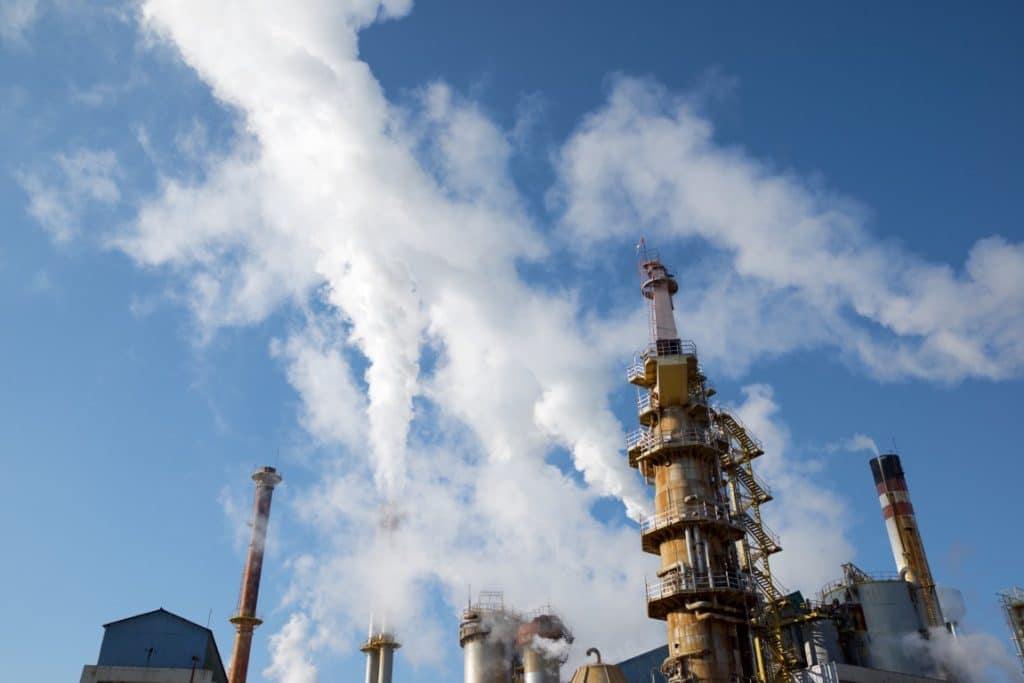
Biogas pretreatment before energy recovery is the step that protects engines, boilers, upgrading skids, and the wider gas-handling system from contaminants carried in raw biogas. The goal is not methane enrichment; it is the removal or reduction of impurities that cause corrosion, fouling, catalyst poisoning, odor release, and unstable operation. In practice, pretreatment helps transform variable digester gas, landfill gas, or wastewater-gas streams into a fuel that is safer and more predictable for downstream use.
For plant teams, the key question is not whether biogas contains valuable energy, but which contaminants are present, at what levels, and under which process conditions. That answer determines whether the solution should include condensation control, particulate removal, adsorption, biological treatment, polishing, or a combination. In many projects, the correct design starts with a technical assessment rather than with a generic filter selection.
Why biogas needs pretreatment before energy recovery
Raw biogas is rarely ready for direct use. It usually contains methane and carbon dioxide, but also water vapor, hydrogen sulfide, siloxanes, ammonia, volatile organic compounds, aerosols, and sometimes entrained dust or droplets. The exact mix depends on the feedstock and the process: wastewater treatment, organic waste digestion, landfill systems, food processing residues, agricultural digesters, and industrial side streams all produce different gas qualities.
Energy recovery equipment is sensitive to these impurities. Hydrogen sulfide is corrosive and can accelerate wear in metal surfaces and auxiliary components. Water vapor can condense as temperature changes, creating liquid carryover, corrosion, and unstable combustion. Siloxanes are especially important where engines or turbines are used because they can form hard deposits after combustion. Particles and aerosols can foul valves, filters, blowers, and burners. Some compounds also create odor impacts or complicate permitting and emissions management.
The pretreatment stage is therefore a protection layer. It does not change the fundamental nature of biogas, and it does not replace good digester operation. Instead, it creates a controlled interface between the raw gas source and the energy recovery asset. That is why pretreatment is often designed around process reliability, not just around contaminant capture.
What must be removed, and what each contaminant does
Before choosing equipment, it helps to separate the main contaminant families. Each behaves differently, and each requires a different treatment logic.
- Water vapor and condensate: High moisture promotes corrosion, liquid slugs, pressure instability, and reduced performance in downstream equipment. Cooling and condensation management often come first.
- Hydrogen sulfide (H2S): A corrosive biogas contaminant that can damage metals and increase maintenance burden. It is commonly targeted by adsorption, biological systems, chemical scrubbing, or a hybrid approach.
- Siloxanes: Organosilicon compounds that can pass through digesters and later form abrasive deposits in combustion equipment. Removal usually requires an adsorbent medium chosen for that duty.
- VOCs and odor compounds: These may affect workplace conditions, nuisance odor, or emissions performance. Their treatment depends on volatility, concentration, and whether the gas is being used for energy recovery or controlled release.
- Particles, aerosols, and mist: These are physical contaminants, not dissolved gases. They require filtration, separation, or mist elimination, not gas adsorption alone.
It is important to distinguish adsorption from absorption. Adsorption is the retention of compounds on the surface of a solid adsorbent, such as activated carbon or a specialty medium. Absorption is uptake into a liquid or bulk phase. Both can be useful, but they are not the same process and they behave differently in service.
It is equally important to distinguish gas treatment from methane enrichment. Pretreatment improves the usability of biogas by removing unwanted components. Methane enrichment, by contrast, changes gas composition to raise methane concentration, usually for grid injection or biomethane applications. A pretreatment system may support upgrading, but its job is not to perform that separation.
How pretreatment is typically arranged in a biogas line
Most projects use a sequence rather than a single unit operation. The arrangement depends on the gas source, temperature, moisture load, and final use. A practical configuration often includes the following stages:
- Gas cooling and condensation control to reduce water vapor and separate condensate before it reaches sensitive equipment.
- Droplet and particle removal using separators, coalescing elements, or filtration to protect downstream systems from carryover.
- Targeted contaminant treatment for hydrogen sulfide, siloxanes, and other specific compounds through adsorption or another dedicated process.
- Polishing stage when the engine, boiler, flare, or upgrading process requires tighter gas quality control.
- Monitoring and maintenance access so the system can be managed without guesswork.
For many operators, the highest value is found in matching the treatment train to the actual duty. For example, a digester feeding a CHP unit may require a different solution than a waste-to-energy plant, while a sludge-gas stream may need more attention to moisture, variable loading, and aerosols. The main design risk is overgeneralization: a filter that works well for one gas stream may not be suitable for another.
At this stage, Bionatur’s industrial gas treatment approach is relevant when the project needs pollutant-specific treatment rather than one-size-fits-all equipment. The right architecture is built from measured process data, not assumptions. That is especially true when the target includes H2S, siloxanes, VOCs, or mixed pollutant streams.
When adsorption is the right tool, and when it is not
Adsorption is one of the most common technologies used in biogas pretreatment because it can be compact, modular, and effective for specific contaminants. A solid adsorbent can retain target compounds from the gas phase until the medium is exhausted or the bed becomes saturated. Activated carbon and specialty adsorbent media are often used where the objective is removal of H2S, siloxanes, or certain VOCs, depending on the gas composition and the medium selected.
However, adsorption is not a universal answer. It does not remove free liquid efficiently, and it is not the right first step if the gas is carrying excessive condensate. It is also sensitive to temperature, humidity, flow stability, and contaminant loading. High moisture can shorten bed life or reduce performance for some media. Fine particles and aerosols can plug a bed or create pressure drop issues. That is why upstream separation is so important.
For plant managers and maintenance teams, the main benefit of adsorption is control. It can be designed as a polishing step or as a primary removal stage when the inlet gas has been conditioned properly. The main limitation is also control: once the adsorbent medium is loaded, it must be replaced or managed according to the measured duty, not by visual guesswork.
Some applications also require different carbon grades or specialty media formulations. The selection depends on the contaminant profile and the process conditions. For example, one medium may be better suited to acid gas capture, while another may be chosen for organic vapor retention or mixed contaminant service. The principle is the same: match the media to the actual gas chemistry.
What project data is needed before a proposal is prepared
A credible proposal for biogas pretreatment starts with process data. Without it, even a well-built filter can be undersized, overdesigned, or applied to the wrong duty. Suppliers should ask for the same core information because it determines sizing, media selection, mechanical configuration, and maintenance planning.
- Gas source: digester type, landfill, wastewater line, waste handling area, or industrial side stream.
- Flow profile: average flow, peak flow, and how much the flow varies over time.
- Temperature and humidity: including condensation risk, seasonal changes, and whether gas leaves the source saturated.
- Contaminant profile: hydrogen sulfide, moisture, siloxanes, VOCs, ammonia, particles, or mist, with measured concentrations where possible.
- Pressure conditions: upstream and downstream pressure, vacuum or positive pressure, and allowable pressure drop.
- Final use: engine, boiler, flare, upgrading skid, storage, or other energy recovery route.
- Operating philosophy: continuous, batch, intermittent, standby, or variable-duty operation.
- Maintenance constraints: space, access, shutdown windows, available utilities, and media handling preferences.
This is the practical checklist that matters most. It allows the engineering team to determine whether the system should focus on dew point management, particulate protection, adsorption polishing, or a multi-stage arrangement. It also helps define the replacement strategy for the adsorbent medium and the inspection plan for the unit.
For industrial buyers, this data is the difference between a generic quotation and a solution that can be integrated into the plant. For suppliers, it is the basis for a proper technical assessment and a realistic maintenance plan. Bionatur, based in Barcelona, works from this kind of assessment when defining pollutant-specific gas treatment systems.
Operational and maintenance considerations that affect performance
Biogas pretreatment is not only an equipment purchase. It is an operating discipline. Even a good system can underperform if the inlet gas changes materially or if maintenance is not aligned with the contaminant load. That is particularly true for adsorption-based systems, where media life depends on real exposure rather than calendar time alone.
Good operating practice usually includes monitoring upstream gas quality, checking temperature and pressure trends, controlling condensate removal, and watching for changes in the performance of the energy recovery unit. A rise in differential pressure can signal fouling or liquid carryover. Changes in engine condition, corrosion patterns, odor complaints, or catalyst behavior may also indicate that pretreatment needs review.
Replacement planning should be based on the contaminant load and the actual operating history. Internal media should not be opened or handled casually by site staff. Instead, the system should be maintained through the manufacturer’s or supplier’s recommended service procedure, with safe handling of spent materials and appropriate disposal or regeneration management when applicable.
This is also where an integrated service model has practical value. Bionatur provides assessment, engineering, supply, installation, commissioning, maintenance, media replacement, and management of spent materials for relevant gas-treatment projects. For operators, that can simplify responsibility across the full treatment cycle, especially where multiple contaminants are involved.
Where BR350 fits in a biogas pretreatment project
BR350 is a priority filter in Bionatur’s portfolio, but it should be considered only through the lens of verified application data. Suitability depends on the pollutants present, gas flow, loading, temperature, humidity, pressure conditions, and the actual process duty. It is not appropriate to assume compatibility from the product name alone, and it is not technically sound to assign a contaminant or operating scenario without manufacturer evidence.
In biogas pretreatment, the right question is therefore not “Can BR350 treat biogas?” but “Does BR350 match this gas stream after the inlet data have been reviewed?” That assessment may point to a role as a dedicated treatment stage, a polishing unit, or part of a larger train with moisture control and upstream separation. In some projects, another configuration may be better suited.
For buyers, this distinction matters. It avoids overspecification and protects the project from mismatched expectations. The same logic applies across industrial gas treatment: first define the contaminants and process conditions, then confirm the correct equipment architecture.
If you want to review broader options for pollutant-specific industrial gas treatment, see Bionatur’s industrial gas treatment solutions.
FAQ
Is biogas pretreatment the same as biogas upgrading?
No. Pretreatment removes contaminants that can damage equipment or create operational issues. Upgrading removes carbon dioxide to enrich methane concentration. The two processes can be connected, but they are not the same.
Why is hydrogen sulfide such an important contaminant in biogas?
Hydrogen sulfide is corrosive and can increase wear in piping, engines, and auxiliary equipment. It also affects maintenance strategy, so it is often one of the first compounds targeted in pretreatment.
Can activated carbon solve every biogas treatment problem?
No. Adsorption is effective for certain gases and vapors, but it does not replace moisture removal, particle separation, or a full process design. The right medium and system layout depend on the actual contaminant mix.
What information should I have ready before asking for a proposal?
Provide gas source, flow range, temperature, humidity, contaminant data, pressure conditions, final use, and maintenance constraints. That information is needed to size the system and select the proper treatment stage.
How do I know when the adsorbent medium needs attention?
Monitor the process data rather than relying on appearance or odor. Pressure drop, outlet gas trends, and downstream equipment behavior are better indicators. Maintenance should follow the supplier’s recommended service approach.
If you are planning a biogas pretreatment project, request a technical assessment so the treatment train can be matched to your actual gas data and operating conditions.