

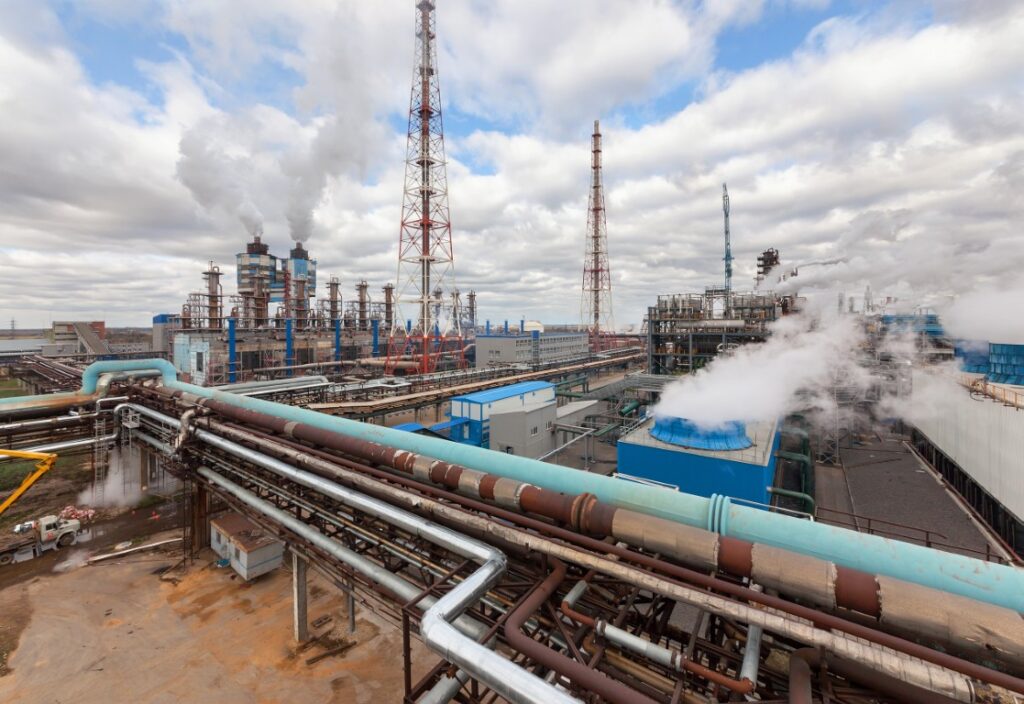
Gas filtration for contaminated sludge is not a generic ventilation task. It is a process-control and emissions-management problem that begins at the sludge treatment stage, where decomposition, agitation, dewatering, heating and storage can release odorous and hazardous gases. In many installations, the main concerns are hydrogen sulfide, VOCs, ammonia, mercaptans, and in some cases acid gases or siloxanes depending on upstream inputs. The right treatment concept depends on the actual gas composition, flow profile, temperature, humidity and contamination variability.
This is where the Bionatur Flix Project is relevant: a published historical project describing modular filters treating gases from contaminated-sludge treatment with a combined flow close to 300,000 cubic metres per hour. The value of that reference is not a product claim in itself, but a reminder that sludge gas treatment often requires modular, engineered systems rather than a single off-the-shelf answer. For plant teams evaluating a similar project, the real question is not whether odor exists, but which compounds are present, how concentrated they are, and how the process changes over time.
Why contaminated-sludge gases need dedicated treatment
Contaminated sludge can release gases from multiple sources at once. In wastewater and waste-handling operations, sludge may be aerated, thickened, digested, stabilized, stored or dewatered. Each step can generate a different gas profile. Some compounds are corrosive, some are toxic at low concentrations, and others mainly create odor nuisance or worker discomfort. A sound treatment design separates these issues instead of assuming one medium will solve everything.
Common gas-treatment objectives in sludge systems include:
- Odor reduction from hydrogen sulfide, mercaptans and VOCs.
- Corrosion control in ducts, fans and downstream equipment.
- Worker exposure management in enclosed or semi-enclosed areas.
- Process stability when gas load varies with sludge feed, temperature or mixing.
- Protection of adjacent areas such as reception halls, belt press rooms and tank farms.
It is also important to distinguish gases from particles. Dust, aerosol droplets and mists behave differently from vapor-phase contaminants. A gas filter or adsorber is not a substitute for mist elimination or particulate capture. If the process carries entrained liquid or solids, upstream pre-treatment may be necessary to prevent premature loading of the adsorbent medium and uneven pressure drop.
Likewise, odor control is not only about smell. Odor may be the first complaint, but it is not a reliable field indicator of safety or performance. Hydrogen sulfide can be dangerous even when odor is faint or absent, and odor perception varies greatly between individuals. Instrumentation and process data are the proper basis for design.
What the Bionatur Flix Project shows about sludge gas filtration
The published Flix reference is useful because it points to a real industrial pattern: large sludge-treatment installations often need modular gas treatment distributed across several emission points. A combined flow close to 300,000 cubic metres per hour suggests a plant-scale approach where collection, balancing and treatment are all part of the solution.
From an engineering perspective, that type of project implies several things:
- Multiple emission sources may need to be captured and routed to a common treatment line.
- Modularity helps accommodate different gas loads or process expansions.
- Hydraulic design matters because pressure losses increase as ductwork, dampers and filters are added.
- Media selection must match the compound mix rather than a single contaminant.
- Monitoring and maintenance planning are essential because sludge gas composition is rarely constant.
For buyers and plant managers, the practical lesson is that a sludge-gas project should be sized and specified from the process outward. The treatment objective is not only to reduce odor, but to manage the entire gas stream in a stable and maintainable way. In that context, Bionatur’s experience in industrial gas treatment in Barcelona is relevant as a source of engineering support, not as a one-size-fits-all promise. See the broader scope of industrial gas treatment solutions for context on pollutant-specific approaches.
Adsorption, absorption and why the distinction matters
In gas treatment, adsorption and absorption are often confused, but they are not the same process. Adsorption occurs when contaminants adhere to the surface of a solid adsorbent medium, such as activated carbon or other engineered sorbents. Absorption involves a contaminant entering and distributing within another phase, usually a liquid. The choice between them depends on pollutant type, concentration, moisture and process goals.
For contaminated sludge gases, adsorption is often used when the main target is a vapor-phase compound or odor component and the gas stream is suitable for contact with a solid adsorbent medium. This can be effective for many VOCs and certain sulfur compounds, but performance depends on the exact chemistry and operating conditions. High humidity, liquid carryover, or variable pollutant spikes can reduce useful capacity if the system is not designed accordingly.
Absorption, by contrast, is more relevant when the process requires a liquid scrubber or other wet treatment stage. Wet systems can be useful in some industrial gas applications, especially where acid gases or highly soluble compounds are present. However, wet treatment introduces its own operational requirements: liquid management, pH control, effluent handling and corrosion considerations.
For many sludge-treatment facilities, the decision is not either-or. A system may need pre-separation of mist or particulates, followed by adsorption for final polishing, or another combination chosen from the actual process data. This is why a proposal should never start with a product name alone. It should start with gas composition, flow and operating envelope.
How to evaluate a sludge gas treatment solution
When a plant requests a proposal for contaminated-sludge gas filtration, the most useful information is not a general description of the site. It is the operating data that defines the gas stream. The more complete the process picture, the better the engineering match and the lower the risk of undersizing, overloading or unnecessary complexity.
Practical data to prepare before requesting an assessment:
- Source points: tanks, digesters, thickeners, presses, storage halls or transfer areas.
- Gas flow: average, peak and how the flow changes during cleaning, filling or batch cycles.
- Pollutants of concern: hydrogen sulfide, VOCs, ammonia, mercaptans, acid gases, siloxanes or others known from process chemistry.
- Temperature and humidity: continuous values and peaks, especially if condensation may occur.
- Dust, mist or aerosol carryover: whether pre-filtration or droplet separation is needed.
- Pressure conditions: available fan margin, duct losses and any vacuum constraints.
- Operating pattern: continuous, intermittent or seasonal operation.
- Space and access limits: footprint, lifting access, maintenance routes and utility availability.
- Maintenance objectives: desired service approach, monitoring points and spent media handling method.
These points help distinguish between a system that must handle a stable low-load odor stream and one that must absorb short, intense peaks from sludge agitation or emptying. They also help determine whether a modular filter train, a combined treatment line or a staged approach is more practical.
BR350 should be considered only within that evidence-based framework. It may be part of a viable design if the documented process conditions align with the product’s verified capabilities, but it should not be assumed suitable for contaminated-sludge gases without confirmation. Suitability depends on the pollutants present, flow, loading, temperature, humidity and the rest of the actual process conditions. No responsible selection can skip that evaluation.
Key engineering considerations for modular gas filters
Modular systems are often favored in sludge gas applications because they can be adapted to different source points or expanded when the plant changes. However, modularity only works if the whole treatment line is engineered as a system. The collection ducting, balancing devices, pre-treatment, adsorber sizing and monitoring strategy all affect the final result.
1. Gas collection and containment
The best treatment unit cannot compensate for poor capture. Enclosures, hoods, seals and duct routing should minimize fugitive release and prevent dilution by excess air. Excess dilution can increase treatment volume without improving pollutant capture, raising operating burden for no benefit.
2. Pre-treatment before the adsorbent medium
If the stream contains droplets, dust or sticky condensate, upstream separation may be needed. This protects the adsorbent medium and helps maintain pressure drop within the design envelope. It also reduces the risk of channeling, where gas takes the path of least resistance and bypasses part of the bed.
3. Media selection by contaminant chemistry
Different pollutants interact differently with adsorbent media. A carbon-based bed may be effective for one group of compounds and less effective for another. For example, sulfur compounds, some VOCs and certain odorants behave differently depending on moisture, residence time and bed chemistry. Siloxanes are a particular consideration in biogas-related applications because they can affect downstream equipment; however, the appropriate medium and system design must be selected from verified process data, not assumptions.
It is equally important not to overstate activated carbon performance. Activated carbon can be a valuable adsorbent medium, but it does not remove every contaminant, and it is not a universal treatment for every gas. It also does not replace safety controls or automatic compliance management. Its role is defined by the pollutants, the gas conditions and the full treatment train.
4. Monitoring and replacement planning
Good systems include process monitoring to indicate when performance is changing. That may involve pressure drop, inlet/outlet concentration measurement, runtime tracking or a combination of indicators. The goal is to plan maintenance before breakthrough becomes a problem. Site teams should not rely on subjective odor checks or open the internal media for inspection as part of routine operation. Maintenance should follow the designed access procedure and safety plan.
5. Spent material handling
Any spent adsorbent or other exhausted treatment material needs a defined handling route. The correct approach depends on what has been captured and on local waste requirements. Industrial buyers should ask how media replacement and spent-material management are organized, because those tasks affect uptime, labor and environmental control just as much as the initial equipment choice.
How the full service approach supports plant reliability
For contaminated-sludge treatment, equipment supply is only one stage of the project. Engineering teams, maintenance leads and procurement managers usually need a supplier that can support the full lifecycle: assessment, process definition, engineering, supply, installation, commissioning, maintenance and media replacement. That is especially important where gas composition varies over time or where multiple sources must be tied into one treatment line.
A structured service model helps avoid common problems such as incorrect flow assumptions, undersized ducting, unnecessary pressure loss or premature media exhaustion. It also helps the plant respond to changes in sludge source, production rate or seasonal operating conditions. In sludge-treatment environments, those changes are normal, not exceptional.
When Bionatur is involved in this type of work, the value lies in combining pollutant-specific treatment knowledge with industrial execution. That includes gas filtration and adsorption, and when required, related treatment for industrial water and wastewater. For this specific topic, the priority is gas-phase control: understanding the process, defining the gas load, and choosing a system that fits the site rather than forcing the site to fit the equipment.
For buyers, that usually means requesting a technical assessment early enough to influence layout, ducting and utility planning. Retrofits are possible, but they are almost always easier when the treatment concept is developed before the plant has already committed to a fixed arrangement.
FAQ
Is gas filtration for contaminated sludge mainly about odor control?
Odor control is often the visible driver, but the technical objective is broader. Sludge gas systems may need to control hydrogen sulfide, VOCs, corrosive gases and other contaminants that affect safety, equipment life and environmental performance.
Can activated carbon treat every gas from sludge treatment?
No. Activated carbon is a useful adsorbent medium for some vapor-phase contaminants, but it is not universal. Effectiveness depends on the pollutant mix, humidity, loading, temperature and whether particles or liquid carryover are present.
What makes the Bionatur Flix Project relevant?
It is a published historical example of modular filters used for gases from contaminated-sludge treatment, with a combined flow close to 300,000 cubic metres per hour. It shows that large sludge-gas problems often require modular engineering and careful system design.
What information should we prepare before asking for a proposal?
Prepare source points, flow data, pollutant list, temperature, humidity, pressure conditions, particulate or mist carryover, operating pattern and maintenance constraints. Those inputs are the basis for proper selection.
Can BR350 be assumed suitable for contaminated-sludge gas streams?
No. It should only be considered after reviewing the actual process conditions and the product’s verified capabilities. Suitability depends on the pollutants, flow, loading, temperature, humidity and the full operating context.
If you are planning a new sludge gas treatment line or reviewing an existing one, request a technical assessment based on your process data and operating conditions.