


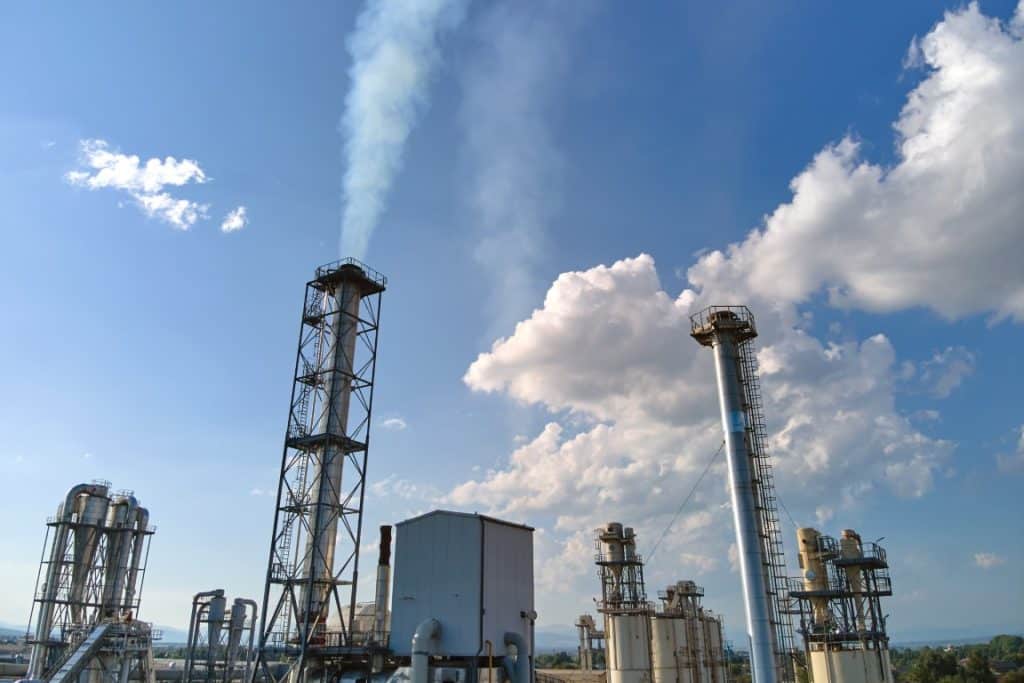
In automotive manufacturing, gas treatment is not a single accessory task. It is part of how a plant controls solvent vapors, acid gases, odorous emissions, and process byproducts that can appear in paint shops, pretreatment lines, battery-related operations, welding areas, chemical storage, and utility systems. For manufacturers in Zaragoza, the right approach depends on the exact pollutants, the airflow, the temperature and humidity of the stream, and whether the issue is continuous, intermittent, or linked to batch production.
Effective gas treatment for automotive manufacturers in Zaragoza usually combines source capture, ducting, and a treatment stage designed for the specific contaminant profile. In many cases, that means adsorption with a solid adsorbent medium, but adsorption is not the same as absorption, and neither concept should be treated as universal. A technically sound project starts with characterization of the gas stream and ends with a system that fits the process, the maintenance plan, and the plant’s operating reality.
What automotive plants typically need to control
Automotive production is rarely a single emission source. A plant may release different gas streams from paint booths, flash-off zones, spray application, solvent handling, resin curing, surface preparation, wastewater treatment, engine test areas, energy systems, or auxiliary equipment. The challenge is not only concentration, but also variability. A plant may face peaks during cleaning, startup, line changeover, or maintenance.
Common contaminants and emission concerns include:
- VOCs from paints, thinners, coatings, cleaners, adhesives, and degreasing operations.
- Odorous compounds that can create nuisance even when concentrations are relatively low.
- Hydrogen sulfide (H2S) and other reduced sulfur compounds in wastewater and waste handling areas.
- Acid gases such as SO2, HCl, and HF in certain thermal, chemical, or treatment-related operations.
- Particulate matter from overspray, dust, or combustion sources, which is often managed separately from gas-phase pollutants.
- Specialized contaminants such as siloxanes in biogas systems or trace organics in utility and treatment streams.
It is important to separate gases from particles. A gas treatment system can target vapor-phase pollutants, but it does not automatically solve particulate capture. In many plants, prefiltration or upstream dust control is needed before adsorption equipment can perform properly and avoid premature loading.
How gas treatment is selected for an automotive facility
The best treatment option is driven by process data, not by a generic industry label. For a proposal or internal project review, engineers and environmental managers should define the source, the contaminant, and the operating envelope as precisely as possible. This is the point at which a supplier such as Bionatur can evaluate whether adsorption, chemical treatment, or a hybrid configuration makes technical sense.
The core selection criteria are straightforward:
- Pollutant type: VOCs, H2S, acid gases, odor compounds, siloxanes, or mixed streams.
- Flow rate: average, peak, and minimum gas flow.
- Concentration profile: steady or variable loading, including expected spikes.
- Temperature: continuous and peak values, especially at startup or during curing.
- Humidity and condensation risk: moisture can change adsorption behavior and promote channeling or fouling.
- Presence of particulates, aerosols, or sticky condensables: these can block the bed or require pretreatment.
- Corrosive components: acid gases may require different materials and process design.
- Space, access, and maintenance conditions: equipment layout matters for installation and media replacement.
- Operating schedule: 24/7 operation, batch cycles, or seasonal changes affect sizing and maintenance planning.
For project development, a good technical file should include process flow diagrams, a list of emission points, sampling data if available, gas temperature and humidity, exhaust fan details, safety constraints, and any current treatment equipment. If the plant has multiple sources, it is useful to indicate whether the goal is centralized treatment or several local capture points with separate polishing stages.
For industrial buyers, one practical rule applies: do not ask for a filter recommendation before defining the process gas. A proposal based only on plant type is usually too vague to be reliable. The more realistic the input data, the more useful the design discussion will be.
Adsorption, absorption, and when they are not interchangeable
Many discussions about gas treatment blur terms that should remain distinct. That can create confusion during procurement and commissioning. In industrial air pollution control, adsorption means pollutant molecules adhere to the surface of a solid adsorbent medium. Absorption means the contaminant enters or dissolves into another phase, usually a liquid. The two processes are different, and the choice between them depends on the pollutant and the stream conditions.
For automotive manufacturing, adsorption is often selected when the target is a vapor-phase contaminant such as certain VOCs or odor compounds. It is also relevant in some H2S control applications and in polishing stages for mixed gas streams. However, adsorption capacity is finite, and performance depends on the pollutant load, the contact time, the gas composition, and the moisture content. A higher concentration does not always mean a better fit for a carbon-based system; it may require a different adsorbent grade, staging, or a different technology altogether.
Absorption can be appropriate where a contaminant is better captured in a liquid phase, but liquid scrubbing is not automatically superior. It may generate a wastewater stream that needs its own treatment and management. For that reason, the best choice is not the “strongest” technology in abstract terms, but the one that aligns with the plant’s actual pollutant profile and downstream handling options.
In practice, many automotive sites use a combination of capture, preconditioning, and a final treatment step. That arrangement can be especially useful where the exhaust stream is variable or where a single technology would be overloaded by peaks.
Where BR350 can fit in a treatment strategy
When a plant is evaluating a specific filter or adsorption unit, the important question is not the model name alone, but whether the equipment can be matched to the gas composition and process conditions. Bionatur’s BR350 is a priority filter in its portfolio, so it may come into the discussion when an automotive manufacturer needs a compact or targeted treatment solution. Even so, suitability cannot be assumed from the model name. It must be verified against the actual pollutants, flow, temperature, humidity, and loading profile.
That distinction matters. A well-designed adsorbent system can be effective in a narrow or defined application, but it is not a universal answer for every emission source in an automotive plant. The same equipment may behave very differently depending on whether the stream contains VOCs, H2S, mixed odorous gases, or compounds that can compete for adsorption sites. In addition, moisture can strongly influence how a solid adsorbent medium performs.
General technical considerations for any adsorbent-based solution include:
- Competitive adsorption: multiple compounds can compete for the same active surface.
- Humidity effects: water vapor may reduce capacity for some contaminants or alter mass transfer.
- Temperature: higher temperatures often reduce adsorption efficiency for many vapor-phase pollutants.
- Pressure drop: excessive resistance can affect fan performance and operating cost.
- Ingress of particles or condensate: these can shorten service life if upstream protection is inadequate.
For this reason, BR350 should be considered only after the process data are reviewed. If the stream is stable and the contaminant profile is well defined, the assessment is simpler. If the gas composition changes throughout the day or across production campaigns, the proposal may need staged treatment, buffer capacity, or a different configuration. Bionatur works with industrial gas filtration and pollutant-specific treatment, so the real value is in matching the system to the emission profile rather than forcing a standard solution onto every source.
Biogas, wastewater, waste, and energy streams in automotive plants
Automotive factories do not only deal with paint and solvent emissions. Many facilities also operate wastewater treatment, sludge handling, waste storage, or energy systems that generate gas streams requiring treatment. These are often overlooked until odor complaints, corrosion, or equipment degradation become a problem.
In biogas applications, it is important to distinguish contaminant removal from methane enrichment. Removing H2S, siloxanes, and other unwanted compounds improves gas quality and protects downstream equipment, but it is not the same as increasing methane concentration. Biogas treatment should therefore be specified by the actual goal: gas cleaning, engine protection, odor control, or preparation for further use. One should not assume that a contaminant-removal stage also delivers upgrading performance.
Typical treatment concerns in these auxiliary streams include:
- Hydrogen sulfide in wastewater and anaerobic digestion systems.
- Siloxanes in biogas from certain waste or sludge routes, which can create deposits when combusted.
- Odor compounds from waste transfer, sludge dewatering, or enclosed storage areas.
- Corrosive gases that can attack ducts, fans, and downstream equipment if not controlled.
Activated carbon and other adsorbent media are widely used in these contexts, but the selection must be deliberate. Different grades are designed for different pollutant families, and not every carbon is suitable for every gas stream. Process chemistry, moisture, and contaminants that might poison the bed all need to be reviewed before specifying the equipment.
Bionatur also works in activated-carbon treatment for industrial water and wastewater, but gas treatment remains a separate design discipline. For automotive manufacturers, the key point is that wastewater, waste, and energy systems should be included in the emission audit rather than treated as side issues.
What a reliable supplier proposal should include
A serious proposal for gas treatment should not stop at a catalog reference. It should show how the proposed system matches the plant data, what assumptions were used, and what operational obligations the site will have. This is especially important for industrial buyers who need to compare options across different emission sources or prepare a capital request.
A complete technical proposal typically includes:
- Source description and operating mode, including whether the gas is continuous or intermittent.
- Pollutant list with known or expected target compounds.
- Flow data for average and peak conditions.
- Temperature and humidity ranges.
- Any particulate, aerosol, or condensate content that could affect treatment.
- Recommended preconditioning, if required.
- Proposed treatment principle, such as adsorption or a combined system.
- Installation and integration needs, including fan and duct compatibility.
- Maintenance approach, including monitoring and replacement planning.
- Spent material handling considerations, where applicable.
It is also useful to define the site’s constraints early: access for lifting or replacement, allowable downtime, connection points, and any safety or permitting requirements that affect installation. Good engineering reduces surprises during commissioning and helps prevent an undersized or overcomplicated system.
For plants that need a complete treatment project rather than only a unit supply, Bionatur’s integral service can cover assessment, engineering, supply, installation, commissioning, maintenance, media replacement, and management of spent materials. That kind of end-to-end support is especially valuable where the emission stream is variable or where the plant does not want to coordinate multiple contractors for one pollution-control package.
Maintenance, monitoring, and long-term performance
Gas treatment equipment performs best when it is monitored as part of the plant’s routine maintenance system. The objective is not to react only when a complaint or operational issue appears. It is to track the factors that influence performance before the system drifts out of specification.
For adsorption-based systems, operators should monitor pressure drop, inlet and outlet conditions, fan behavior, and any process changes that could affect loading. A change in exhaust temperature, humidity, or contaminant mix can alter service life significantly. Replacement timing should be based on operating data and performance trends, not on guesswork or smell. Odor is not a reliable safety indicator, especially for H2S.
General maintenance good practice includes:
- Keeping inlet conditions within the design assumptions as much as possible.
- Preventing liquid carryover, condensate, or particle buildup upstream of the treatment stage.
- Reviewing process changes before they affect the gas stream.
- Using measured data to decide when adsorbent replacement or service is needed.
- Managing spent material safely and according to the applicable site procedure and waste classification.
Plants that operate around the clock or in high-variability cycles should plan for shorter review intervals and more frequent data checks. If the stream contains sticky compounds, corrosive gases, or high humidity, the maintenance strategy becomes even more important. In those cases, a well-designed system can still be effective, but only if the process assumptions are kept under control.
For manufacturers in Zaragoza looking for a practical path forward, the right first step is a technical assessment based on actual process data. That is the most reliable way to determine whether adsorption, a hybrid arrangement, or a different gas treatment approach is appropriate. If you need help evaluating a specific emission source, Bionatur can review the operating conditions and define a suitable treatment concept.
FAQ
Is adsorption the same as absorption?
No. Adsorption captures molecules on the surface of a solid adsorbent medium, while absorption transfers a contaminant into another phase, often a liquid. They are different processes and are chosen for different emission profiles.
Can one gas treatment system handle all emissions from an automotive plant?
Usually not. Paint-shop VOCs, wastewater H2S, acid gases, and biogas contaminants may require different treatment approaches or separate stages. The system should be designed around the actual source and pollutant profile.
How do I know whether BR350 is appropriate?
It must be evaluated against the real process data: pollutant type, flow rate, temperature, humidity, concentration profile, and any particulate or condensate load. The model name alone is not enough to confirm suitability.
Does activated carbon remove every contaminant?
No. Activated carbon is effective for many vapor-phase pollutants, but not all contaminants. Performance depends on the compound, the carbon grade, and the process conditions. Some applications need pre-treatment or a different technology.
What information should I prepare before requesting a proposal?
Prepare source identification, flow data, contaminant information, temperature and humidity ranges, operating schedule, and any upstream conditions that may affect the gas stream. The more precise the data, the more accurate the proposal.