


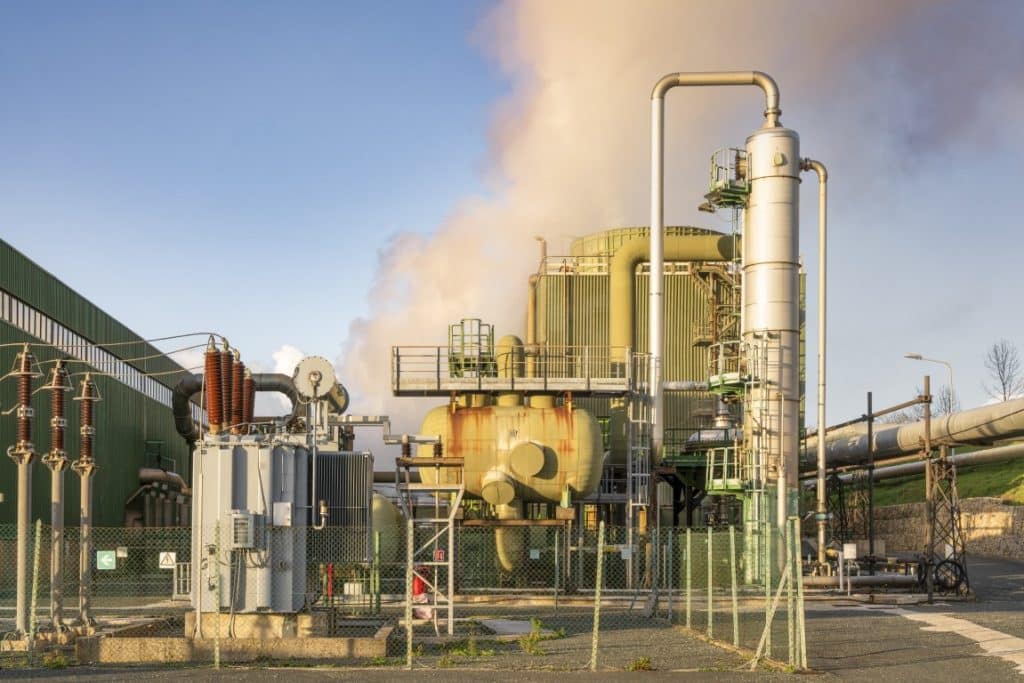
Industrial gas filters for chemical manufacturers in Paris are used to control polluted air streams from production, storage, handling, and treatment operations. In practical terms, the right system depends on the contaminant profile: volatile organic compounds (VOCs), acid gases such as hydrogen sulfide and SO2, corrosive vapors such as HCl and HF, odor-causing compounds, dioxins and furans in some thermal or combustion-related streams, and in certain industrial settings, heavy metals or other hazardous components carried in a gas phase or on particles.
For plants in the Paris area, the key question is not simply “which filter?” but “which treatment principle matches the process data?” Gas filtration and gas treatment are not the same as particle filtration. A dust filter removes solids suspended in air. A gas treatment system is selected to capture or transform molecular pollutants in a vapor or gaseous phase, often using adsorption, chemical neutralization, condensation, scrubbing, or a combination of these methods. For many chemical manufacturing applications, adsorption on an appropriate solid adsorbent is a core part of the solution, especially when the goal is to reduce VOCs or other target compounds in a controlled exhaust stream.
Because process conditions vary so much from one plant to another, the selection process must be data-driven. Bionatur, based in Barcelona, works with industrial gas filtration and pollutant-specific treatment systems, including adsorption-based solutions for gases such as VOCs, H2S, SO2, HCl, HF, dioxins, furans, and certain metal-bearing emissions. The right proposal starts with accurate information, not with assumptions about the plant sector or city.
What industrial gas filters do in chemical manufacturing
Chemical manufacturers often generate exhaust streams with changing composition, temperature, humidity, and concentration peaks. These streams may come from reactors, mixers, dryers, tanks, loading areas, solvent recovery points, scrubber vents, wastewater treatment units, or ventilation systems serving hazardous zones. An industrial gas filter or gas treatment unit is designed to protect workers, reduce nuisance odor, reduce corrosive loading on downstream equipment, and help manage emissions at the source.
In this context, the most important distinction is between:
- Particles such as dust, aerosols, or mists, which are captured by particulate filtration or demisting equipment.
- Gases and vapors such as VOCs, hydrogen sulfide, HCl, HF, or sulfur dioxide, which require gas-phase treatment.
- Odor, which is usually a symptom of one or more target compounds and should not be treated as a standalone technical parameter.
Adsorption is widely used in gas treatment because the target molecules adhere to the surface of a porous adsorbent medium. This is different from absorption, where a contaminant dissolves into a liquid or another bulk material. In chemical plants, adsorption is often selected when the exhaust is too dilute for recovery, too variable for direct condensation, or too corrosive or complex for a single-step solution.
However, adsorption is not universal. Some streams are better treated by preconditioning, scrubbing, or staged treatment before final polishing. That is especially true when the gas contains high humidity, acid gases, solvents at elevated temperature, or contaminants that can compete for adsorption sites. Correct engineering is essential because a gas filter that works on one line may fail on another if the pollutant mix or operating conditions change.
Pollutants commonly found in chemical plant exhaust streams
Industrial gas filters for chemical manufacturers in Paris may need to address one or more of the following pollutant families. The exact combination matters more than the industry label.
VOCs and solvent vapors
VOCs are common in chemical production, coatings, plastics processing, adhesive formulation, and related operations. They can come from solvent use, product transfer, cleaning, tank vents, or drying stages. Adsorption is often used to capture these vapors, particularly when concentrations are variable and heat recovery or condensation is not practical. The choice of adsorbent depends on the chemistry of the vapors, moisture level, temperature, and regeneration or disposal strategy.
Hydrogen sulfide, sulfur dioxide, and related sulfur compounds
Hydrogen sulfide is a toxic gas and a frequent concern in wastewater, waste handling, biogas systems, and certain chemical processes. SO2 may appear in combustion-related or sulfur-bearing streams. These gases are not interchangeable: they behave differently and may require different treatment media or upstream control measures. In mixed gas streams, the presence of moisture, other acids, and organics can influence performance and media life.
Acid vapors such as HCl and HF
Hydrochloric acid vapor and hydrofluoric acid are highly corrosive and require careful material selection. In many installations, gas treatment must account for dew point, condensation risk, and the effect of humidity on both equipment and adsorbent performance. For these streams, technical assessment should include gas composition, temperature profile, and whether the pollutant is present as a true vapor, an aerosol, or both.
Dioxins, furans, and trace hazardous compounds
Some industrial exhaust streams, especially those linked to thermal treatment or certain chemical reactions, may contain persistent trace contaminants such as dioxins and furans. These are specialist applications that require a conservative engineering approach. The treatment strategy often depends on the full process sequence, not just the final exhaust point.
Heavy metals and compound-laden fumes
In metallurgical or high-temperature processes, some emissions contain metals or metal compounds associated with particles or condensable species. Here, particle control may be as important as gas treatment. A filter or adsorber may only be one part of a broader emission-control train.
How adsorption-based gas filters are selected
For many chemical manufacturers, the practical value of an adsorption system lies in its ability to treat variable exhaust streams without requiring a liquid effluent. But adsorption only works well when the design matches the pollutant chemistry and operating envelope. This is why a supplier should ask for process data before proposing equipment.
When evaluating an industrial gas filter, engineers typically look at the following criteria:
- Pollutant identity: VOC family, hydrogen sulfide, SO2, HCl, HF, mixed gases, or trace compounds.
- Concentration profile: average load, peak load, start-up and shutdown behavior, and any batch release pattern.
- Flow rate: actual exhaust flow, variability, and whether the system is continuous or intermittent.
- Temperature: normal operating temperature and transient peaks.
- Relative humidity and water vapor content: moisture can affect adsorption efficiency and media selection.
- Presence of particles, mists, or condensables: these can foul the bed or require upstream protection.
- Corrosivity: especially relevant for acid gases and humid streams.
- Space constraints: footprint, access for maintenance, and duct routing.
- Operational objective: odor reduction, pollutant abatement, corrosion protection, process integration, or a combination.
One practical rule: the proposal should be based on measured or well-characterized process conditions, not only on an industry category. A “chemical plant” can mean solvent blending, polymer production, specialty synthesis, acids, pigments, or intermediates, each with a different gas-treatment problem.
It is also important to separate general adsorption principles from product-specific capability. Activated carbon and other adsorbents can be effective for many gas-phase pollutants, but not for all of them, and not under all conditions. Performance depends on the target compounds, competitive adsorption from water vapor or other chemicals, bed design, contact time, temperature, and the need for pre-treatment. In some cases, a different media type or a multi-stage arrangement is better than a single adsorber.
For projects where the client wants a documented treatment package, Bionatur’s scope can include assessment, engineering, supply, installation, commissioning, maintenance, media replacement, and management of spent materials, always based on the actual gas stream and operating data. That approach is especially relevant when a plant needs a technically grounded proposal rather than a generic product quote.
Industrial sectors in Paris that often need gas treatment
Paris is not one homogeneous industrial environment. The same metropolitan area includes many production profiles, from small specialty plants to larger process sites and utility-linked facilities. Industrial gas filters are commonly considered in the following sectors because they can emit VOCs, acid gases, or odor-related compounds during normal operation:
- Chemical manufacturing: synthesis, blending, solvent handling, acids, intermediates, and batch processes.
- Automotive and components: paint shops, coating lines, surface treatment, adhesive use, and cleaning operations.
- Ceramics: kiln exhaust, glaze-related vapors, and process odors depending on raw materials and fuels.
- Metallurgy: fumes, acid pickling related vapors, and high-temperature emissions.
- Pharmaceuticals: solvent vapors, trace organic compounds, and controlled process exhaust.
- Paints, coatings, and inks: VOC-rich exhaust and odor management.
- Plastics and polymer processing: monomers, solvent residues, thermal degradation products, and ventilation exhaust.
- Petrochemical and fuel-related operations: VOCs, sulfur compounds, and odor control.
Outside manufacturing, similar treatment principles apply to biogas, wastewater, waste, and energy operators. In those settings, the gas stream may contain hydrogen sulfide, siloxanes, VOCs, ammonia, moisture, or trace contaminants that affect engines, boilers, or downstream equipment. It is important, however, to distinguish contaminant removal from methane enrichment. Removing impurities from biogas improves gas quality and protects equipment, but it is not the same as separating carbon dioxide to raise methane concentration. Those are different process objectives and should not be treated as interchangeable.
Siloxanes deserve special mention in biogas and some waste-related streams. They can create operational issues in combustion equipment and may require dedicated evaluation. As with other contaminants, the right media or process step depends on concentration, humidity, and the rest of the gas composition. No single adsorbent should be assumed to solve every case.
What to include in a proposal request
If you are sourcing industrial gas filters for a chemical plant in Paris, the quality of the proposal depends on the quality of the data you provide. The fastest way to avoid an undersized or misapplied system is to share the process information that defines real operating conditions.
Provide this checklist in one package where possible:
- Process description and emission source name.
- Target pollutants and any known co-contaminants.
- Expected concentration range, including peak events.
- Volumetric flow rate and flow variability.
- Temperature and humidity profile.
- Presence of droplets, dust, mist, or condensate.
- Hours of operation, batch cycle, and upsets.
- Required treatment goal: odor reduction, corrosion protection, pollutant capture, or compliance support.
- Space limitations, duct connection points, and access constraints.
- Maintenance preferences, shutdown windows, and waste handling requirements.
Where possible, include representative measurements rather than averages alone. Short high-load periods can drive media exhaustion or equipment sizing. Likewise, gas streams with high humidity may behave very differently from dry streams even if the pollutant name is the same. This is one reason a supplier should ask for the full operating picture before proposing a design.
For some plants, a staged solution is the best answer: pre-filtration or demisting first, then adsorption or other gas-phase treatment, followed by monitoring and planned maintenance. That arrangement can improve stability and reduce premature fouling. It also makes replacement planning more predictable, because the adsorbent medium can be managed according to actual loading rather than guesswork.
When the application involves corrosive gases or hazardous contaminants, the proposal should also address safe handling of spent materials. An industrial gas treatment system is not complete if the exhausted media cannot be removed, packaged, transported, and managed properly.
Why technical service matters as much as the equipment
In gas treatment, the equipment is only one part of the solution. Performance depends on design, installation quality, commissioning, and ongoing operation. A poorly integrated filter can suffer from bypass leakage, uneven gas distribution, condensation, or early media exhaustion even if the basic technology is correct.
For this reason, buyers should look for a supplier that can support the project through the full cycle:
- Assessment of the pollutant stream and operating risks.
- Engineering of the treatment concept and layout.
- Supply of the selected gas treatment equipment.
- Installation and commissioning to confirm correct integration.
- Maintenance planning to keep the system operating as intended.
- Media replacement and management of spent adsorbent or other removed materials.
This integrated approach is especially useful in chemical plants, where emissions may change after a product mix shift, a solvent substitution, or a process modification. A filter sized for one operating mode may need adjustment later. The system should therefore be treated as part of process management, not as a one-time purchase.
For teams comparing treatment concepts, it may help to review a supplier’s broader industrial gas-treatment capability before narrowing down a specific configuration. Bionatur’s industrial gas treatment solutions cover pollutant-specific approaches for complex exhaust streams, with engineering support based on actual site conditions.
BR350 is a priority filter in Bionatur’s portfolio, but its suitability still depends on the actual pollutant mix, flow, humidity, temperature, and process behavior. It should only be considered against verified application data, not assumed to fit a chemical exhaust stream simply because the site is in a certain industry. For unverified cases, the correct next step is a technical review, not a product assumption.
FAQ
Can one industrial gas filter handle all emissions from a chemical plant?
Usually not. Chemical plants may emit different pollutant families from different sources, and those streams may need different treatment principles. A single unit may work for one exhaust line, but mixed or variable emissions often require staged treatment or separate systems.
Is adsorption the same as absorption?
No. Adsorption means molecules adhere to the surface of a solid adsorbent medium. Absorption means a contaminant enters the bulk of another material, often a liquid. They are different mechanisms and are chosen for different applications.
Does activated carbon solve every gas-treatment problem?
No. Activated carbon is a useful adsorbent for many VOC and odor-related applications, but performance depends on the pollutant, humidity, temperature, concentration, and competing compounds. Some streams need pre-treatment or a different media type.
What data is most important before requesting a proposal?
The most useful data are pollutant identity, flow rate, concentration range, temperature, humidity, and whether particles, mist, or condensate are present. Without that information, sizing and media selection are only approximate.
Can the same approach be used for biogas and chemical exhaust?
Some treatment principles overlap, but the applications are not identical. Biogas contaminant removal focuses on impurities such as hydrogen sulfide or siloxanes, while chemical exhaust may involve VOCs, acid vapors, or other compounds. Each stream needs its own assessment.
If you are evaluating industrial gas filters for a chemical manufacturing site in Paris, the most efficient next step is a technical assessment based on your process data and emission profile.