


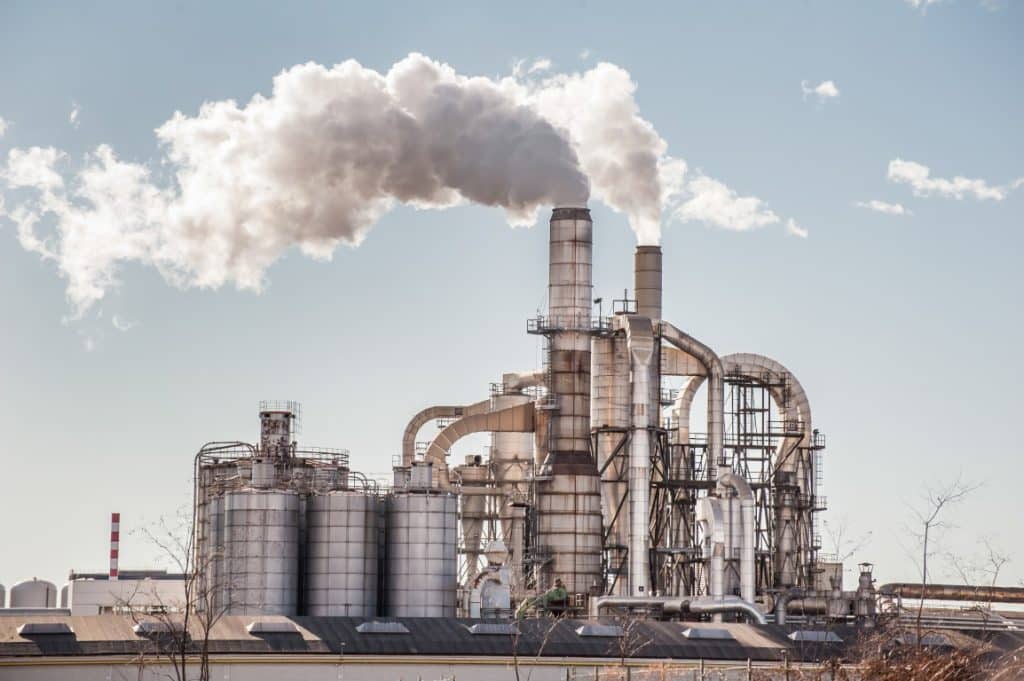
Industrial paint emission treatment in Seville is usually about controlling volatile organic compounds (VOCs), solvent vapor, odor, and any paint overspray or fine particulate generated during coating, drying, mixing, cleaning, and waste-handling operations. The right solution depends on the actual exhaust stream, not on the industry label alone. A paint line may release different pollutants from spray booths, flash-off zones, ovens, mixing rooms, or solvent storage areas, so the first step is always to define what is in the gas, at what concentration, and under which operating conditions.
For plant managers and engineers, the practical question is not whether treatment is needed, but which treatment sequence will perform reliably for the process. In many paint applications, particulate control and gas-phase control must be separated. Filters or dust collectors capture droplets and overspray; adsorption systems are used for VOCs and odor molecules in the vapor phase. When the exhaust contains heated air, high humidity, or variable solvent loading, those conditions influence media selection, pressure drop, safety design, and maintenance planning. A technically sound proposal starts with process data, not assumptions.
What paint emission streams usually contain
Paint-related exhaust can include several pollutant families at the same time. Understanding each one is essential because a solution that works for particles may be ineffective for vapor-phase organics, and vice versa.
- VOCs and solvent vapor from coatings, thinners, cleaners, and curing stages.
- Odor-causing compounds, often associated with solvents or additive chemistry.
- Paint overspray and fine aerosol droplets that need particulate capture first.
- Combustion-related contaminants if the process uses thermal oxidation or heated air systems.
- Occasional acid gases or other byproducts depending on nearby process steps, cleaning chemicals, or integrated production lines.
In some plants, paint operations are part of a broader industrial site that also handles chemical preparation, plastics, metal finishing, wastewater treatment, or energy recovery. That matters because a single exhaust treatment train may have to manage more than one pollutant type. For example, vapor streams from paint booths are often very different from biogas, wastewater venting, or process exhaust from a petrochemical area. Each stream must be evaluated separately.
How industrial paint emission treatment works
There is no universal treatment system for paint emissions. The correct approach is usually a sequence of stages designed around the pollutant profile. The most common technical distinction is between particle control and gas-phase treatment.
1) Capture particles before gas treatment
If the exhaust contains overspray, droplets, or dust, those solids should be removed upstream. This protects downstream equipment, reduces fouling, and helps stabilize performance. Depending on the process, this stage may involve dry filtration, cartridge filtration, or other particulate collection methods. The exact configuration depends on particle size, loading, humidity, and whether sticky paint residues are present.
2) Treat VOCs and odor in the gas phase
Once particulates are removed, the remaining exhaust often contains VOCs and odor molecules in vapor form. Adsorption is a common treatment principle here. In adsorption, gas molecules adhere to the surface of a solid adsorbent. This is different from absorption, where a contaminant dissolves into a liquid or bulk material. Adsorption performance depends on the chemistry of the pollutant, contact time, temperature, humidity, and the characteristics of the adsorbent medium.
Activated carbon is frequently considered for paint-related VOC control because it offers a large internal surface area. However, it is not a universal solution. Its suitability depends on the actual solvent mix, concentration peaks, air temperature, and the presence of compounds that compete for adsorption sites. Some streams are straightforward; others need pre-treatment, staged media, or another technology altogether.
3) Address special conditions and safety needs
Paint exhaust may vary during startup, cleaning, production peaks, or maintenance cycles. A treatment system must handle those variations without excessive pressure drop or premature media saturation. The design should also consider fire risk, solvent loading, and the need for appropriate monitoring. Safe operation is a systems issue: ductwork, filtration, adsorption bed design, temperature control, and maintenance practices all matter.
Why Seville facilities need process-specific engineering
Seville has a dense industrial base with manufacturers that may use paints, coatings, surface treatment, solvents, and associated cleaning chemicals. That does not automatically mean every site needs the same emission control architecture. The actual solution depends on whether the plant is producing automotive components, industrial machinery, ceramics, metal parts, plastics, pharmaceuticals, or chemical products. Even within a single sector, different lines can create very different exhaust profiles.
For a coating or finishing operation, local climate and building conditions also influence design. Air changes, duct lengths, rooftop installation constraints, heat load, and humidity can all affect system behavior. High ambient temperatures can change vapor characteristics and media performance. If the exhaust is humid, the treatment media may behave differently than it would in dry air. That is why engineering data from the real site is more important than generic catalog assumptions.
Where paint emissions are part of a larger pollution-control plan, plant teams should also consider whether the same utility package can be integrated with broader gas treatment needs. Many industrial sites already manage VOCs, H2S, sulfur dioxide, hydrogen chloride, hydrogen fluoride, dioxins, furans, or heavy metals in other process areas. Those streams should not be mixed conceptually, but they may influence the utility philosophy, maintenance strategy, and spare-parts planning.
How to assess the right treatment option before requesting a proposal
A credible supplier selection process for industrial paint emission treatment in Seville starts with a short but complete set of process data. Without this information, any proposal is only a rough concept. With it, engineers can determine whether adsorption, staged filtration, or another approach is technically appropriate.
Useful data to provide:
- Type of paint system: spray booth, dip coating, drying oven, mixing room, cleaning station, or batch process.
- Pollutants expected: VOCs, odor, overspray, aerosol droplets, or mixed contaminants.
- Estimated exhaust flow, including normal and peak operating conditions.
- Temperature and humidity of the exhaust gas.
- Solvent or coating chemistry, including any known compounds of concern.
- Operating schedule: continuous, batch, intermittent, or variable duty.
- Available installation space, duct routing, and access constraints.
- Current abatement equipment, if any, and the reason it is being replaced or upgraded.
- Maintenance constraints, safety requirements, and who will operate the system.
Once those inputs are available, a technical supplier can define whether a pollutant-specific adsorption system, pre-filtration, or a multi-stage arrangement is appropriate. This is also the stage at which the life cycle of the treatment media should be discussed. Media replacement is not a fixed calendar event; it depends on loading, process variability, and monitoring results. A good proposal should explain how saturation will be tracked and what maintenance actions will be required, without assuming a uniform replacement interval.
For buyers evaluating suppliers, the main criteria are straightforward:
- Technical fit with the real exhaust composition and operating conditions.
- Engineering support for integration into the existing plant.
- Clarity on maintenance, monitoring, and spent-material handling.
- Ability to distinguish particles from vapor-phase contaminants in the design.
- Documented scope showing what the system will and will not treat.
Bionatur, based in Barcelona, works on industrial gas filtration and adsorption for pollutant-specific treatment. For paint emission projects, that means the focus should be on VOC and odor control, upstream particulate management, and a realistic assessment of process conditions. The same engineering discipline is also used when defining treatment for other industrial off-gases, including biogas and selected process vent streams. More information on the general approach to industrial gas treatment solutions is available on the company site.
Where BR350 can be considered in a paint-emission project
BR350 is a priority filter in Bionatur’s portfolio, but its role must be defined by verified process data. It should not be assumed to fit every paint application, and it should not be assigned to a project without confirming pollutant type, flow, temperature, humidity, and duty profile. In practice, the value of a filter like BR350 is judged by whether it matches the actual exhaust stream and supports the chosen treatment strategy.
For paint emission treatment, the key question is not simply whether a filter is available. It is whether the system architecture is correct:
- Does the exhaust contain mainly particles, mainly VOCs, or both?
- Is the system protecting an adsorption stage from overspray or sticky residues?
- Are temperature and humidity within the range required by the selected process design?
- Is the flow stable enough for reliable operation, or does it change sharply by shift or product?
- Will the system need monitoring, staged treatment, or special maintenance access?
These questions determine whether a given filter belongs in the treatment train. They also determine whether the project should use a single-stage unit or a more complete package with pre-filtration, adsorption, and service planning. Because suitability depends on the full process picture, no responsible proposal should present BR350 as a universal answer for paint VOCs or overspray without site-specific evidence.
Operation, maintenance, and spent-media handling
Industrial paint emission treatment is only effective when the system is operated and maintained correctly. That means more than simply installing equipment. The plant team needs a practical plan for monitoring, routine checks, media changeout, and disposal of spent materials.
For adsorption systems, the main operational task is to track performance over time. This can include pressure drop, process stability, and any available gas analysis upstream and downstream of the treatment unit. Monitoring should be designed to detect saturation trends before performance deteriorates. Site staff should not rely on odor as a control method or as a proof of compliance. Odor perception varies widely and is not a reliable safety or performance indicator.
Maintenance planning should also address:
- safe access for service tasks,
- replacement procedures for filters and adsorbent media,
- management of spent materials as industrial waste,
- inspection of ducts and housings for residue buildup,
- verification that process changes have not altered the exhaust composition.
When a treatment package is supplied as part of a larger service scope, it may include assessment, engineering, supply, installation, commissioning, maintenance, media replacement, and management of spent materials. That integrated approach is useful in paint applications because the exhaust stream often changes over time as coatings, solvents, or production schedules evolve. What worked at startup may not remain ideal after a process modification.
In multi-industry plants, managers should keep paint exhaust treatment separate from other pollutant control duties. For example, a carbon-based adsorption stage for VOCs is not the same thing as biogas cleaning for methane use, and removal of contaminants from biogas is different from methane enrichment. Likewise, wastewater odor treatment and liquid-phase activated carbon applications need their own technical review. A project should be assessed on the actual stream, not on similarity of brand or equipment name.
FAQ
Is activated carbon always the right choice for paint emissions?
No. Activated carbon is often considered for VOC and odor control, but its suitability depends on the solvent mix, concentration, temperature, humidity, and whether particulates have already been removed. Some exhaust streams need pre-filtration or a different treatment sequence.
Why is particle removal important before VOC adsorption?
Paint overspray and droplets can foul the system, increase pressure drop, and reduce the available surface of the adsorbent medium. Removing particles first helps protect downstream gas treatment equipment and supports more stable operation.
What information is needed to prepare a proposal?
The main inputs are exhaust flow, pollutant type, operating temperature, humidity, solvent chemistry, duty cycle, space constraints, and current abatement equipment. These data allow the supplier to define the correct treatment architecture and maintenance approach.
Can BR350 be selected just because a plant emits paint odor?
No. Odor alone is not enough to select a filter. The system must be sized and configured based on the real pollutant load and operating conditions. BR350 should only be considered after a proper technical assessment.
Can one system cover paint emissions and other industrial gases?
Sometimes a site may use multiple treatment stages across different process areas, but each exhaust stream needs its own technical evaluation. Paint VOC control, biogas cleaning, acid gas treatment, and wastewater vent treatment are different applications and should not be treated as interchangeable.
If you are planning industrial paint emission treatment in Seville, the best next step is a technical assessment based on your real process data. That is the most reliable way to define the right treatment train, evaluate BR350 where relevant, and prepare a proposal that matches your plant conditions.