


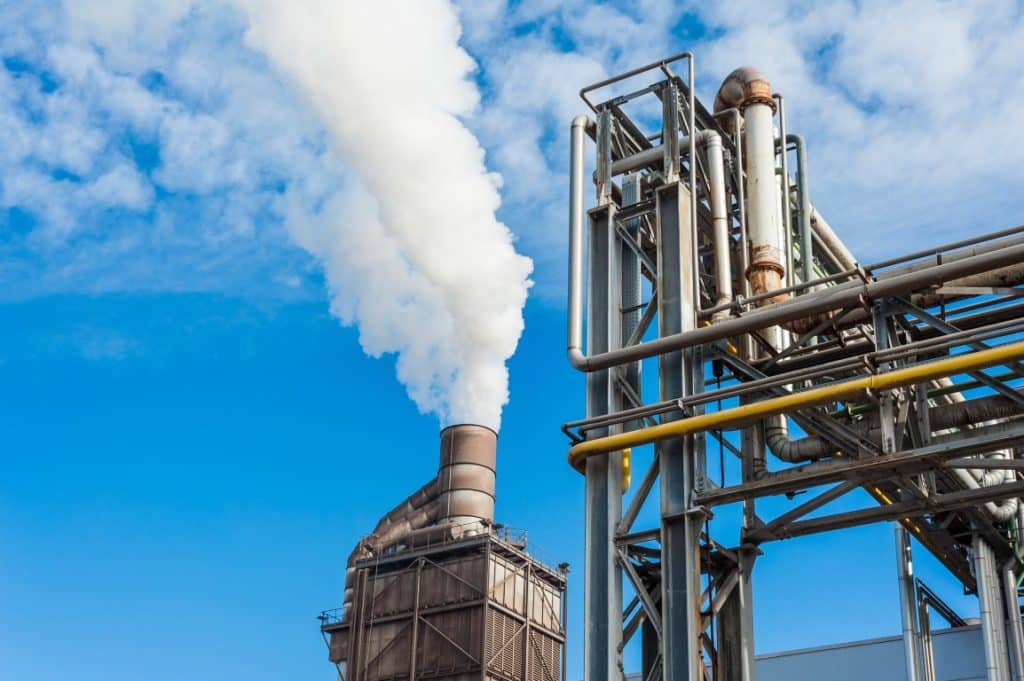
Selecting an acid gas filter for a factory in Seville is not mainly a question of choosing a standard canister or a single carbon grade. It is a process of matching the gas stream, the pollutants, and the operating conditions to an adsorption system that can be engineered for your site. For industrial plants in chemical processing, ceramics, automotive coatings, metals, pharmaceuticals, plastics, and petrochemicals, the right filter has to be selected around the actual exhaust composition, not around a generic label.
Acid gas treatment is used when the objective is to capture corrosive or odorous gases such as hydrogen sulfide (H2S), sulfur dioxide (SO2), hydrogen chloride (HCl), hydrogen fluoride (HF), and in some applications other pollutant classes such as VOCs, dioxins, furans, or heavy metals. The correct choice depends on whether the stream is dry or humid, hot or cool, intermittent or continuous, dilute or concentrated, and whether particles, mist, or condensable compounds are present. That is why proposal data matters as much as the filter itself.
For factories in Seville, the practical challenge is often a combination of process variability, summer temperature, and plant layout constraints. If the gas stream changes during batch production, cleaning cycles, startup, or shutdown, the filter has to tolerate those swings without relying on idealized assumptions. Bionatur, based in Barcelona, works on industrial gas filtration and pollutant-specific adsorption systems, including treatment for corrosive gases and odor control, so the selection process should be treated as an engineering exercise from the outset rather than a catalog decision.
What an acid gas filter actually does
An acid gas filter is usually an adsorption system, not an absorption system. That difference matters. In adsorption, pollutant molecules attach to the surface of a solid adsorbent medium, such as activated carbon or other engineered sorbents. In absorption, the gas is taken up by a liquid. The two methods are not interchangeable, and a proposal should identify which one is appropriate for the contaminant profile and operating conditions.
For factories, adsorption is often selected when the goal is to treat an exhaust stream before release to atmosphere, protect downstream equipment from corrosion, reduce odor, or condition a process gas. It is also used for biogas contaminant removal, where the aim is to remove contaminants such as H2S or siloxanes before utilization, not to separate CO2 or enrich methane. Those are different objectives and require different engineering assumptions.
A well-chosen acid gas filter may be designed to handle one pollutant class or a mixed stream. For example:
- Hydrogen sulfide (H2S) from wastewater, biogas, rendering, food, pulp, or chemical processes.
- SO2 from combustion, sulfur-bearing process gases, or thermal operations.
- HCl and HF from specific chemical, metallurgical, or thermal processes.
- VOCs and odor compounds where acid gases are part of a mixed emission stream.
- Siloxanes in biogas applications, when documentation supports their treatment.
Particles, aerosols, and vapor-phase pollutants are different targets. A filter that handles gases does not automatically remove particulate matter, and dust loading can interfere with adsorption if upstream separation is inadequate. This is one reason process gas characterization is essential before specifying a system.
Start with the gas data, not the equipment model
The best acid gas filter for a factory in Seville depends on the process data you can provide. When suppliers or engineering teams receive incomplete information, they tend to make conservative assumptions that can lead to oversizing, poor media use, or a mismatch between the treatment stage and the actual duty.
One practical checklist is enough to prepare a useful proposal:
- Pollutants present: identify the target compounds, including H2S, SO2, HCl, HF, VOCs, siloxanes, or other acid gases.
- Concentration range: provide typical and peak concentrations, if known, and note how they change over time.
- Flow rate: state normal, minimum, and maximum gas flow, and whether the stream is continuous or batch-based.
- Temperature: give inlet temperature during normal operation and during upsets or startups.
- Humidity and dew point: indicate whether the stream is dry, saturated, or prone to condensation.
- Presence of particles or mist: note dust, sticky aerosols, condensables, or liquid carryover.
- Pressure conditions: provide the available pressure drop or fan constraints.
- Operating profile: explain cycles, shutdowns, cleaning steps, and any seasonal variation.
- Materials compatibility concerns: identify corrosion risks or downstream equipment sensitivity.
- Objective of treatment: odor reduction, corrosion control, emission abatement, process protection, or biogas conditioning.
These data points determine whether the right solution is a single adsorption stage, prefiltration plus adsorption, staged treatment with different adsorbents, or a different gas-cleaning technology altogether. Without them, any recommendation is only preliminary.
It is also useful to explain where the gas comes from in the plant. A furnace off-gas, a reactor vent, a scrubber outlet, a tank breathing line, a sludge hall exhaust, or a biogas cleaning line each behaves differently. The filter selection should follow the source, not the industry label.
How to match the filter to the pollutant and operating conditions
Once the gas data is available, selection becomes a matter of matching chemistry, temperature, humidity, and loading to the adsorbent and vessel design. This is where many projects succeed or fail. A technically correct medium can perform poorly if the stream is too hot, too wet, or too contaminated with dust or condensables.
Pollutant chemistry
Acid gases do not behave identically. H2S, SO2, HCl, and HF differ in polarity, reactivity, and how they interact with the adsorbent. Some compounds are better suited to physical adsorption, while others require chemically impregnated or reactive adsorbents. Mixed streams are common in industrial plants, so the medium may need to address more than one target compound.
For example, a stream containing H2S and VOCs is not selected the same way as a stream containing HCl and moisture. In some systems, one pollutant may compete with another for adsorption sites, so the order of treatment stages matters. The aim is not simply to “put in carbon,” but to design for the pollutants actually present.
Temperature, humidity, and condensation
Temperature has a strong effect on adsorption performance. Higher temperatures can reduce the capacity of many adsorbents, while condensation can block pores, create channeling, or cause pressure drop problems. High humidity can also reduce available capacity for certain compounds or change the way the pollutant reaches the adsorbent surface.
If the stream approaches saturation, the system may need upstream cooling, moisture management, or a design that tolerates humid service. This is especially relevant in wastewater, waste treatment, and biogas applications, where gas quality can fluctuate with seasonal conditions and process operation.
Flow, residence time, and pressure drop
Adsorption needs contact time between the gas and the solid adsorbent medium. If the gas moves too quickly through the bed, the pollutant may not have enough time to transfer to the surface. If the vessel is too restrictive, the fan or blower may not handle the pressure drop. The right design balances capacity, residence time, and system resistance.
That balance is part of filter sizing and should be based on real process data. A good proposal will explain the expected gas velocity, the allowable pressure drop, and how the system will behave as loading increases over time. These are operational issues, not marketing points.
Single pollutant versus mixed stream
Many factories in Seville face mixed emissions rather than a single contaminant. Paint and coating lines may combine VOCs with acid gases. Metallurgical or thermal processes may involve SO2 and particulates. Chemical and pharmaceutical plants may have fluctuating solvent vapors plus corrosive gases. Ceramic or glass plants may present fluoride compounds or hot exhaust with dust. A mixed stream generally needs a more careful technical review than a single-pollutant line.
For biogas, the separation between contaminant removal and methane enrichment should stay clear. Removing H2S or siloxanes improves gas quality and protects engines, burners, or upgrading equipment, but it is not the same as CO2 removal. A filter used for contaminant removal should be specified for that function alone unless the full upgrading train is being engineered as a system.
How to evaluate a supplier proposal for a Seville factory
When comparing proposals, the most useful question is not “Which filter is biggest?” but “Which proposal is based on the best process understanding?” The right supplier should ask for data, identify risks, and explain the treatment logic before recommending equipment.
A serious proposal for an acid gas filter should clarify the following:
- Target pollutants: exactly which compounds are being addressed and which are not.
- Expected duty: whether the system is for odor reduction, corrosion protection, emission treatment, or process gas conditioning.
- Media selection logic: why a given adsorbent medium is being proposed for the contaminant profile.
- Pre-treatment needs: whether dust removal, mist separation, cooling, or equalization is needed before adsorption.
- Operating envelope: what temperature, humidity, and concentration range the proposal assumes.
- Maintenance approach: how the system will be monitored, when media replacement is expected to be considered, and how spent materials will be managed.
- Integration details: how the equipment connects to ducting, fans, enclosures, and existing process controls.
For industrial buyers, it is also important to separate general adsorption principles from verified product capability. If a model is documented for specific gas-treatment duties, that documentation should guide the selection. If there is no evidence for a particular contaminant or operating environment, the correct response is to request a technical review rather than assume compatibility.
This is where a supplier with pollutant-specific engineering experience adds value. Bionatur’s industrial gas-treatment work includes adsorption systems for VOCs, H2S, SO2, HCl, HF, dioxins, furans, and heavy metals, along with service that can cover assessment, engineering, supply, installation, commissioning, maintenance, media replacement, and management of spent materials. Those services matter because the filter choice is only one part of a functioning system. See the broader scope of industrial gas treatment solutions for pollutant-specific applications.
BR350 and other filter choices: what can be said responsibly
If BR350 is being considered as part of the project, the selection should still follow the same technical method described above. A model name alone is not enough to determine suitability. The actual fit depends on pollutant type, flow, temperature, humidity, loading, and whether the stream is dry, wet, hot, or mixed with other contaminants.
Because product suitability cannot be assumed without verified manufacturer evidence, the safest approach is to treat BR350 as a candidate to be evaluated against the site data. For a factory in Seville, that means checking whether the process stream matches the filter’s documented gas-treatment scope and whether the operating envelope aligns with the plant’s real conditions.
That evaluation should answer questions such as:
- Is the filter intended for the specific pollutant or pollutant mix present at the plant?
- Is the gas stream clean enough, or does it need upstream particle or mist removal?
- Are temperature and humidity stable enough for the selected adsorbent medium?
- Does the pressure drop fit the available fan or blower capacity?
- Will the duty be continuous, intermittent, or heavily variable?
These questions are especially important in industries where emissions vary by batch, recipe, cleaning cycle, or maintenance event. In such cases, a system that looks adequate on average may still be undersized during peaks. Conversely, a system sized only for peaks may be inefficient during normal operation. Proper assessment avoids both problems.
Installation, monitoring, and maintenance considerations
Once the filter is selected, installation and maintenance strategy become part of performance. An acid gas treatment unit should be integrated so that the gas enters under the conditions assumed in the design. Poor duct transitions, unexpected condensation, or unplanned leaks can undermine performance even when the adsorbent choice is correct.
Monitoring should focus on process conditions and outlet performance indicators rather than visual inspection of the internal media. In practice, maintenance teams often rely on instrumentation, pressure drop trends, process observation, and scheduled engineering review to decide when action is needed. Staff should not open internal media unless the system is isolated and the maintenance procedure explicitly allows it.
For adsorption systems, replacement planning is important. The adsorbent medium has a finite working capacity, and capacity depends on the actual pollutant load and site conditions. A media change is not dictated by a generic calendar alone. It should be based on the process data, the performance trend, and the design assumptions made at the proposal stage.
Spent material management should also be addressed early. Depending on the adsorbed contaminants, the spent adsorbent may require special handling. That is especially relevant when the stream contains corrosive compounds, sulfur-bearing species, or other regulated pollutants. A complete service package can reduce risk because it keeps engineering, commissioning, maintenance, and spent-material handling aligned from the start.
FAQ
What information do I need to request a proposal for an acid gas filter?
You should provide pollutant identity, concentration ranges, flow rate, temperature, humidity, pressure conditions, presence of dust or mist, operating profile, and the purpose of treatment. The more realistic the process data, the more accurate the proposal will be.
Is activated carbon always the right choice for acid gas treatment?
No. Activated carbon is one type of adsorbent medium, but selection depends on the pollutant and conditions. Some acid gases, mixed streams, or humid applications require a different adsorbent or a staged approach. The medium should match the chemistry and process data.
Can one filter remove both H2S and VOCs from a process gas?
Sometimes a single system can be designed for mixed contaminants, but that depends on concentrations, humidity, temperature, and the interaction between pollutants. A technical review is needed before assuming a single-stage solution will work.
Does biogas contaminant removal mean methane enrichment?
No. Removing H2S, siloxanes, or other contaminants improves gas quality and protects equipment, but methane enrichment and CO2 separation are separate upgrading functions. They should be designed and described independently.
How do I know when the filter media needs replacement?
Replacement should be based on process performance, monitored operating data, and the design duty of the system. It should not rely on smell or casual inspection. A maintenance plan should define how performance is tracked and when intervention is required.
If you are selecting an acid gas filter for a factory in Seville, the most effective next step is a technical assessment based on your real gas data, operating profile, and treatment objective. That is the best way to identify the right solution before equipment is specified.