


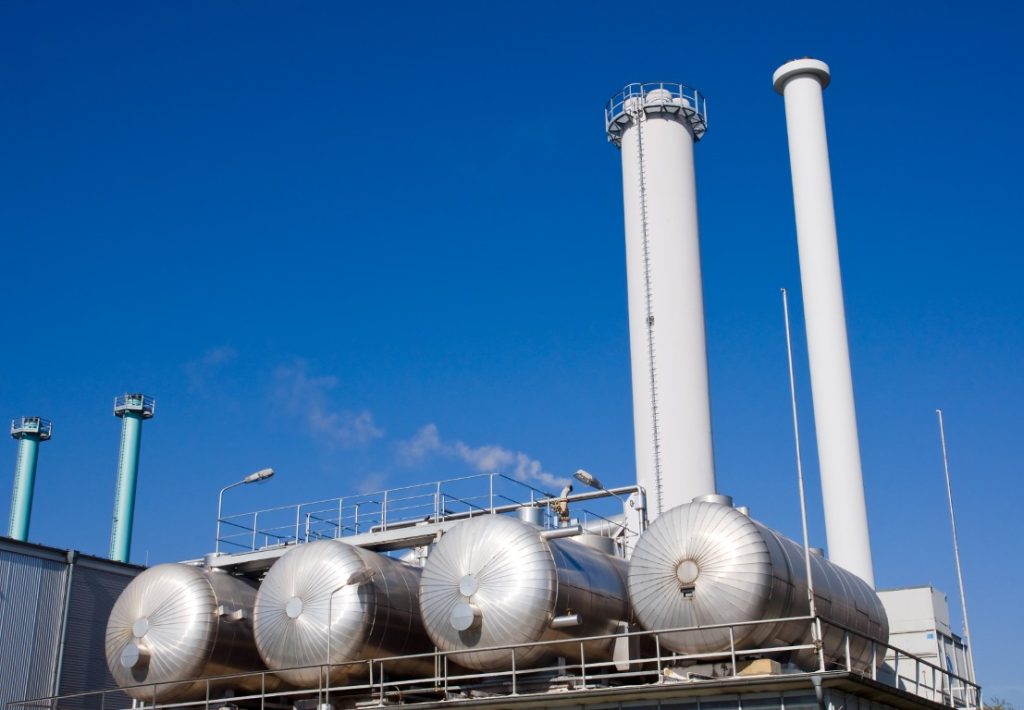
Adsorption and absorption are often mentioned together in industrial gas treatment, but they are not the same process. Understanding the difference matters when selecting a system for VOCs, hydrogen sulfide, SO2, HCl, HF, odor compounds, siloxanes, dioxins, furans or heavy metals in air or biogas streams. The right choice depends on the pollutant, the gas flow, temperature, humidity, concentration profile and whether the goal is contaminant removal, process protection or downstream recovery.
In practical terms, adsorption captures gas-phase molecules on the surface of a solid adsorbent, while absorption transfers a contaminant into a liquid or another bulk phase. Both can be effective, but they solve different problems and respond differently to changes in the process. For industrial operators, this distinction is not academic: it affects capital cost, operating cost, maintenance planning, safety controls and the accuracy of supplier proposals.
This article explains how adsorption and absorption work in industrial gas treatment, where each approach fits, and which process data should be prepared before requesting a technical assessment or proposal.
Adsorption vs. absorption: the core technical difference
Adsorption is a surface phenomenon. Gas molecules move through the gas stream and attach to the surface of a porous adsorbent medium. Activated carbon is the best-known example, but not the only one. The capture mechanism depends on physical attraction, pore structure, surface chemistry and, in some cases, chemical impregnation designed for specific pollutants.
Absorption is a bulk-phase process. The pollutant enters a liquid or another absorbing phase and is taken up throughout that phase, not just at a surface. In industrial gas treatment, absorption is commonly used in scrubbers, where a gas contacts a liquid that dissolves, neutralizes or reacts with certain contaminants.
The practical consequence is straightforward:
- Adsorption is often preferred for dry or moderately humid gas streams with low to medium contaminant concentrations, especially when compact equipment and simple operation are important.
- Absorption is often preferred when the contaminant is highly soluble in the liquid phase, when chemical neutralization is needed, or when the process already includes wet treatment.
- Some plants use both in sequence, for example a wet stage for acid gases followed by adsorption for polishing, odor control or protection of downstream equipment.
It is also important to distinguish gases from particles. A gas-treatment unit designed for adsorption or absorption is not a dust collector. Particulate loading can interfere with performance, block distribution, foul packing or prematurely load an adsorbent bed. If the stream carries aerosols or solids, pretreatment may be needed.
When adsorption is the better fit
Adsorption is widely used in industrial gas treatment because it can handle many trace pollutants in a controlled, compact footprint. It is especially relevant when the main objective is to capture contaminants that are present at low concentrations but still create odor, corrosion, toxicity, product contamination or environmental burden.
Typical industrial uses include:
- VOC control from paints, coatings, printing, plastics, chemical processing and solvent handling.
- Odor treatment in wastewater, waste handling, rendering, food processing and certain manufacturing areas.
- Hydrogen sulfide removal from biogas, wastewater vents and waste treatment systems.
- Acid gas polishing for specific streams containing HCl, HF or SO2 after upstream treatment.
- Protection of downstream equipment such as engines, burners, catalysts or sensitive process units.
Adsorption works best when the gas composition is understood. Temperature, relative humidity, flow variability and contaminant load all influence breakthrough behavior, which is the point at which the adsorbent can no longer retain the contaminant effectively. That is why two sites with the same pollutant name may still need different adsorbent grades or different bed designs.
For example, biogas contaminant removal is not the same as methane enrichment. Adsorption can remove hydrogen sulfide, siloxanes and selected trace compounds to improve gas quality and protect equipment, but it does not separate methane from CO2 in the way a gas upgrading process does. If the objective is to feed a boiler, CHP engine or other combustion system, contaminant removal may be enough. If the objective is biomethane production, a broader upgrading strategy is required.
Activated carbon is commonly used, but “activated carbon” is not a single universal solution. Different carbon grades and impregnation chemistries are selected depending on whether the target is VOCs, hydrogen sulfide, acid gases, mercury or odor compounds. Humidity, temperature and concentration can strongly affect performance, so the adsorbent choice must match the real process conditions rather than the label on the pollutant.
Bionatur develops industrial gas filtration and adsorption systems for pollutant-specific treatment, including streams containing VOCs, H2S, SO2, HCl, HF, dioxins, furans and heavy metals. In practical projects, the right adsorbent and housing design depend on the stream chemistry and duty cycle, not on a generic industry category.
Where absorption is the better fit
Absorption is often the preferred technology when the contaminant is better removed by contact with a liquid phase. This is common for acid gases and certain soluble compounds. In a scrubber, the gas stream contacts a liquid that may absorb the contaminant physically or react chemically with it. For example, an alkaline liquid can neutralize acidic pollutants, turning them into salts that remain in the liquid system.
Absorption is frequently used when one or more of these conditions apply:
- The pollutant is highly soluble or chemically reactive in the selected liquid.
- The stream contains high contaminant loads that would rapidly saturate a dry adsorbent bed.
- Cooling, humidification or simultaneous gas washing is needed.
- The site already has wastewater or liquid treatment infrastructure to manage the spent liquid.
However, absorption introduces its own operating demands. Liquid chemistry must be controlled, blowdown or purge streams may need treatment, scaling and corrosion must be managed, and mist elimination may be required to prevent liquid carryover. In other words, absorption is not automatically simpler than adsorption; it is simply better suited to certain gas compositions and operating objectives.
For some industrial emissions, a hybrid approach is the best technical answer. A wet absorption stage can reduce bulk acid gas loading, followed by adsorption for final polishing, odor control or protection of a catalyst or engine. This arrangement can improve overall process stability, but it only works well when the process data support it.
How to choose between the two in real plants
The best technology is determined by process data, not by a generic pollutant name. Plant managers and engineers should compare adsorption and absorption against the actual process conditions, maintenance resources and discharge targets. The main selection criteria are usually these:
- Pollutant type: VOCs, hydrogen sulfide, SO2, HCl, HF, odor compounds, siloxanes, dioxins, furans or metal vapors.
- Concentration profile: average load, peaks, start-up transients and shutdown conditions.
- Gas flow: minimum, normal and maximum flow rates, plus variability over time.
- Temperature and humidity: both can change adsorption capacity and absorption behavior.
- Presence of particulates or mist: can foul beds, packing or associated ductwork.
- Objective: odor reduction, equipment protection, emission abatement, process polishing or preparation for downstream use.
- Utilities and waste handling: water, chemicals, drain treatment, spent adsorbent management and maintenance access.
In biogas and wastewater applications, operators should also define whether the goal is simple contaminant removal or full gas upgrading. Hydrogen sulfide and siloxanes are often targeted to protect engines and reduce maintenance, but removing these compounds is not the same as separating CO2. Likewise, odor control in a waste treatment plant may require different treatment logic than in a chemical reactor vent.
For manufacturers, the process context matters just as much as the pollutant. A paint line, a plastics extrusion system and a pharmaceutical dryer may all emit VOCs, but their gas temperatures, solvent mixtures, moisture levels and operating cycles are not interchangeable. The same is true for metallurgical, ceramic and petrochemical plants, where acid gases, heavy metals or complex vapors may require different capture strategies.
If you are comparing solutions, a practical first step is to compile a clear process description before asking for a proposal. This helps avoid oversizing, undersizing or selecting the wrong treatment principle.
What technical data suppliers need for an accurate proposal
A reliable proposal for industrial gas treatment should be based on measured or well-documented process information. The following checklist is usually enough to start a serious engineering review:
- Gas source: process unit, vent, stack, enclosure, digester, storage area or exhaust point.
- Pollutants expected: names of compounds, not only generic categories.
- Measured concentrations: average and peak values, if available.
- Flow rate: normal and maximum gas flow, plus whether it is continuous or intermittent.
- Temperature and relative humidity at the treatment point.
- Gas composition: oxygen content, CO2 level, methane presence in biogas, and any reactive gases.
- Particulate or aerosol load: dust, mist, condensed hydrocarbons or sticky compounds.
- Operating cycle: batch, continuous, start-stop, seasonal or variable production.
- Space constraints: available footprint, height limits and access for maintenance.
- Maintenance expectations: staffing, shutdown windows and preferred service model.
- Spending and disposal constraints: options for spent adsorbent, liquid purge or recovered materials.
This information allows the supplier to determine whether adsorption, absorption or a combination is appropriate. It also helps define whether a system should be designed for low-pressure drop, chemical resistance, easy media replacement or integration with existing ventilation and treatment assets.
Bionatur’s integral service approach is relevant here: assessment, engineering, supply, installation, commissioning, maintenance, media replacement and management of spent materials can all be part of the project scope when the application requires it. For industrial buyers, that matters because the best technical solution is only useful if it can be operated safely and maintained on a realistic schedule.
Operating and maintenance considerations that affect performance
Both adsorption and absorption depend on stable operation. A treatment unit that is correctly selected but poorly maintained can underperform even if the design is sound.
For adsorption systems, the main concerns are breakthrough, channeling, pressure drop increase and contamination of the adsorbent surface by water, mist or solids. Breakthrough occurs when the adsorbent bed approaches saturation and the pollutant begins to appear downstream. That is why monitoring should focus on inlet and outlet gas quality, not on subjective indicators such as odor alone. Odor can be misleading, and hydrogen sulfide should never be assessed by smell as a safety or performance check.
For absorption systems, the main concerns are liquid chemistry, recirculation condition, scaling, corrosion, pH control, foam formation and mist elimination. If the absorbent liquid degrades or becomes overloaded, capture efficiency can drop and downstream equipment may be exposed to carryover or emissions.
Good maintenance planning usually includes:
- Routine process monitoring of contaminant levels and pressure drop.
- Defined service intervals based on actual loading, not generic calendar assumptions.
- Inspection of external equipment, instrumentation and seals.
- Safe procedures for media replacement or liquid management.
- Documented handling of spent materials in line with site requirements and applicable rules.
For adsorption beds, replacement intervals cannot be assumed from a brochure alone. They depend on pollutant loading, humidity, temperature, contaminant mix and the selected adsorbent grade. A site with low intermittent loading may have a very different service life from one with continuous high peaks, even if both treat the same chemical family.
When the application involves biogas, wastewater vents or waste handling systems, monitoring is especially important because gas composition can change quickly. Temporary upsets, cleaning operations and feed variability can all affect contaminant load. A treatment system should be evaluated against those real conditions, not only against steady-state operation.
How Bionatur approaches industrial gas treatment projects
For industrial gas treatment, Bionatur works on pollutant-specific systems rather than one-size-fits-all designs. That matters because a VOC stream from a paint booth, a hydrogen sulfide-laden biogas line and an acid gas vent from a chemical process require different engineering choices. The company’s published scope includes gas filtration and adsorption solutions for contaminants such as VOCs, H2S, SO2, HCl, HF, dioxins, furans and heavy metals.
The industrial gas treatment solutions overview is relevant for buyers who need to compare treatment routes before they specify equipment. In practice, the important question is not “adsorption or absorption?” in isolation, but “which treatment sequence best matches the actual emission profile, operating conditions and maintenance model?”
The BR350 is Bionatur’s priority filter, but suitability must always be verified against the pollutant mix, gas flow, loading, temperature, humidity and actual process conditions. It should not be assumed appropriate for any specific application without documented evidence from the manufacturer and a project-specific assessment. In other words, the model name does not replace engineering review.
That same principle applies across the rest of the system: the adsorbent grade, bed design, housing material, prefiltration and service concept must all match the real duty. For buyers in chemicals, automotive, ceramics, metallurgy, pharmaceuticals, paint, plastics and petrochemicals, this is usually the difference between a system that integrates cleanly into the plant and one that becomes an operating burden.
FAQ
Is adsorption always better than absorption for industrial gas treatment?
No. Adsorption is often better for dry or moderately humid streams with trace contaminants, while absorption can be better for soluble or reactive gases and for high-load wet treatment. The correct choice depends on the process data.
Can activated carbon remove every gas contaminant?
No. Activated carbon is useful for many VOCs, odor compounds and some other pollutants, but not every contaminant is suitable for carbon treatment. The gas composition, humidity, temperature and target pollutant all matter.
Does hydrogen sulfide removal in biogas mean the gas has been upgraded to biomethane?
No. Removing hydrogen sulfide improves gas quality and protects equipment, but it is not the same as methane enrichment or CO2 separation. Those are different process objectives.
How do I know when an adsorption system needs media replacement?
Use measured process monitoring, especially inlet and outlet contaminant levels and pressure drop trends. Do not rely on odor alone, and do not open internal media unless the system is isolated and the proper safe procedure is in place.
What should I prepare before asking for a proposal?
Provide the gas source, pollutant list, concentration data, flow rate, temperature, humidity, gas composition, particulate load, operating cycle, available space and maintenance expectations. That information allows a realistic technical assessment.
If you are evaluating adsorption, absorption or a combined solution for an industrial gas stream, request a technical assessment so the treatment concept can be matched to your actual operating conditions.