


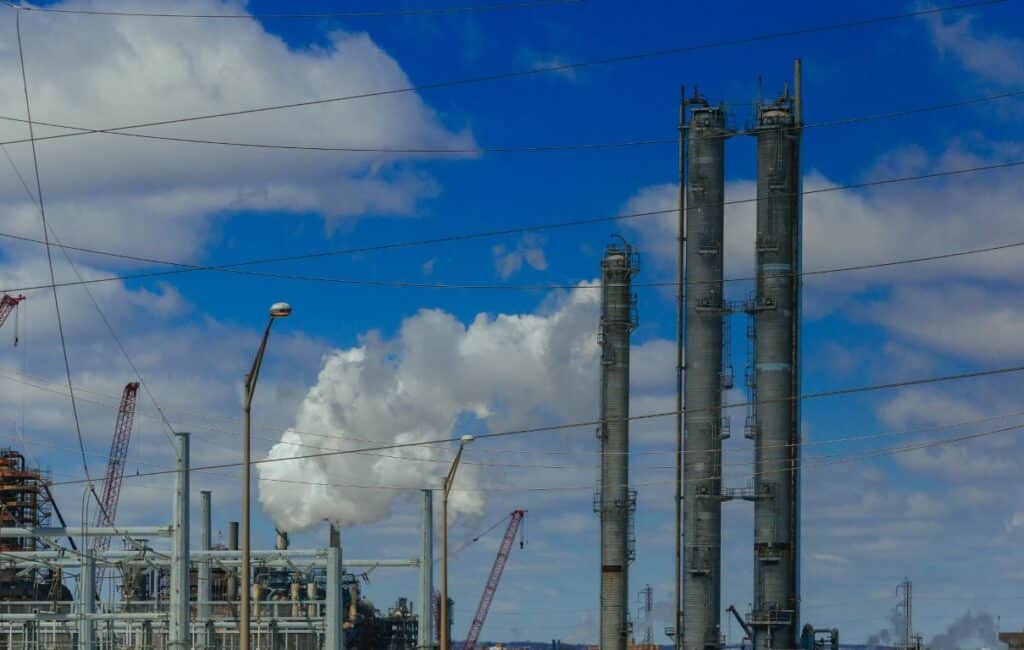
Gas filtration for metallurgical plants in Duisburg is mainly about controlling the pollutants created by high-temperature metal processing, raw-material handling, furnace exhaust, and auxiliary treatment systems. In practice, that means selecting the right combination of particulate capture, adsorption, and gas-specific treatment for the actual stream, not assuming one filter will solve every emission problem.
For plant managers and engineers, the key question is not whether filtration is needed, but which contaminants are present, in what concentration, at what temperature, and under what operating conditions. Metallurgical sites can release dust and fumes together with acid gases, hydrogen sulfide, volatile organic compounds (VOCs), odor compounds, and, in some cases, dioxins, furans, or metal-bearing species. The right treatment concept depends on whether the target is a process exhaust, a general ventilation stream, a byproduct gas, or a contaminated off-gas from a treatment unit.
This matters in Duisburg because metallurgical operations often run continuously, with variable loads, start-up and shutdown phases, and mixed gas streams. A reliable proposal therefore begins with process data, not assumptions. Bionatur works on industrial gas filtration and pollutant-specific treatment systems, including adsorption-based solutions for gases such as H2S, SO2, HCl, HF, VOCs, dioxins, furans and heavy metals, as well as integrated service for engineering, installation, commissioning, maintenance and media replacement.
What gas filtration has to do in a metallurgical plant
In metallurgy, “gas filtration” is often used broadly, but the engineering reality is more specific. Particulate control and gas-phase treatment are different tasks:
- Particles are solid matter such as dust, fumes, oxides, and metal-containing fines.
- Gases and vapors are molecular pollutants such as hydrogen sulfide, acid gases, VOCs, and certain odor compounds.
- Adsorption removes target gas molecules by capturing them on a solid adsorbent medium.
- Absorption transfers contaminants into a liquid phase; it is a different process and is not interchangeable with adsorption.
In a metallurgical plant, the gas treatment system may need to address more than one issue at once. A furnace off-gas may contain particulate loading and condensable compounds; a secondary duct may carry mainly odor and VOCs; a waste treatment or byproduct system may generate H2S or acid gas peaks. The most effective design usually starts by separating these functions rather than trying to force a single step to handle all contaminants.
For example, a dust collector or high-temperature particle separator may protect downstream equipment, while a dedicated adsorption stage handles residual gas pollutants. This staged approach helps reduce premature loading of the adsorbent medium and improves operational control. It also makes maintenance planning more predictable because the dust and gas-treatment duties are no longer merged into one unknown duty.
Which pollutants are most relevant in metallurgical off-gas
Metallurgical plants vary widely, but several pollutant groups appear often enough that they should be considered in any technical assessment:
Acid gases and corrosive components
Hydrogen chloride (HCl), hydrogen fluoride (HF), and sulfur dioxide (SO2) can appear in certain metal production, heating, pickling-related, or combustion-adjacent streams. These gases are important not only because of emission concerns, but also because they can corrode ductwork, fans, and downstream treatment equipment if not managed correctly.
Reduced sulfur compounds and odor
Hydrogen sulfide (H2S) is a critical contaminant in many industrial gas systems, especially where organic residues, wastewater interfaces, sludge handling, or process byproducts are involved. It is also a major odor driver, but odor alone is not a reliable indicator of safe operation or of filtration performance. Some gases are detectable at very low concentrations, while others are not consistently perceived by all people. Monitoring must always be based on instruments and process knowledge, not smell.
VOCs and condensable organics
VOCs may arise from binders, coatings, oils, solvents, cleaning steps, process residues, or auxiliary chemical use. In metallurgical environments, these compounds may be present alongside warm or humid gas streams, which can influence adsorption behavior. If condensable vapors are present, temperature management is often as important as the adsorbent selection itself.
Dioxins, furans, and heavy metals
Some metallurgical exhaust streams can involve trace pollutants such as dioxins, furans, or metal-bearing compounds. These require careful evaluation because their behavior depends strongly on temperature, dust loading, and process history. They should never be treated as generic “odors” or lumped into a simple carbon-only assumption without data.
Process-specific byproduct gases
Auxiliary systems such as wastewater treatment, sludge handling, or certain thermal processes can generate mixed gases that combine H2S, VOCs, and moisture. In these cases, the gas treatment objective may be odor reduction, pollutant capture, protection of operating staff, or preparation of a downstream process gas. Each goal leads to a different design.
How adsorption systems are selected for metallurgical conditions
Adsorption is one of the most useful tools for industrial gas treatment because it can target specific contaminants without changing the main process gas chemistry. However, it is not universal. Selection depends on the pollutants, the gas flow, the concentration profile, humidity, temperature, residence time, and the presence of competing compounds.
In simple terms, the adsorbent medium captures molecules on its surface or within its pore structure. Different grades and formulations behave differently depending on the target contaminant. Activated carbon is one common adsorbent medium, but the correct grade is not chosen by name alone. The actual process conditions determine whether standard carbon, impregnated carbon, or another adsorbent concept is more appropriate.
For metallurgical plants, the following factors are typically decisive:
- Contaminant type: H2S, VOCs, SO2, HCl, HF, odor compounds, or mixed pollutants.
- Concentration profile: steady load, peaks, cyclic operation, or batch release.
- Humidity: moisture can compete with adsorption or change how certain compounds behave.
- Temperature: higher temperatures may reduce adsorption capacity or increase vapor release.
- Presence of dust or aerosols: these can block flow paths or foul the bed.
- Required outlet quality: process protection, odor control, or emission reduction.
- Maintenance access: how the system will be monitored and the adsorbent replaced.
In some cases, the best solution is not a single bed but a staged configuration, such as pre-filtration followed by adsorption. That may help protect the adsorbent medium from premature fouling and stabilize performance over time. The correct arrangement, however, should be based on measured gas data, not generic assumptions about the plant type.
If you are reviewing options for a project, Bionatur’s industrial gas treatment solutions page provides a useful starting point for understanding the scope of pollutant-specific gas treatment systems.
What information is needed before requesting a proposal
A technical proposal for gas filtration in a metallurgical plant should be based on process data. This is especially important in Duisburg, where many sites operate with variable loads, shared utilities, and mixed exhaust sources. A supplier cannot responsibly size or specify a system without understanding the stream.
Practical checklist for proposal preparation:
- Process description and point of extraction
- Gas flow rate, including normal and peak conditions
- Temperature range at the inlet
- Relative humidity or moisture content
- Pollutants to be treated and expected concentration range
- Whether the stream contains dust, mist, condensables, or sticky compounds
- Operating schedule: continuous, batch, intermittent, or seasonal
- Space available for equipment, access, and maintenance
- Constraints on pressure drop and fan capacity
- Required treatment objective: odor control, corrosion protection, emission reduction, or process protection
- Safety considerations for flammable, toxic, or corrosive gases
- Waste handling expectations for spent adsorbent or collected residues
For plants with multiple exhaust points, it is also useful to identify whether all sources can be combined or whether they should be treated separately. Mixed streams can simplify piping, but they can also create conflicts in humidity, temperature, and pollutant load. A stream with low contaminant concentration but high flow behaves very differently from a smaller stream with sharp peaks of H2S or acid gas.
Accurate proposal work also depends on knowing what success means. “Reduce odor” is not the same as “protect equipment from corrosion” or “capture a specific regulated compound.” The treatment objective determines the design, the monitoring strategy, and the maintenance plan.
BR350 in the context of metallurgical gas filtration
BR350 is a priority filter in Bionatur’s portfolio, but it should be considered only within the limits of verified manufacturer documentation and actual process data. That means the model should not be assumed to be suitable for a specific metallurgical duty unless the contaminants, flow, temperature, humidity and operating profile have been assessed.
What matters in practice is the fit between the stream and the treatment concept. A filter model can be relevant for one gas stream and unsuitable for another that looks similar on paper. The same plant may need different solutions for different exhaust points. For example, one line may mainly require VOC adsorption, while another may demand control of H2S or acid gases, and a third may need dust protection upstream of adsorption.
When reviewing BR350 or any comparable unit, ask for the basis of selection, not just the product name. The useful questions are:
- Which pollutants are being treated?
- What inlet conditions were used for selection?
- Is pre-filtration required?
- How is pressure drop expected to change over time?
- What maintenance approach is recommended?
- How is spent adsorbent handled and replaced?
Bionatur’s role is not limited to equipment supply. Its service scope includes assessment, engineering, installation, commissioning, maintenance, media replacement, and management of spent materials. That integrated approach is especially relevant when a plant wants one accountable partner for the treatment concept rather than a collection of disconnected subcontractors.
Operation, monitoring, and maintenance in real plant conditions
Gas filtration systems in metallurgical plants work best when they are monitored as process equipment, not as passive accessories. The adsorbent medium has a finite capacity, and performance changes as it loads. Waiting for obvious odor or visible process problems is not a reliable maintenance strategy.
Monitoring should focus on process indicators that reflect actual operating conditions, such as pressure drop, inlet and outlet gas quality where instrumentation is available, temperature, humidity, and changes in upstream process behavior. If the plant sees unexpected peaks, that may indicate a production change, a fault in upstream capture, or a need to reassess the treatment concept.
Maintenance planning should also consider safe replacement logistics. In industrial gas treatment, the adsorbent medium may need to be replaced or managed according to contaminant loading and operating history. Site personnel should not open equipment or handle internal media without the appropriate procedures and controls. Dust, residual contaminants, and concentrated adsorbed compounds can present health and environmental risks.
A well-designed system should also support traceability of spent materials. That is important for plants handling corrosive or toxic constituents, and it is equally important for general housekeeping, inventory planning, and service coordination. If the treatment system is part of a larger emissions-control program, records from operation and maintenance can also help with internal audits and process improvement.
Why local metallurgical projects need a process-led supplier, not a generic filter quote
In Duisburg, metallurgical operators often deal with brownfield layouts, shared utilities, variable exhaust quality, and tight maintenance windows. That makes generic quotations risky. A supplier should be able to evaluate the stream, identify the dominant contaminant mechanism, and recommend a treatment concept that fits the real plant conditions.
Good supplier selection criteria are straightforward:
- Does the supplier ask for process data before proposing equipment?
- Can they distinguish dust control from gas adsorption?
- Do they address humidity, temperature, and contaminant peaks?
- Can they explain the maintenance and replacement concept clearly?
- Do they provide pollutant-specific treatment rather than one generic answer?
That is where a company such as Bionatur can be relevant for metallurgical facilities. Based in Barcelona, it focuses on industrial gas filtration and adsorption systems for pollutant-specific treatment, with services that cover the project from assessment to maintenance. For buyers, that reduces the risk of receiving a one-size-fits-all design that looks attractive on paper but does not match the real exhaust stream.
In some metallurgical sites, gas treatment may also need to interface with other industrial systems such as waste handling, wastewater treatment, or energy recovery. In those cases, the treatment concept should be reviewed as part of the whole plant, not as an isolated box. Mixed industrial facilities often create mixed gas challenges, and the better solution is usually the one that treats the actual contaminant profile with the simplest reliable arrangement.
FAQ
Is gas filtration in metallurgical plants mainly for dust or for gases?
Both can matter, but they are different problems. Dust and fumes require particle capture, while pollutants such as H2S, SO2, HCl, HF, VOCs, and odor compounds require gas-phase treatment, often by adsorption or another pollutant-specific method.
Can activated carbon handle every metallurgical gas contaminant?
No. Activated carbon is a useful adsorbent medium for many applications, but it does not remove every contaminant and it is not automatically the right choice for every stream. The correct grade and system design depend on the pollutant, temperature, humidity, and concentration profile.
What data should a plant prepare before asking for a proposal?
At minimum: gas flow, temperature, humidity, contaminants present, concentration range, operating schedule, dust or mist content, pressure-drop limits, available space, and the treatment objective. Without that information, sizing and media selection are speculative.
Does odor always mean hydrogen sulfide is present?
No. Odor can come from many compounds, and human smell is not a reliable test for H2S or for treatment performance. Instrument-based monitoring is the correct approach for safety and process control.
Should biogas contaminant removal be treated the same as methane enrichment?
No. Removing contaminants such as H2S, siloxanes, or VOCs is different from separating CO2 to enrich methane. They are related only in the sense that both improve gas usability, but they are distinct process goals with different treatment requirements.
If you are planning gas filtration for a metallurgical plant in Duisburg, the next step is a technical assessment based on your real process data. That is the most reliable way to define the right treatment concept, media selection, and maintenance approach.