


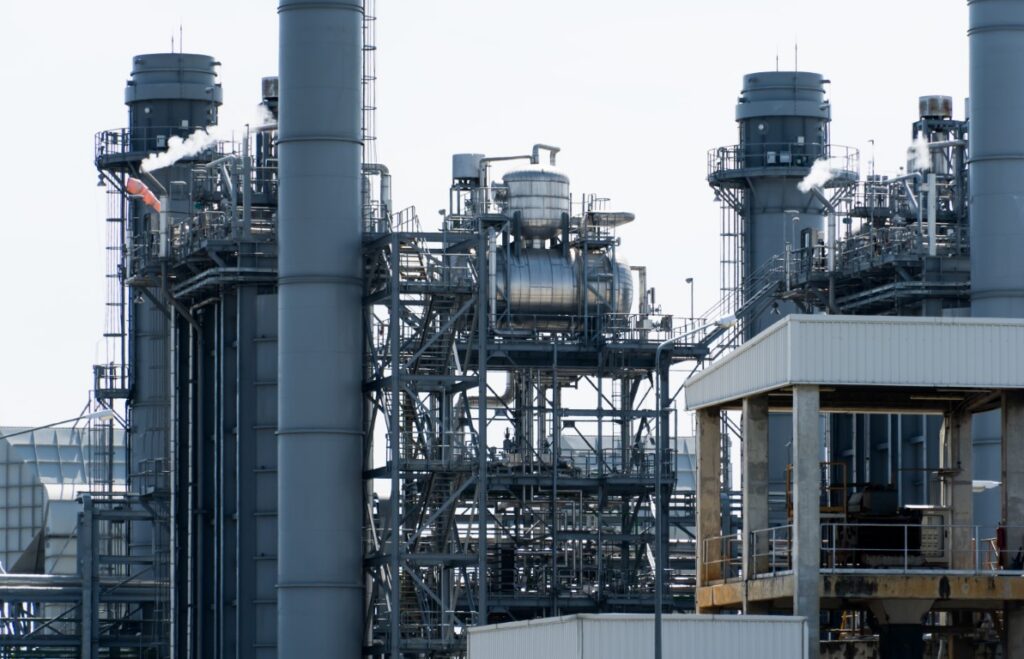
Gas treatment for resin manufacturers in Ohio is usually about controlling the vapors and reactive gases that leave process equipment, storage areas, wastewater systems and thermal steps before they reach the stack or the workplace. In resin production, the challenge is rarely one single pollutant. It is often a mix of VOCs, acid gases, odorous compounds, and sometimes sulfur compounds generated by raw materials, catalysts, cleaning operations or by-product streams. The right treatment system depends on the actual gas chemistry, the flow rate, temperature, humidity, and how steady the emission is over time.
For plant teams, the practical goal is not simply “install a filter.” It is to select a treatment train that matches the emission profile, protects downstream equipment, and can be maintained without disrupting production. In many resin plants, that means evaluating whether adsorption, chemical scrubbing, thermal treatment, or a hybrid approach is the best fit. In some cases, a carefully engineered solid adsorbent stage is the most efficient final polishing step for low-to-moderate concentration streams. In others, it is part of a broader system that must also handle variable loads, condensation risk and corrosive species.
What resin production gases usually contain
Resin manufacturing can generate very different emission streams depending on the chemistry being used. A plant making thermoset resins, thermoplastic compounds, coatings resins, adhesives or specialty polymers may see different gas burdens from reactors, vents, dryers, blending systems, storage tanks, wastewater vents and maintenance cleaning points.
Typical pollutants to consider include:
- VOCs from monomers, solvents, cleaning agents and residual process vapors.
- Odorous compounds that may be noticeable even at low concentrations.
- Hydrogen sulfide (H2S) in certain wastewater, by-product or utility streams.
- Acid gases such as SO2, HCl or HF where the process chemistry creates them.
- Fog, condensable vapors and mist that can interfere with treatment equipment.
- Trace heavy metals or inorganic contaminants in some specialized processes.
- High moisture content, which can strongly affect adsorption performance.
It is important to distinguish gases from particles. A gas-treatment system is designed for vapor-phase contaminants, while dust collectors and mist separators address solids or liquid droplets. When a stream contains both, pretreatment may be needed so the gas-cleaning stage is not overloaded or blinded.
For resin operations, a common mistake is to assume that a single odor-control device can solve every emission point. In reality, different vent sources may require different treatment methods. Reactor vents, drum filling areas, wastewater vents and thermal exhausts rarely behave the same way.
How to choose between adsorption, scrubbing and thermal treatment
Different gas-treatment technologies remove contaminants by different mechanisms. The first step is to match the mechanism to the pollutant.
Adsorption uses a solid adsorbent medium that captures target molecules on its surface. This is not the same as absorption, where a contaminant dissolves into a liquid. Adsorption is widely used for VOCs, odor compounds and certain inorganic gases when the stream conditions are suitable. Performance depends on contact time, concentration, humidity, temperature and the type of contaminant.
Chemical scrubbing transfers contaminants into a liquid, often with a chemical reagent that reacts with the pollutant. This can be effective for certain acid gases and soluble compounds, especially when gas loads are high or variable. However, it creates a liquid stream that must also be managed.
Thermal treatment oxidizes combustible VOCs and other compounds at elevated temperature. It is often considered when concentrations, flow patterns or pollutant types make adsorption less practical. Thermal systems can be effective, but they usually require more energy and close process control.
For many resin plants, the final solution is a combination. For example:
- Knock out condensable material first.
- Remove mist or particles if present.
- Treat the gas with an adsorbent bed for VOCs or odor compounds.
- Use separate treatment for acid gases if the chemistry requires it.
This staged approach reduces the risk of premature media saturation and improves system stability. It also makes maintenance more predictable.
When evaluating adsorption, the process team should ask a simple question: what exactly is the adsorbent expected to remove? Activated carbon and other adsorbent grades are not universal solutions. Their behavior changes with pollutant type, humidity, loading and temperature. Some compounds adsorb strongly; others do not. Some streams benefit from impregnated grades designed for acid gases or sulfur compounds. Other streams need a different approach altogether.
Why resin plants need a process-specific design
Gas treatment in resin manufacturing is often more difficult than it first appears because the emission profile can change across the day, batch, campaign or season. A system sized only for average conditions may struggle at peak load. A system sized only for peak load may be unnecessarily costly or difficult to maintain.
Several operating factors must be checked before proposing any industrial gas filtration system:
- Pollutant identity: VOCs, H2S, acid gases, odorous compounds, siloxanes, heavy metals or mixed streams.
- Concentration range: average and peak loads, plus whether the stream is steady or intermittent.
- Flow rate: normal, minimum and maximum gas volumes.
- Temperature: at the emission source and at the point where treatment is installed.
- Humidity and condensation risk: water vapor can reduce adsorption performance and cause pressure-drop issues.
- Presence of aerosols, mist or dust: these can foul the treatment bed or auxiliary equipment.
- Corrosivity: especially where acid gases or sulfur compounds are present.
- Required operating philosophy: continuous duty, batch duty, standby redundancy or seasonal operation.
These data determine whether the best option is adsorption alone, pretreatment plus adsorption, a scrubber followed by polishing, or another engineered combination. Without them, any proposal is only a guess.
For industrial buyers, the proposal should also identify how the system will be monitored. In practice, that means defining the pressure drop limits, the expected changeover logic, and the maintenance route for replacing the adsorbent medium or other consumables. It should also clarify whether the treatment line must be integrated with plant controls, alarms or ventilation interlocks.
If the plant handles wastewater, waste handling or utility off-gases, the same discipline applies. Biogas-related streams are a good example: removal of hydrogen sulfide and other contaminants is a separate question from methane enrichment. A treatment system can improve gas cleanliness without changing the fundamental methane balance, and those objectives should not be confused.
Where adsorption fits in resin manufacturing gas treatment
Adsorption is often used where the pollutant load is moderate, the gas stream is reasonably clean, and the process requires a compact, low-temperature treatment step. It is particularly useful as a polishing stage or for localized vents that do not justify a larger thermal or wet treatment system.
In resin plants, adsorption is commonly evaluated for:
- VOC control from storage and process vents.
- Odor abatement in low-to-medium loading streams.
- Hydrogen sulfide reduction in compatible utility or waste-related streams.
- Targeted removal of acid gases when the adsorbent medium is selected for that chemistry.
- Final polishing after condensation or other primary treatment.
However, adsorption is not a cure-all. High humidity can displace or compete with target compounds in some applications. Hot streams may require cooling or conditioning before treatment. Heavy loading can exhaust the adsorbent faster than expected. If the gas contains condensable vapors, those may block flow paths or cause premature bed saturation. If the stream contains both gases and particles, separation of the particulates should usually come first.
Siloxanes are another technical consideration in some industrial gas streams, especially where biogas or certain wastewater gases are present. They can affect downstream equipment and may require a media selection strategy different from a standard VOC application. The point is not that every resin plant has siloxane concerns, but that the treatment concept must be chosen from the actual gas composition, not from a generic assumption.
For resin manufacturers, the value of adsorption is often its simplicity at the point of use. It can be easier to integrate than a large process alteration, and it can be well suited to localized vents where a compact treatment footprint is important. Still, the design must be based on measured or well-characterized process data, not on odor alone. Odor is not a reliable indicator of safety or performance, and it should never be used to judge H2S levels.
Assessment data needed before requesting a proposal
A good proposal begins with reliable process information. The more accurate the input, the more likely the treatment system will perform as intended and the easier it will be to maintain.
Provide these details when requesting a technical assessment:
- Emission source description: reactor vent, tank vent, wastewater line, blending area, dryer, thermal exhaust or mixed source.
- Known contaminants: VOC family, H2S, acid gases, odor compounds, mist, trace metals or other pollutants.
- Gas flow profile: average flow, peak flow, batch duration and any downtime conditions.
- Gas temperature and humidity: at source and after any cooling or condensation step.
- Material compatibility concerns: corrosive vapors, solvent exposure, dust carryover or sticky condensables.
- Space and installation limits: available footprint, elevation, access for maintenance and tie-in points.
- Current abatement equipment: existing fan, scrubber, filter, ducting or thermal unit.
- Operating objective: odor reduction, emissions control, equipment protection or process compliance support.
If the stream is highly variable, it helps to share historical operating patterns rather than a single design point. Batch plants often produce “normal” and “worst case” conditions that need different treatment assumptions. Maintenance teams should also identify whether the system can be isolated safely for media replacement or whether standby capability is needed.
For adsorbent-based systems, proposal quality improves when the supplier understands how long the gas will be in contact with the media, whether the stream is continuous or intermittent, and what contaminants are present before and after any pretreatment. This is especially important when the application involves mixed pollutants, because one compound can affect the behavior of another.
Bionatur works on industrial gas filtration and pollutant-specific treatment with this type of data-driven approach. That matters because a resin plant’s vent gas is not just “air with smell”; it is a process stream with chemistry, moisture and operating constraints that must be respected.
Maintenance, media management and long-term operation
Once a treatment system is installed, long-term performance depends on monitoring and disciplined maintenance. The goal is not to wait until the treatment bed is fully spent, but to manage the system based on operating indicators and planned intervention.
Useful maintenance considerations include:
- Tracking pressure drop across the system.
- Monitoring for changes in treated-gas quality at the outlet.
- Checking for condensation, fouling or abnormal temperature shifts.
- Confirming that upstream pretreatment is still working correctly.
- Scheduling media replacement before breakthrough becomes a process problem.
- Handling spent materials according to plant procedures and applicable waste rules.
Operators should not open internal media beds unless the system has been isolated, made safe and prepared according to site procedures. Internal inspection is not a routine visual task. It is a planned maintenance activity that must account for residual contaminants, confined-space risk and the condition of the adsorbent medium.
It is also important not to confuse maintenance of a gas-treatment system with cleaning a general ventilation unit. Adsorption media may need replacement, but the causes of premature exhaustion are often upstream: excessive moisture, unexpected solvent loading, particulate carryover or wrong technology selection. A strong maintenance plan therefore starts with good process control.
In broader industrial contexts, Bionatur also supports project stages that include assessment, engineering, supply, installation, commissioning, maintenance, media replacement and management of spent materials. For plants that need a structured pathway from diagnosis to operation, that integrated service model can simplify accountability and reduce the chance of design gaps between departments.
For more technical background on treatment options, see the industrial gas treatment overview.
FAQ
Is adsorption always the best choice for resin plant vapors?
No. Adsorption is effective for many VOC and odor-control duties, but the right technology depends on pollutant type, concentration, temperature, humidity and flow stability. Some streams are better handled by scrubbing, thermal treatment or a combination of stages.
Can activated carbon remove every contaminant from a resin process gas?
No. Activated carbon and other adsorbent media are selective. They work well for certain compounds, but not for every gas or operating condition. The material grade and system design must match the actual contaminants and process data.
How do I know whether my resin vent needs pretreatment before adsorption?
If the stream contains mist, condensable vapor, dust or very high humidity, pretreatment is often needed. These conditions can reduce adsorption performance and shorten media life. The assessment should confirm what is in the gas before final design decisions are made.
Is hydrogen sulfide removal the same as odor control?
No. H2S may contribute to odor, but odor alone is not a reliable way to assess concentration or safety. Hydrogen sulfide must be evaluated with proper process data and monitoring, and treatment should be selected for the actual contaminant load.
Can Bionatur size a system without plant data?
No credible engineering proposal should be based on assumptions alone. A technical assessment needs process details such as gas composition, flow rate, temperature, humidity, and operating pattern. If you are planning gas treatment for a resin plant in Ohio, request an assessment with those data so the design can be matched to the real process.