


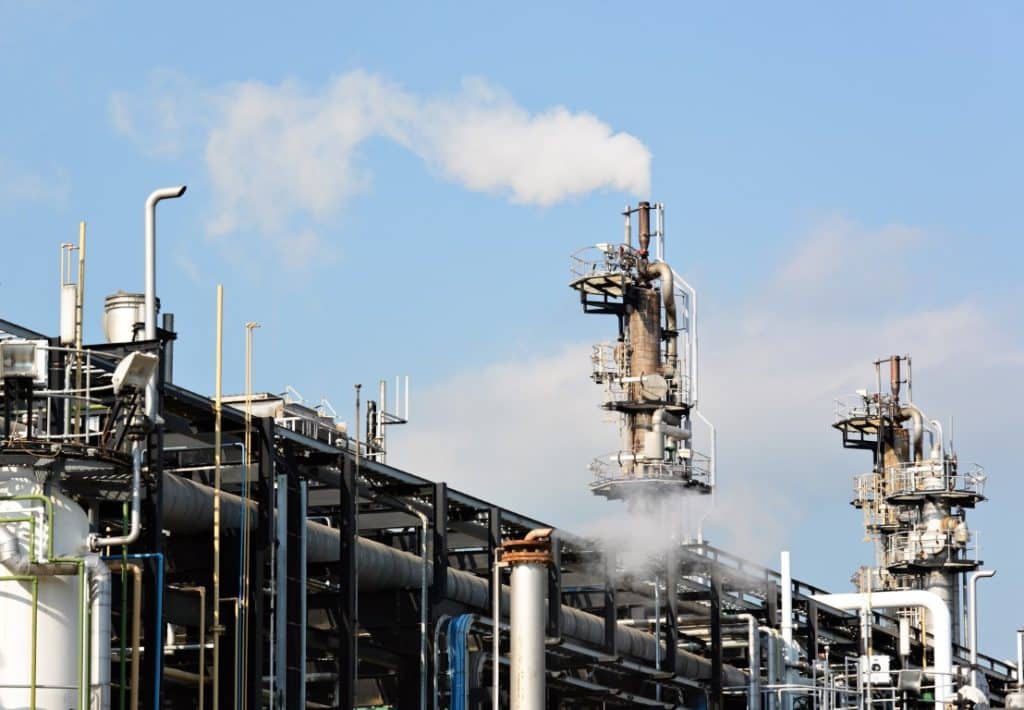
Industrial gas treatment for manufacturing plants in Malaga is not just an environmental add-on. It is a process design decision that affects worker safety, equipment life, odor control, emissions management, and the stability of production lines. The right system depends on what is being released, at what concentration, under which temperature and humidity conditions, and whether the goal is to remove a pollutant, protect a process, or condition an off-gas before release.
For plant managers and engineers, the key point is simple: gas treatment is pollutant-specific. A system that works well for volatile organic compounds (VOCs) may not be suitable for hydrogen sulfide, acid gases, metal fumes, or siloxanes. In many Malaga-area manufacturing environments, the challenge is a mixed stream, where the gas phase contains several contaminants and the process load changes over time. That is why a proposal should start with process data, not with a generic equipment size.
Bionatur, based in Barcelona, works with industrial gas filtration and adsorption systems for pollutants such as VOCs, H2S, SO2, HCl, HF, dioxins, furans, heavy metals and biogas contaminants. The practical value for a manufacturing plant is an integrated approach: assessment, engineering, supply, installation, commissioning, maintenance, media replacement and management of spent materials. In some projects, a filter such as the BR350 is part of the discussion, but suitability always depends on the actual gas composition and operating conditions, not on the model name alone.
What industrial gas treatment must solve in manufacturing plants
Manufacturing plants typically need gas treatment for one or more of four reasons:
- Emission control before venting to atmosphere or to a thermal treatment stage.
- Odor reduction in areas where nuisance gases affect workers, neighbors or surrounding operations.
- Process protection for equipment, catalysts, sensors, heat exchangers or downstream systems.
- Material recovery or conditioning when the gas stream is part of a larger reuse, energy or treatment scheme.
In Malaga’s manufacturing base, the same plant may produce several gas streams: solvent vapors from coating lines, acid fumes from surface treatment, H2S from wastewater or sludge handling, or a mixed off-gas from thermal or chemical processes. The treatment objective changes with the stream. For example, removing VOCs from a paint booth exhaust is not the same as handling H2S in a wastewater plant or acid gases in a metallurgical operation.
It is also important to distinguish gases from particles. Industrial gas treatment deals with vapors, gaseous pollutants and some vapors that have been adsorbed or condensed onto a carrier stream. Dust collectors and particulate filters solve a different problem. In many plants, both systems are needed, but they are not interchangeable.
Adsorption, absorption and other treatment routes: choosing the right mechanism
For gas-phase pollutants, the most common mechanisms are adsorption, absorption, oxidation, condensation and biological treatment. Each has a different role.
Adsorption
Adsorption is a surface phenomenon. Molecules in the gas stream attach to the surface of a porous adsorbent medium, such as activated carbon or other engineered media. This is widely used for VOCs, odor compounds, H2S and certain acid gases, depending on the media selected and the process conditions. Adsorption is not the same as absorption, and the distinction matters when specifying a system.
In practical terms, adsorption is selected when the target is a dilute contaminant in a gas stream and the plant needs a compact treatment stage. The effectiveness depends on contact time, humidity, temperature, gas composition, the presence of competing compounds and the pollutant loading over time.
Absorption
Absorption transfers pollutants into a liquid phase, usually in a scrubber. This can be appropriate for some acid gases and soluble contaminants, especially where a chemical reagent is used. However, absorption is not the best answer for every VOC stream, and it may create a liquid waste stream that must then be managed.
Other routes
Thermal oxidation, condensation and biofiltration can also be relevant, but the choice depends on the pollutant and the plant context. No single technology is universally best. The selection should be based on process data, utility availability, maintenance expectations and how the gas stream varies across production cycles.
For manufacturing buyers comparing options, the key question is not “Which technology is best?” but “Which mechanism matches the pollutant and operating envelope?” That is where the proposal process starts.
Pollutants commonly treated in Malaga manufacturing plants
Manufacturing facilities in sectors such as chemical production, automotive, ceramics, metallurgy, pharmaceuticals, paint, plastics and petrochemicals often emit one or more of the following:
- VOCs from solvents, resins, coatings, cleaning operations and some reaction steps.
- Hydrogen sulfide (H2S) from wastewater handling, anaerobic processes, sludge treatment or certain chemical streams.
- SO2 from combustion-related or sulfur-bearing processes.
- HCl and HF from acid handling, surface treatment, etching or certain high-temperature processes.
- Dioxins and furans in specific combustion or thermal treatment contexts.
- Heavy metals in fumes or dust-laden process gases from metallurgical and high-temperature operations.
- Biogas contaminants such as H2S, siloxanes and organic trace compounds where gas recovery is involved.
Each contaminant requires a different level of caution. For example, VOC treatment may focus on adsorption capacity and breakthrough behavior, while H2S control may require careful attention to media selection, moisture management and corrosion protection. Acid gases can demand materials compatibility checks, and siloxanes call for a specific review of the downstream equipment they can affect.
When biogas is involved, it is useful to separate contaminant removal from methane enrichment. Removing H2S, siloxanes and other impurities improves gas quality and protects engines, boilers or upgrading equipment, but it is not the same as upgrading biogas to biomethane. Those are related but distinct process goals.
What data you need before requesting a proposal
A useful industrial gas treatment proposal is built from process information, not assumptions. The more accurate the input data, the more realistic the design discussion will be.
Use this practical checklist when preparing a technical inquiry:
- Pollutants present: VOCs, H2S, SO2, HCl, HF, siloxanes, metals or mixed streams, including likely co-contaminants.
- Flow rate: average and peak gas flow, plus how the flow changes during start-up, shutdown, batch cycles or cleaning operations.
- Concentration range: typical inlet levels and whether the stream is steady or variable.
- Temperature: continuous and peak temperatures, including any hot-gas excursions.
- Humidity: water vapor level, condensation risk and whether the stream is saturated.
- Pressure conditions: fan-assisted, ducted, low-pressure or process-integrated conditions.
- Gas composition: oxygen content, inert gas dilution, corrosive components and process additives.
- Particulate load: whether the stream carries dust, mist or aerosols that can foul equipment.
- Operating profile: hours per day, days per week, seasonal variation and production swings.
- Available utilities and space: electrical supply, access for maintenance, footprint and integration constraints.
- Maintenance expectations: access windows, staffing, monitoring strategy and spent-media handling requirements.
These data points help determine whether adsorption is appropriate, whether pretreatment is needed, and whether the system should be designed for a single pollutant or a mixed stream. They also allow the supplier to assess whether a compact filter arrangement or a different gas treatment architecture is more realistic for the plant.
For a manufacturer evaluating a model such as the BR350, the same principle applies: the model name is only a starting point. Suitability depends on pollutant type, loading, flow, humidity, temperature and the actual process conditions. Without those inputs, no responsible supplier should promise performance.
How to evaluate a supplier for industrial gas treatment
When selecting a partner for industrial gas treatment in Malaga, the most valuable criterion is technical fit. A supplier should be able to translate process data into a credible concept, then support the project through commissioning and operation.
Look for the following capabilities:
- Assessment and sampling logic that reflects real process conditions rather than generic assumptions.
- Engineering support to match contaminant type, gas flow and operating profile with the appropriate treatment mechanism.
- Pollutant-specific media selection based on the stream, without treating activated carbon as a universal solution.
- Attention to materials compatibility when acid gases, humidity or corrosive compounds are present.
- Installation and commissioning support so the system is integrated correctly with ducting, controls and plant operation.
- Maintenance planning that addresses monitoring, replacement strategy and spent-material management.
- Ability to handle mixed pollutants where VOCs, H2S and acid gases may occur together.
For many plants, the commercial decision is not only about equipment purchase. It is also about lifecycle support. A system that is poorly integrated or under-monitored can create pressure drop issues, breakthrough risk, corrosion concerns or avoidable downtime. That is why full service matters in industrial settings.
Bionatur’s role is strongest when the project needs both treatment know-how and practical implementation support. Its work in gas filtration, adsorption and pollutant-specific treatment aligns with manufacturing streams where the pollutant profile must be understood before any hardware is specified. The same approach is relevant for biogas cleaning, industrial exhausts and process off-gases.
For an overview of the service scope, see industrial gas treatment solutions for process emissions and odor control.
Operation, monitoring and media replacement: what plant teams should expect
Once a gas treatment system is running, the focus shifts to stable operation. The most common operational risks are not theoretical; they are practical issues such as variable loading, condensation, pressure drop increase and exhausted media.
Plant teams should plan for:
- Trend monitoring of inlet and outlet conditions where the project design calls for it.
- Pressure drop observation to detect fouling or flow restriction.
- Temperature and humidity control when the process stream can fluctuate.
- Defined replacement strategy for the adsorbent medium or other consumable treatment stage.
- Safe handling of spent materials according to the nature of the captured contaminants.
It is not good practice to judge filter performance by smell alone. Odor can be a useful complaint trigger, but it is not a reliable safety indicator, and it does not confirm whether H2S, VOCs or other compounds are under control. Nor should staff open internal media compartments as a routine check unless the equipment is designed for that purpose and the proper safety procedures are in place.
Maintenance planning should also consider whether the stream contains compounds that can shorten media life or cause uneven loading. High humidity, aerosol carryover, intermittent peaks and mixed contaminants all affect treatment behavior. A well-designed system should account for these conditions from the start, not after the first performance problem appears.
Why a technical assessment matters for Malaga plants
Manufacturing plants in Malaga operate in different sectors, but they share one challenge: off-gas streams are rarely simple. A paint line, a ceramic kiln exhaust, a metallurgical process, a plastics plant, a pharmaceutical suite and a wastewater or biogas unit all create different gas-treatment problems. Even within one site, the composition may vary by batch, season or operating mode.
That is why the right approach is a technical assessment tailored to the plant’s actual conditions. A competent proposal should answer questions such as:
- What pollutants are present and in what combinations?
- What is the normal and peak gas flow?
- Are there temperature, humidity or corrosion concerns?
- Will adsorption be enough, or is pretreatment needed?
- How will the system be monitored and maintained over time?
- What will happen to the spent adsorbent or other removed material?
These are the questions that turn a vendor quote into an engineering solution. For buyers, they also reduce the risk of over-specifying a system that is too complex or under-specifying one that cannot handle real process variation.
In practice, industrial gas treatment is most successful when the supplier understands both the contaminant chemistry and the plant’s operating reality. That is true whether the target is VOC control, H2S removal, acid gas treatment or biogas conditioning. It is also the right way to evaluate a model such as the BR350: by matching documented capabilities to the actual stream, never by assumption.
FAQ
Is activated carbon always the right choice for industrial gas treatment?
No. Activated carbon is a useful adsorbent medium for many VOC, odor and some gas-phase contaminant applications, but it is not universal. Suitability depends on the pollutant, humidity, temperature, concentration and whether the stream contains compounds that can reduce performance or require another treatment step.
Can one system treat VOCs, H2S and acid gases together?
Sometimes, but not automatically. Mixed gas streams require a careful review of pollutant interactions, moisture, corrosion risk and the expected loading of each contaminant. In some cases, a multi-stage design is more appropriate than a single treatment stage.
How do I know whether my plant needs adsorption or absorption?
It depends on the gas chemistry and the process goals. Adsorption is often used for dilute contaminants in gas streams, while absorption is used when pollutants can be transferred into a liquid phase. The right choice should be based on process data and engineering review.
What information is most important when asking for a proposal?
The most important inputs are pollutant type, gas flow, concentration range, temperature, humidity, pressure conditions and operating profile. These determine whether a proposed system is technically suitable and how it should be integrated into the plant.
Does odor mean the treatment system is failing?
Not necessarily, but odor should never be used as the only check. It is not a reliable measure of safety or treatment performance. Monitoring, process data and maintenance records are more dependable indicators.
If your plant is evaluating industrial gas treatment in Malaga, request a technical assessment based on your actual process data. That is the best way to define a practical, pollutant-specific solution.