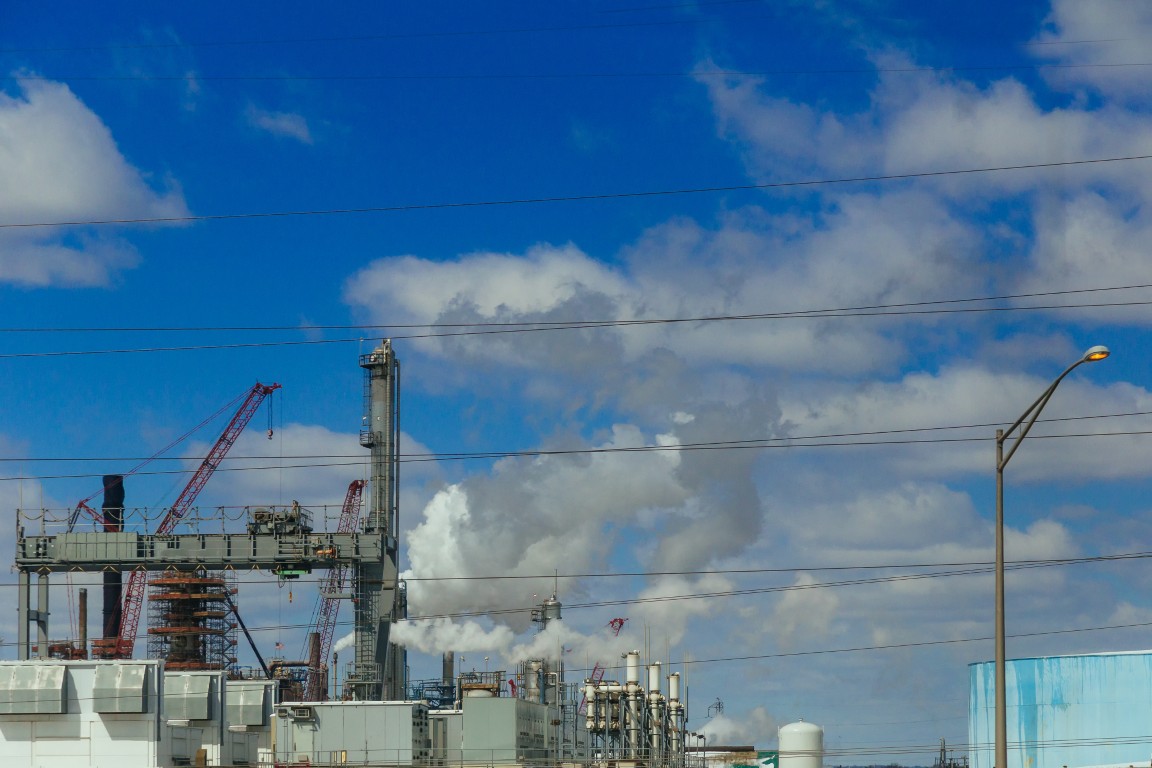

Industrial Odor Control in Food Manufacturing
Industrial odor control in food manufacturing is not just about making a plant less noticeable to neighbors. It is about capturing and treating odorous air streams at the source, protecting worker comfort, reducing complaints, and supporting a stable environmental performance program. In food plants, odors often come from raw material handling, cooking, drying, fermentation, rendering, washing, wastewater treatment, and waste storage. The technical challenge is that these air streams may contain mixtures of volatile organic compounds (VOCs), hydrogen sulfide, ammonia, aldehydes, organic acids, and moisture, while also varying widely in flow, temperature, and concentration over the day.
The right solution depends on the actual process data, not on a generic “odor filter” label. In many food manufacturing applications, odor control relies on a combination of capture, ducting, and a treatment stage based on adsorption or other pollutant-specific technologies. Activated carbon and related adsorbent media are commonly used when the target compounds are adsorbable gases or vapors, but they are not a universal answer for every odor source. A good system starts with understanding what is in the air, where it is released, and how the process operates in real conditions.
What creates odor problems in food plants
Food manufacturing odor sources are often intermittent, but they can be intense. The same facility may emit different odor profiles from one process area to another, so treating the entire site as one air stream usually leads to poor results. Common sources include:
- Cooking, frying, roasting, and baking, which can release organic vapors and odor compounds carried by warm exhaust air.
- Fermentation and ingredient processing, where alcohols, organic acids, and other vapors may be present.
- Raw material receiving and storage, especially for meat, fish, dairy, oils, spices, and other odor-sensitive inputs.
- Waste handling and by-product areas, including bins, compactors, and transfer points.
- Wastewater treatment systems, where hydrogen sulfide, ammonia, and other reduced sulfur compounds can form under anaerobic conditions.
- Cleaning and sanitation operations, which can introduce acidic or alkaline vapors and humid air.
It is important to distinguish between odorous gases and vapors on one side and particles or aerosols on the other. A filtration or adsorption system designed for vapors will not automatically remove mist, dust, or grease droplets. In many plants, pre-treatment such as demisting, droplet separation, or particulate filtration is needed before the gas reaches the odor-control stage.
Odor complaints are often linked to process upsets, seasonal changes, or cleaning cycles. That is why engineers should treat odor control as a process engineering task, not only as a maintenance issue.
How industrial odor control works: capture, conditioning, and treatment
An effective odor-control system usually has three technical layers.
1) Capture at the source
The most effective odor treatment starts by capturing the contaminated air where it is generated. Local exhaust hoods, enclosures, negative pressure rooms, and sealed transfer points reduce the amount of fugitive odor released into the building or atmosphere. If the capture step is weak, even a well-designed treatment unit will struggle because it will receive diluted, variable, or partially bypassed air.
2) Air conditioning before treatment
Many food process exhaust streams are hot, humid, or loaded with mist. That matters because temperature, humidity, and condensable vapors affect how well adsorption systems perform. In some cases, cooling or moisture management is needed before the treatment stage. If grease, oil mist, or sticky condensables are present, a prefilter or separation stage can protect the adsorbent medium from premature plugging or fouling.
3) Final treatment of pollutants
The final stage depends on the pollutant profile. For air streams containing adsorbable VOCs or odor molecules, a solid adsorbent such as activated carbon can be effective. Adsorption is a surface process: molecules are captured on the surface of the adsorbent medium. This is different from absorption, where a contaminant dissolves into a liquid or another bulk material. That distinction matters because adsorption capacity depends strongly on the gas composition, residence time, humidity, and contaminant concentration.
In other applications, treatment may rely on chemical scrubbing, biological treatment, or a hybrid configuration. The key point is that odor control should match the chemistry of the emissions, not just the airflow.
Where activated carbon fits in food manufacturing odor control
Activated carbon is one of the most widely used technologies for industrial odor control because it can capture many organic vapors and some reduced sulfur compounds when properly specified. In food manufacturing, it is often considered for exhaust from ingredient rooms, packaging areas with odor transfer, waste rooms, rendering-related interfaces, and some wastewater ventilation lines.
However, activated carbon is not a universal odor solution. Its performance depends on the contaminant type, concentration, relative humidity, temperature, and the presence of competing compounds. A high moisture load can reduce the available capacity for certain gases. Likewise, if the gas stream contains dust, aerosols, or sticky vapors, the adsorbent medium may foul before its chemical capacity is fully used.
When planning a carbon-based odor system, engineers should also consider the difference between general VOC control and specific pollutant removal. Some compounds are readily adsorbed; others are not. Hydrogen sulfide, for example, is a key odor compound in wastewater and waste handling, but it requires careful media selection and operating-condition review. Siloxanes are another relevant consideration in some biogas and waste-related air streams because they can affect downstream equipment and require the right adsorbent strategy. None of this should be assumed without a process analysis.
For food manufacturers working with broader industrial gas challenges, Bionatur provides industrial gas treatment solutions for pollutant-specific air streams, including odor-related contaminants. The appropriate configuration depends on the actual emissions profile and the site conditions.
In practice, adsorbent systems are often selected when the plant needs:
- Targeted treatment of odorous VOCs or gases in vent air.
- A compact solution for limited space.
- A polishing stage after pre-treatment or another primary control step.
- Pollutant-specific handling of gas-phase contaminants.
They are less appropriate when the main problem is liquid aerosol, high particulate loading, or an emission profile that changes so much that the treatment media cannot be selected reliably. In those cases, process redesign or a multi-stage treatment train may be necessary.
What data you need before requesting a proposal
Good odor-control proposals are built from real process data. The goal is not to produce a generic filter size, but to identify the right treatment concept and the operating risks. A vendor or engineering team should ask for the following information:
- Source description: which process area emits the odor and when it operates.
- Pollutants suspected or measured: VOCs, hydrogen sulfide, ammonia, organic acids, mercaptans, or other gases.
- Flow rate: normal, minimum, and peak exhaust volumes.
- Temperature and humidity: including any condensing conditions.
- Particle or mist loading: dust, grease aerosols, water droplets, or condensate.
- Concentration profile: steady, intermittent, batch, or shock emissions.
- Operating schedule: shift pattern, cleaning cycles, shutdowns, and start-ups.
- Space and utility constraints: footprint, pressure drop limits, fan arrangement, and access for maintenance.
- Compliance objective: odor reduction target, workplace improvement, or emission control for a specific vent.
- Site history: recurring complaints, corrosion, fouling, or previous treatment problems.
This checklist matters because the same odor source can behave very differently in summer versus winter, or during production versus sanitation. For example, a stream that seems manageable during steady production may overload the adsorbent medium during cleaning or product changeover. Similarly, a low-flow vent with high hydrogen sulfide concentration may need a different approach than a larger, more dilute VOC stream.
If the plant is also dealing with process water, wastewater, or biogas-related odors, the proposal should separate each gas stream clearly. Biogas contaminant removal is not the same as methane enrichment. Removing hydrogen sulfide, siloxanes, or certain VOCs can improve gas quality and protect equipment, but that does not mean the system is performing CO2 separation or upgrading biogas to biomethane.
Operational and maintenance considerations that matter in real plants
Odor-control systems succeed or fail based on everyday operation. Even a well-engineered adsorber will underperform if the upstream capture is poor, the air is wetter than expected, or the media is left in service beyond its useful life.
Plant teams should focus on a few practical issues:
- Keep the exhaust air stable where possible. Sudden spikes in temperature, humidity, or contaminant load can shorten media life.
- Protect the treatment stage from carryover. Grease, mist, and dust can block airflow and reduce adsorption efficiency.
- Monitor pressure drop and system behavior. Rising pressure drop may indicate fouling, channeling, or airflow restrictions.
- Track process changes. New recipes, higher throughput, or cleaning chemical changes can alter the odor profile.
- Plan media replacement and spent-material handling. Replacement should be based on operating data, not odor perception alone.
Smell is not a reliable safety or performance indicator for hydrogen sulfide or other process gases. Personnel should use appropriate monitoring and site procedures rather than relying on human detection. Likewise, internal adsorbent media should not be opened or inspected casually by site staff. Maintenance planning should follow the manufacturer’s guidance and the plant’s own safety procedures.
For facilities that need end-to-end implementation, Bionatur’s service model includes assessment, engineering, supply, installation, commissioning, maintenance, media replacement, and management of spent materials. That integrated approach is especially useful when odor control must be coordinated with other gas-treatment needs, such as VOC removal or treatment of reduced sulfur compounds.
How to choose the right solution for your plant
Choosing an odor-control system is mainly a technical selection process. The best option depends on what is in the gas, how much of it is present, and how the plant really runs. A practical selection process should compare:
- Pollutant chemistry: Are the main compounds organic vapors, hydrogen sulfide, ammonia, acids, or a mixture?
- Air characteristics: Is the stream dry, wet, hot, cold, dusty, or mist-laden?
- Emission pattern: Continuous, batch, variable, or shock-loaded?
- Space and integration: Can the system fit near the source, or must it be centralized?
- Operating philosophy: Is the priority low maintenance, compact size, or multi-contaminant treatment?
- Lifecycle handling: How will the plant manage spent adsorbent or other residues?
In some food facilities, the best answer is a single-stage adsorber. In others, it is a hybrid system with pre-separation, duct balancing, and a final polishing stage. If the plant has wastewater or waste-treatment odors, the same reasoning applies, but the gas composition can be more aggressive and moisture-rich, so the treatment train may need to be more robust.
BR350 should be considered only within the limits of documented manufacturer evidence and the actual process data for the site. Its suitability cannot be assumed from the product name alone. As with any adsorbent solution, confirmation requires the target contaminant profile, flow, temperature, humidity, and other operating conditions.
For industrial buyers, the most useful supplier is the one that asks the right questions before proposing a system. That is the best way to avoid oversizing, premature media exhaustion, or a unit that cannot handle the real exhaust stream.
FAQ
Can activated carbon solve every odor problem in food manufacturing?
No. Activated carbon is effective for many odor molecules and VOCs, but it is not universal. It may need pre-treatment, and some gas streams require scrubbing, biological treatment, or a multi-stage system instead.
Is odor control only needed for neighbor complaints?
No. Odor control also supports worker comfort, process cleanliness, corrosion management in some areas, and overall environmental performance. In some plants, internal exposure and fugitive emissions are as important as external complaints.
How do I know whether my stream needs adsorption or another technology?
Start with the gas composition, moisture content, temperature, and flow profile. Adsorption is usually considered for gas-phase pollutants such as VOCs or certain reduced sulfur compounds. If the main issue is mist, dust, or a highly variable wastewater vent, another treatment step may be necessary.
What information should I prepare before contacting a supplier?
Provide the source description, suspected pollutants, flow rates, temperature, humidity, concentration profile, operating schedule, space constraints, and any past odor-control issues. The more complete the data set, the more reliable the proposal will be.
Does removing biogas contaminants mean the gas has been upgraded to biomethane?
No. Contaminant removal and methane enrichment are different processes. Removing hydrogen sulfide, siloxanes, or other impurities can improve gas quality and protect equipment, but it does not by itself mean CO2 has been separated or the gas has been upgraded.
If your food plant is facing persistent odor emissions, the next step is a technical assessment based on your actual process data. A well-designed system starts with the source, the chemistry, and the operating conditions, not with guesswork.